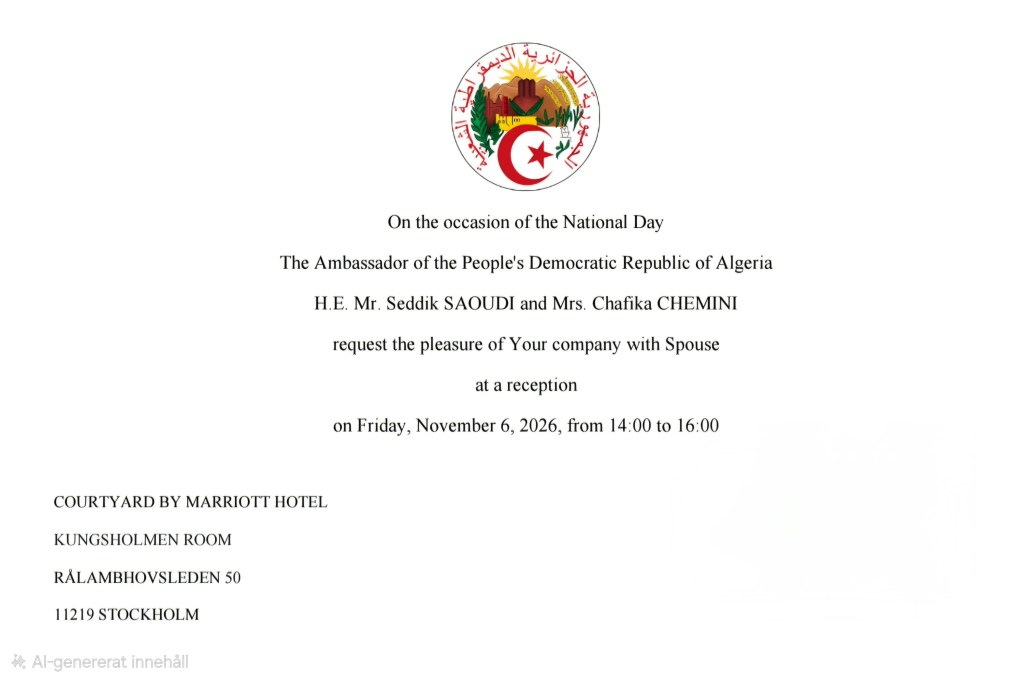
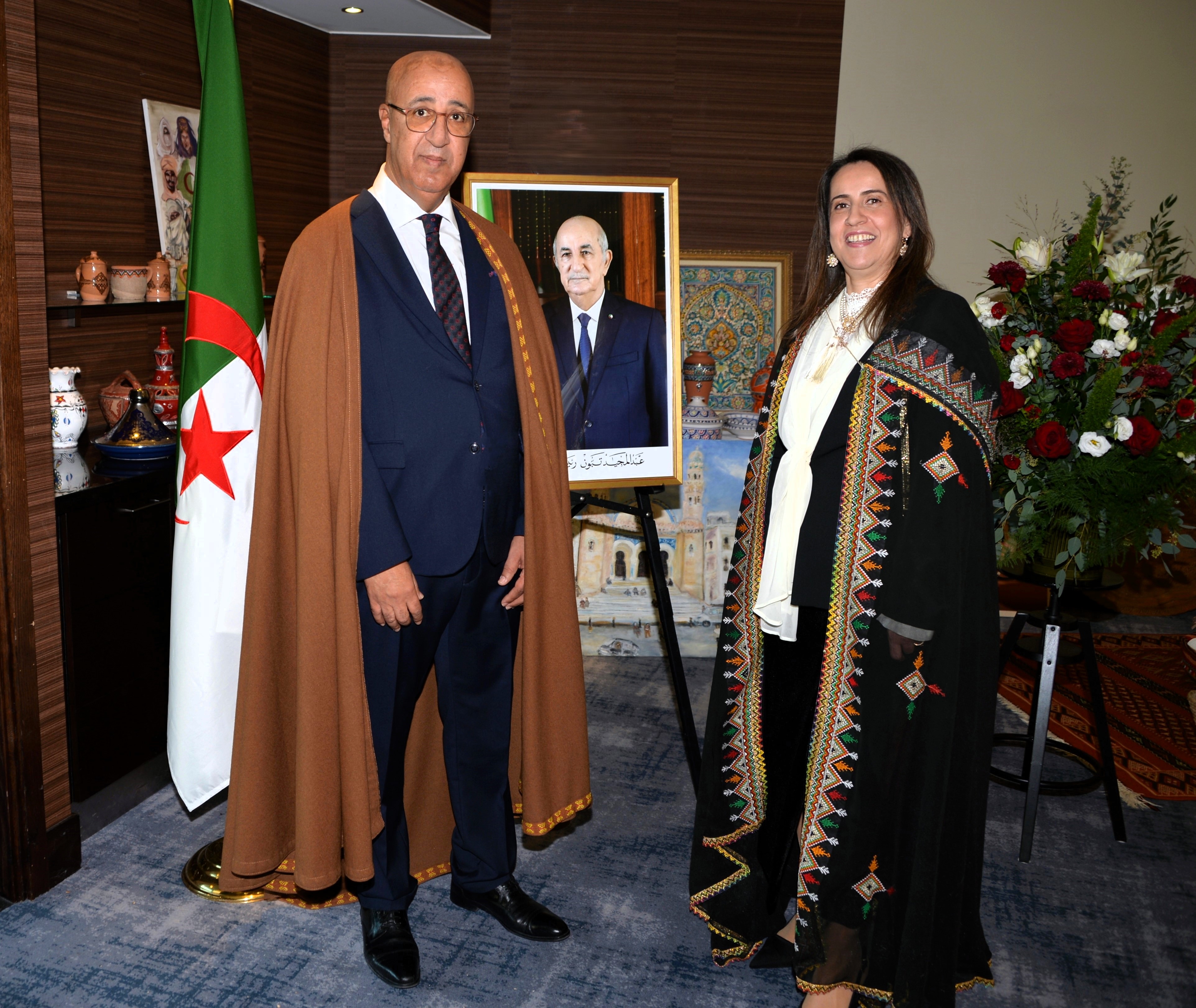
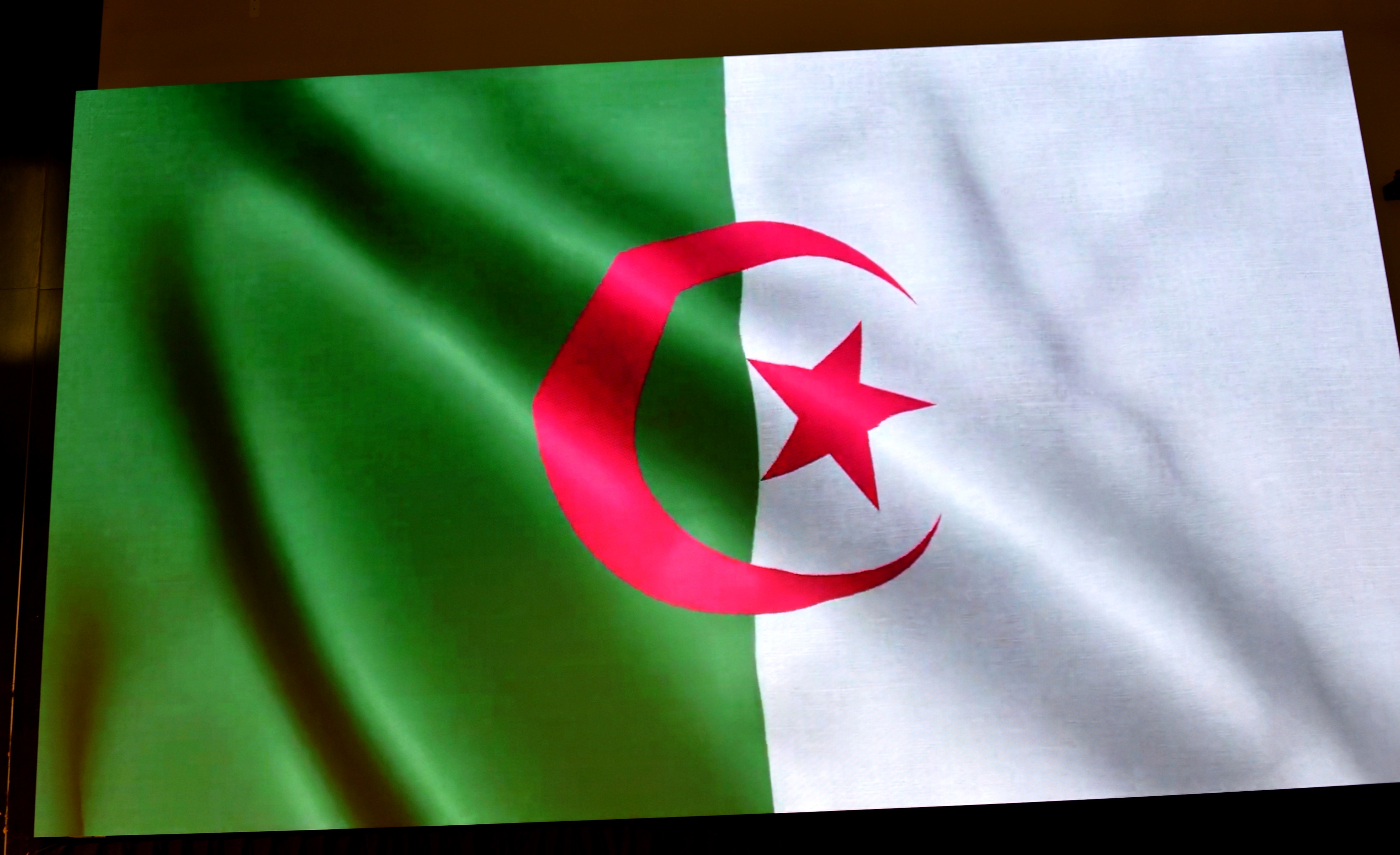
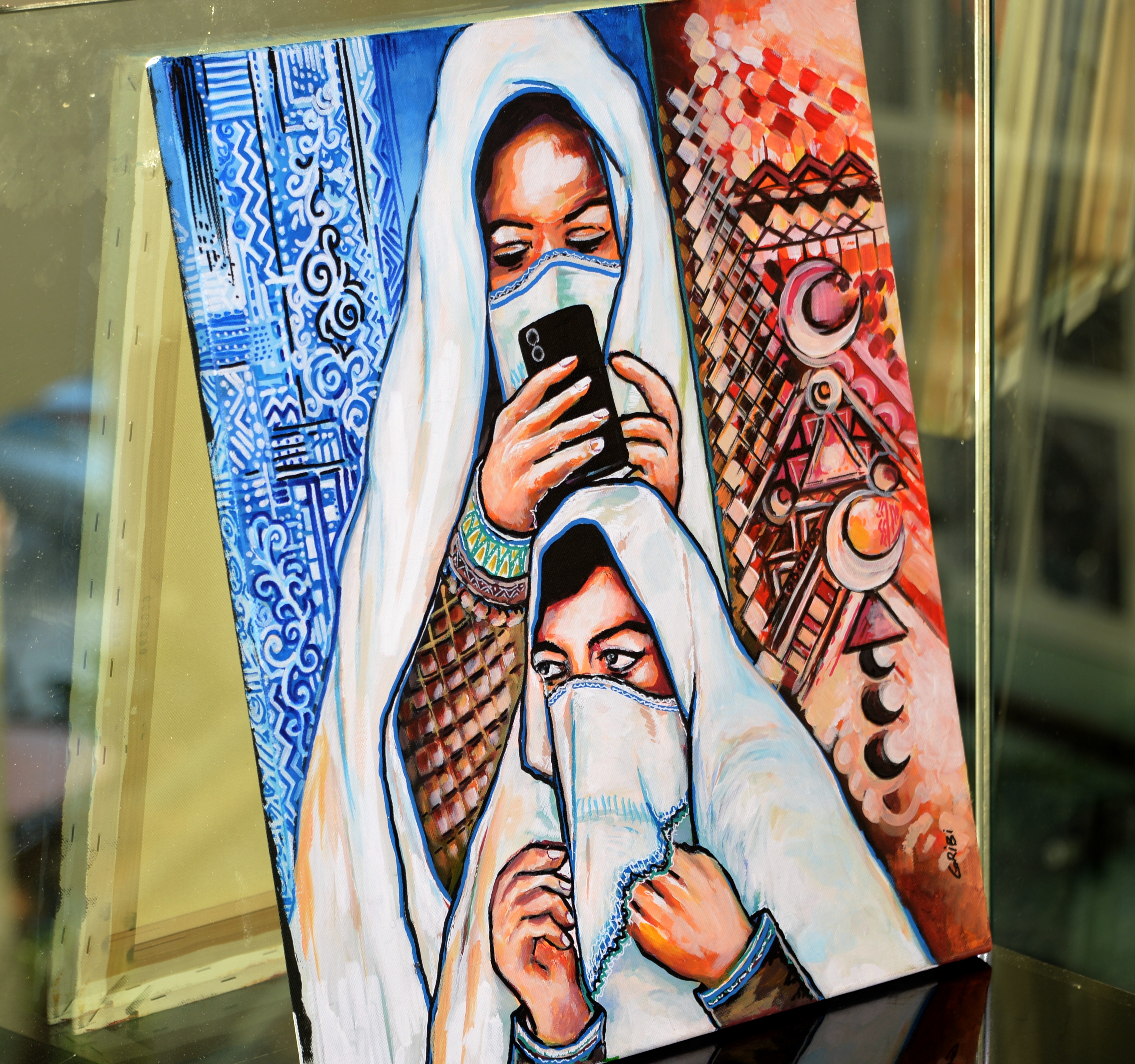
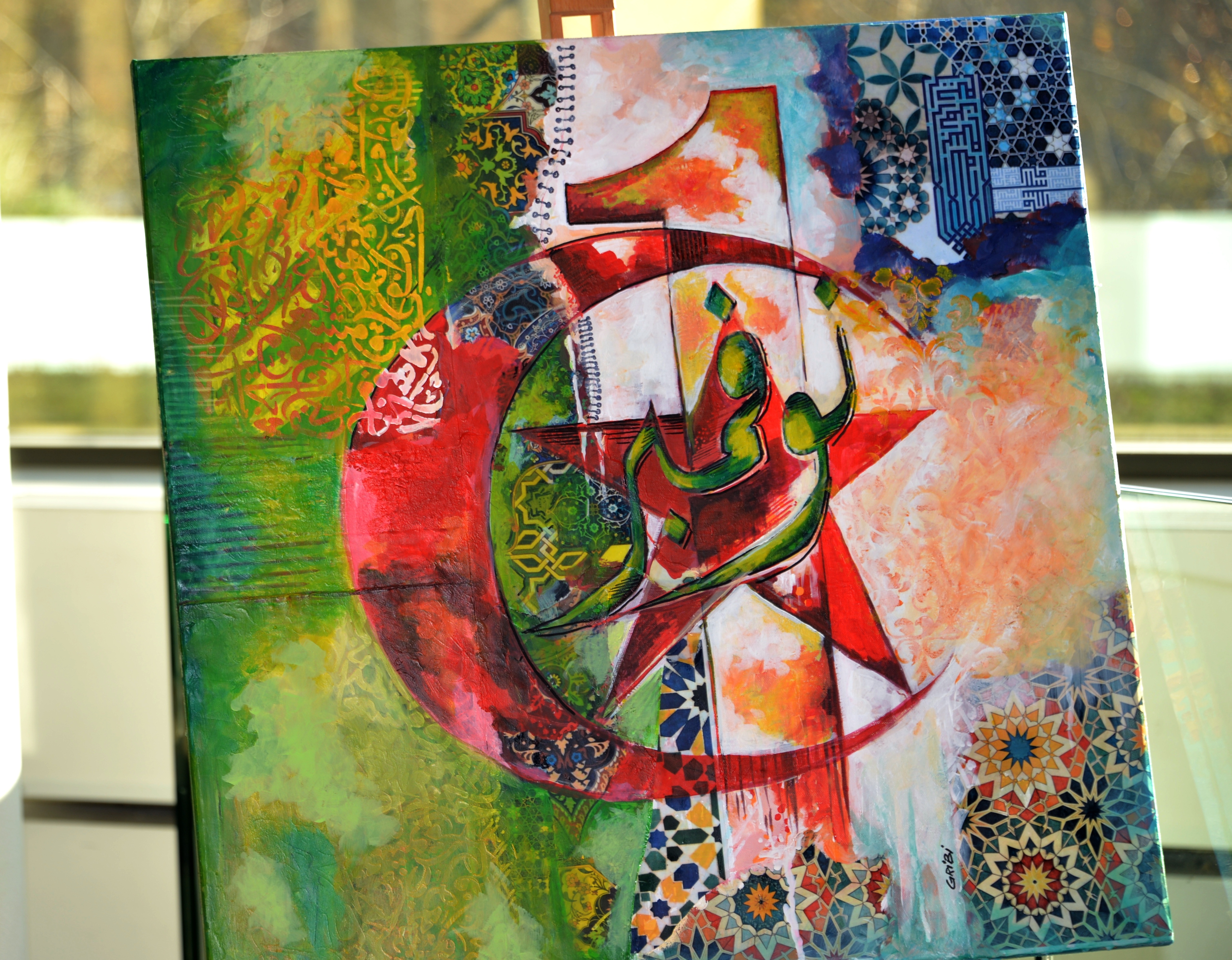
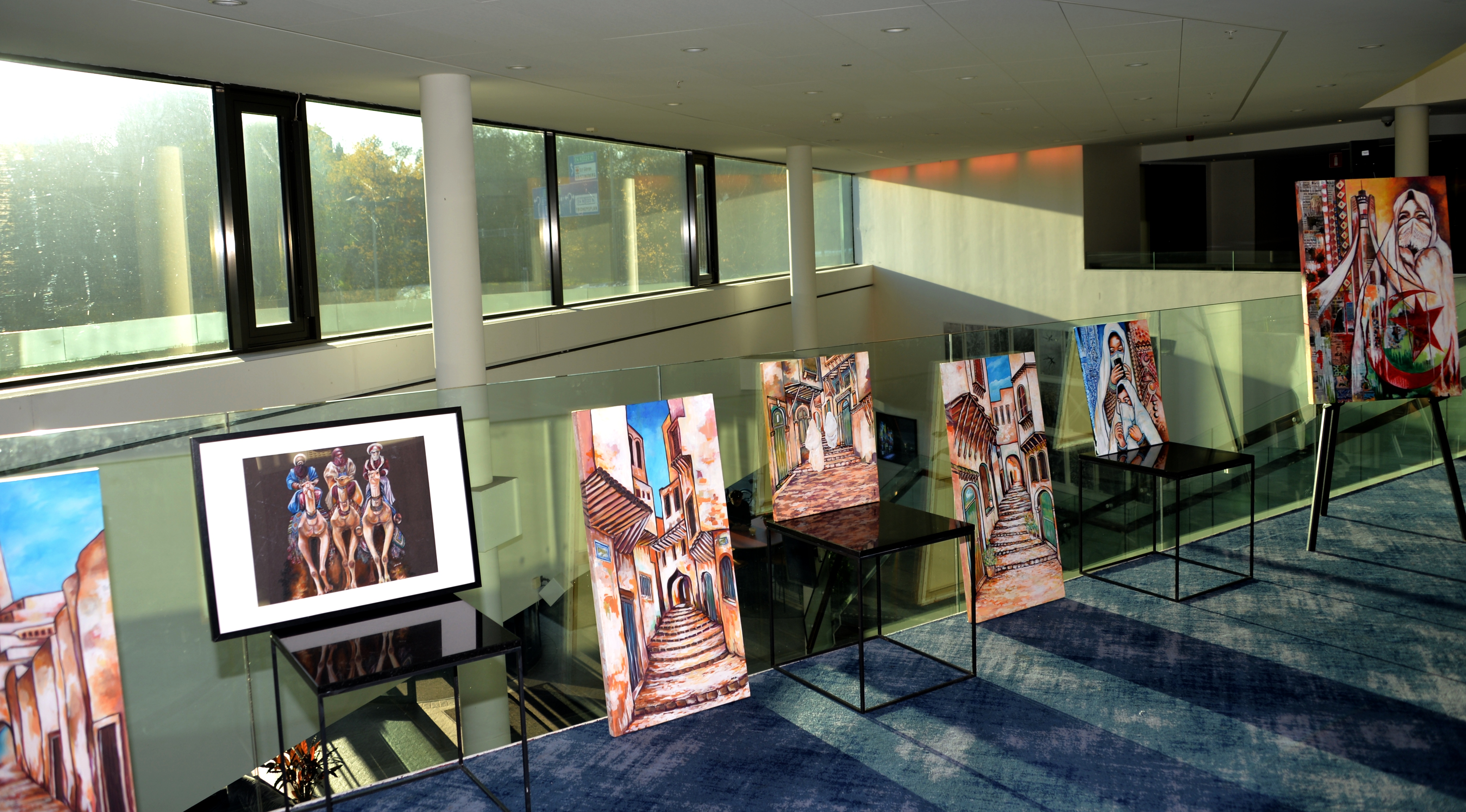
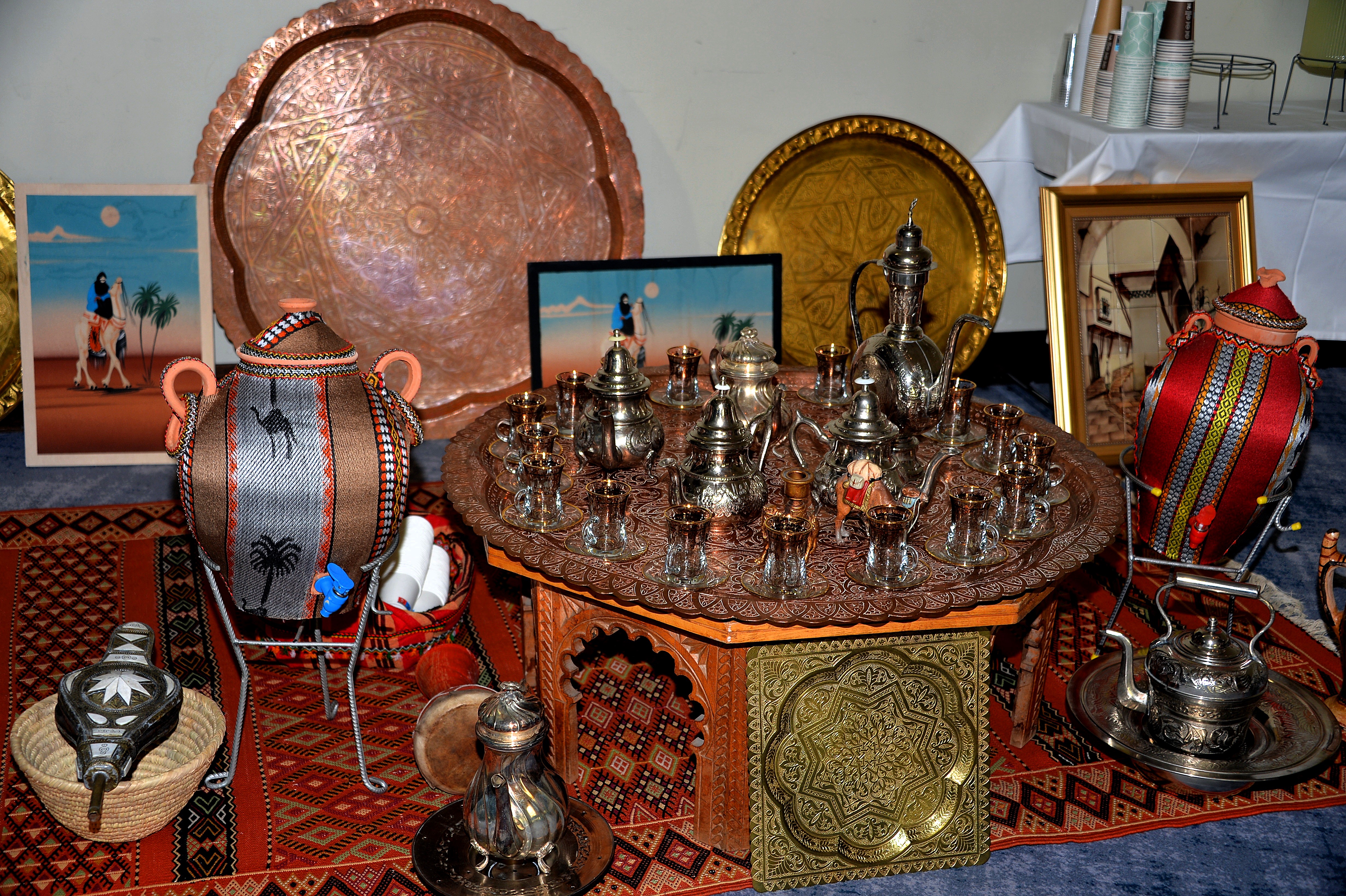
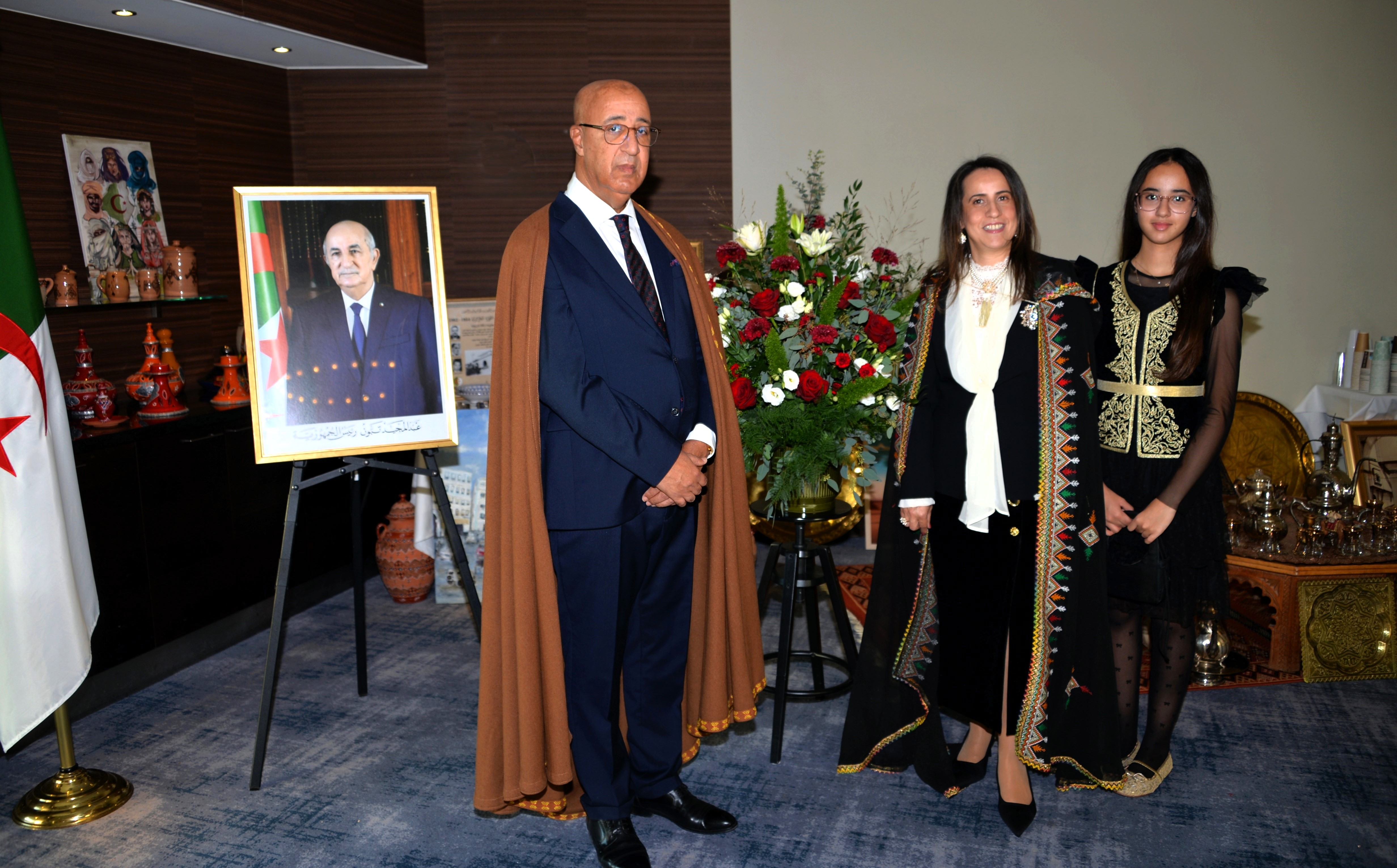
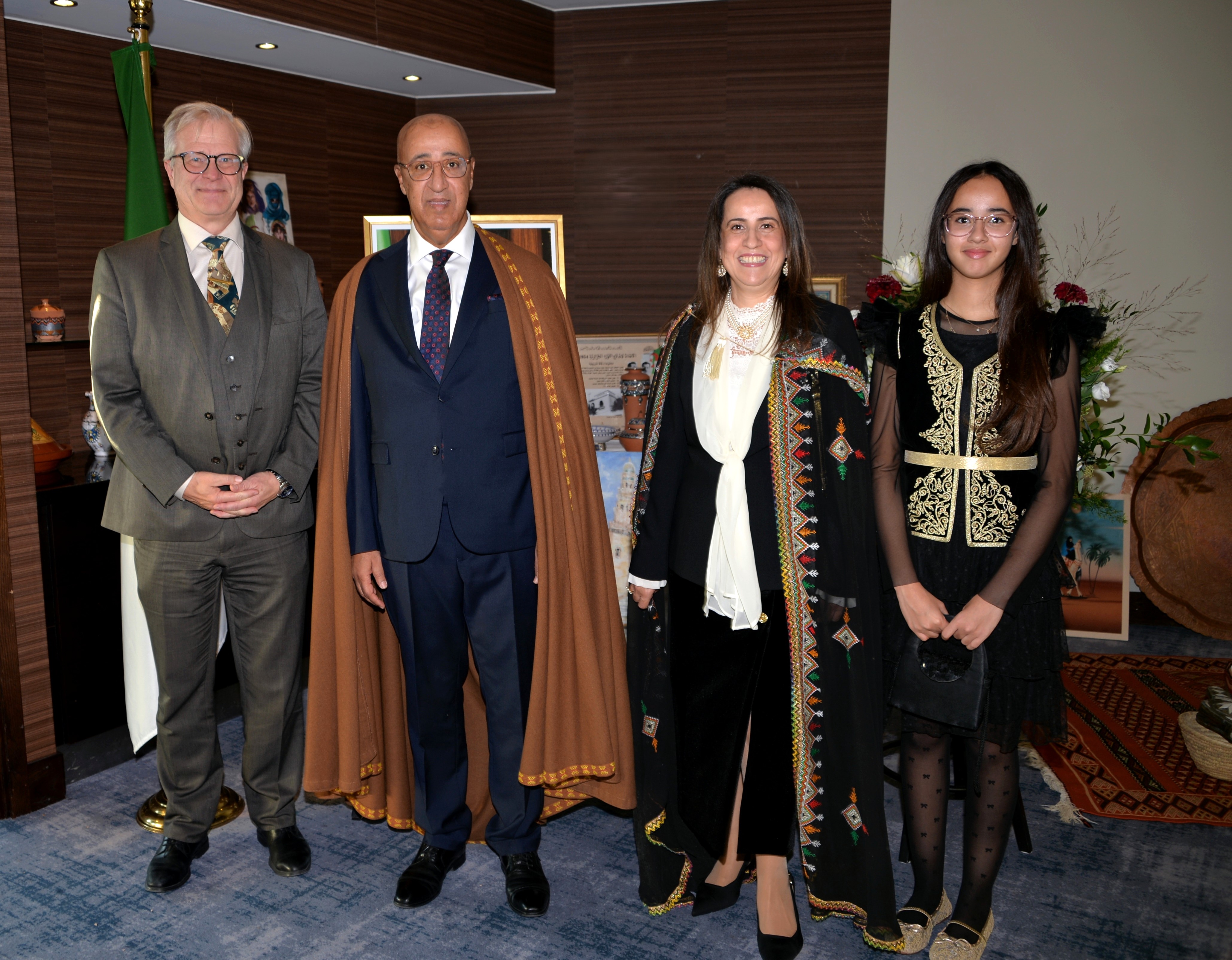
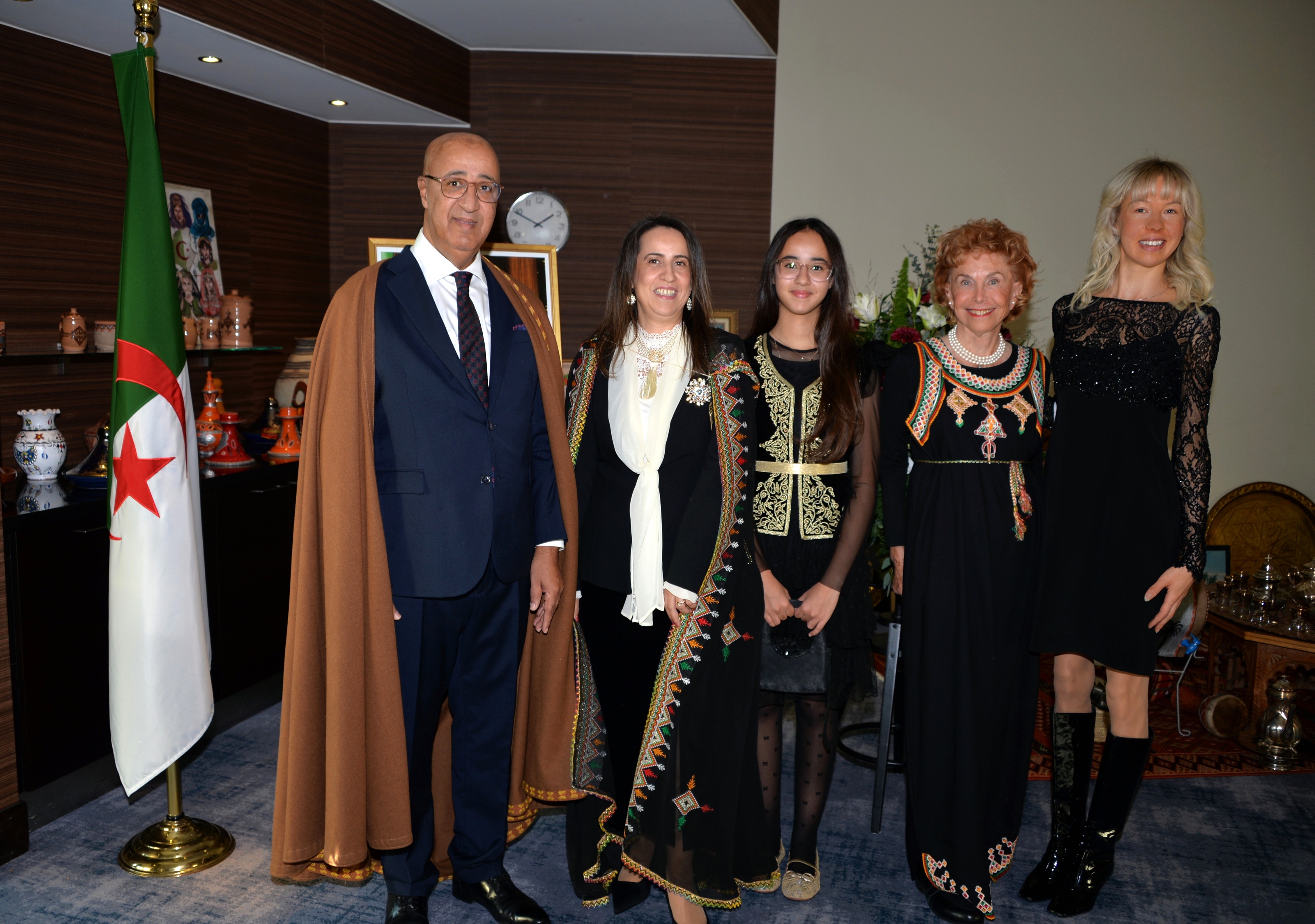
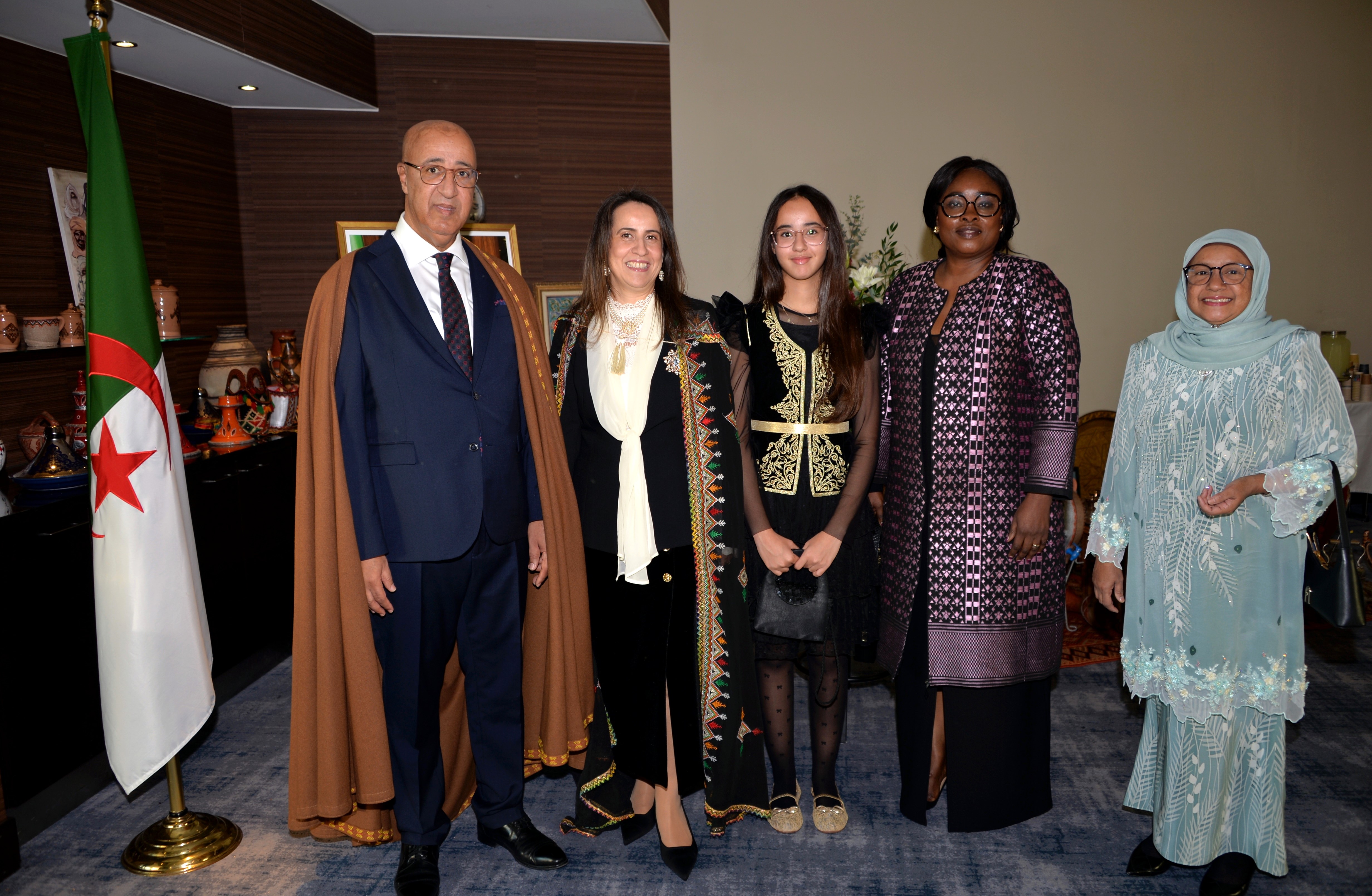
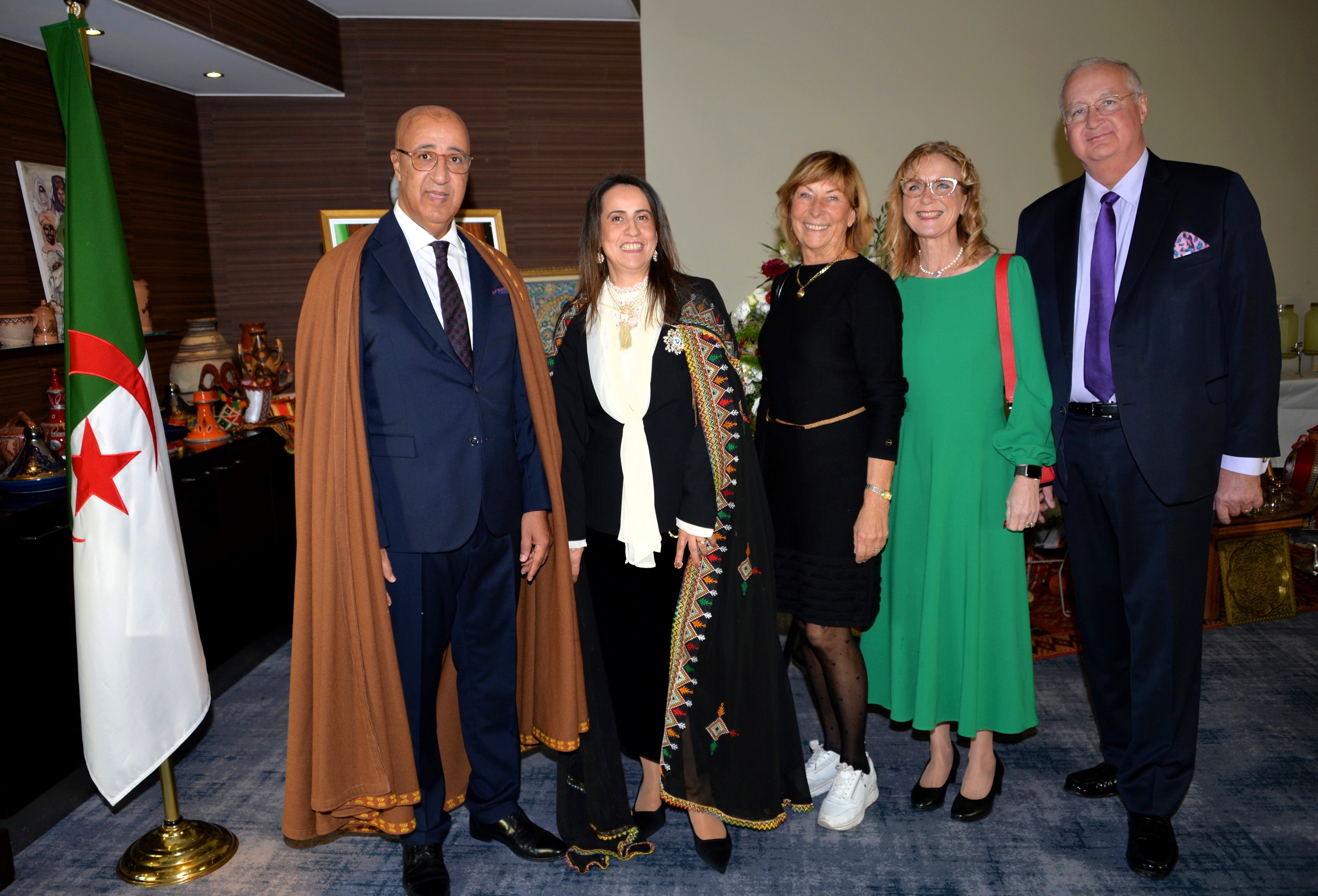
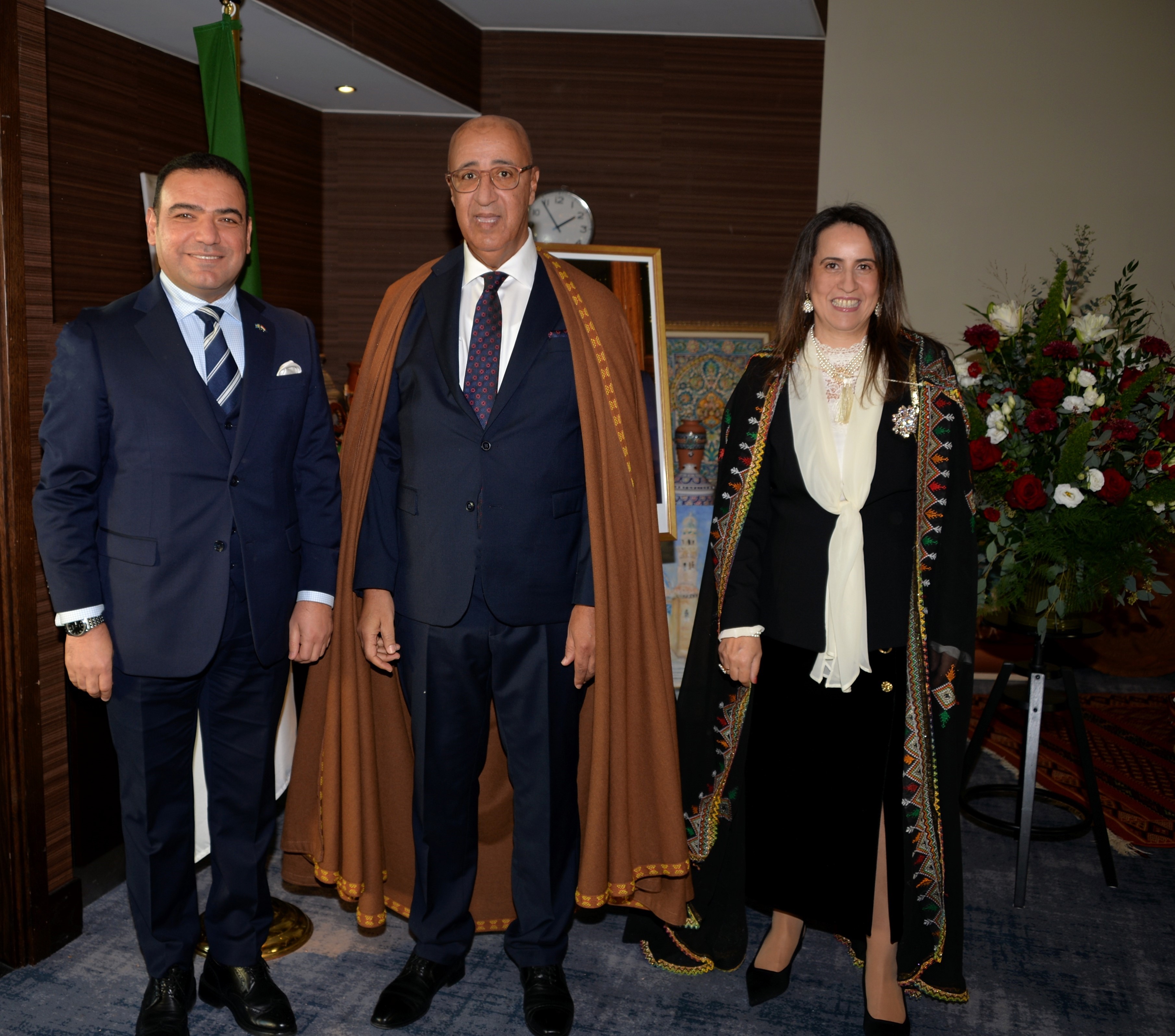
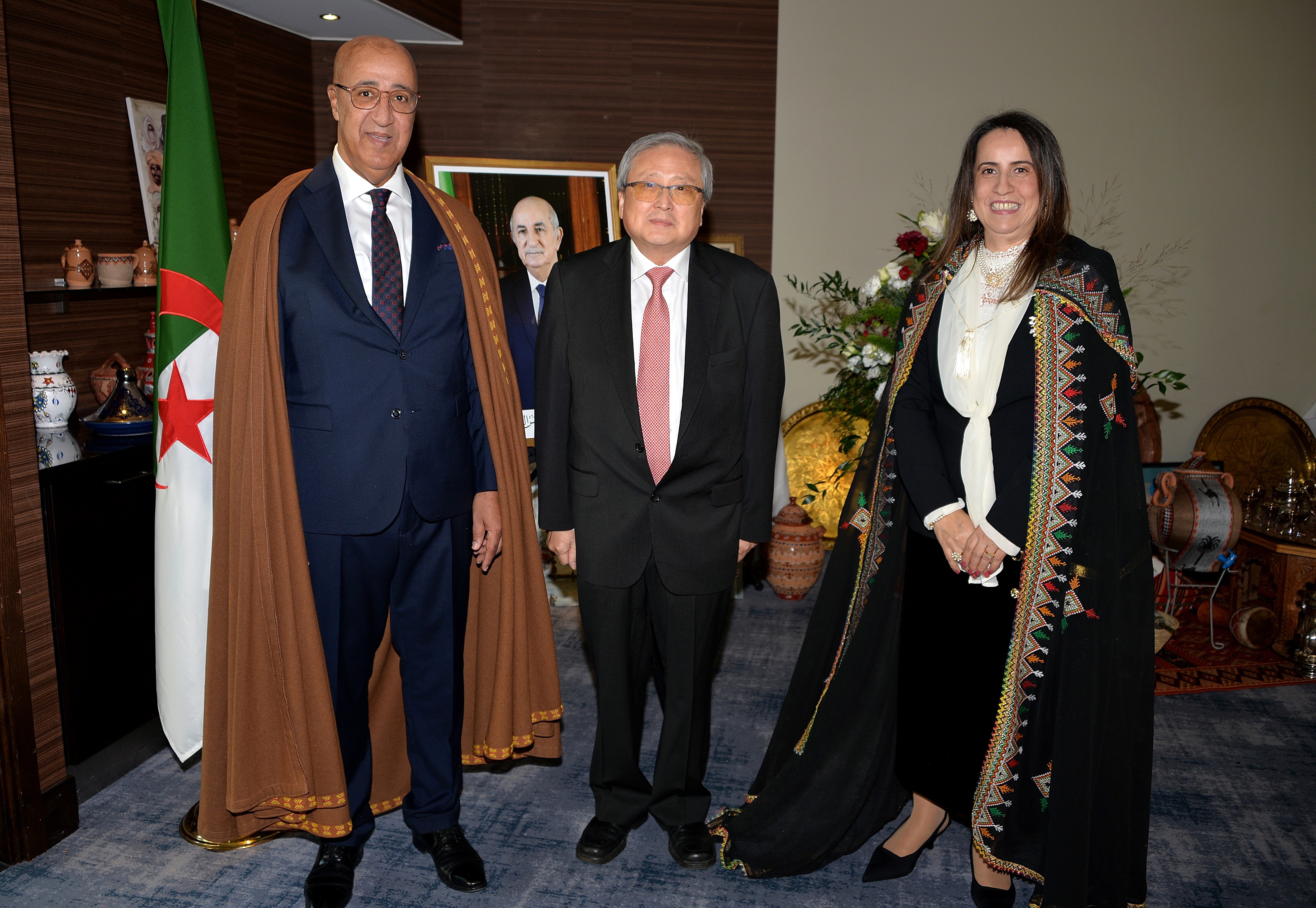
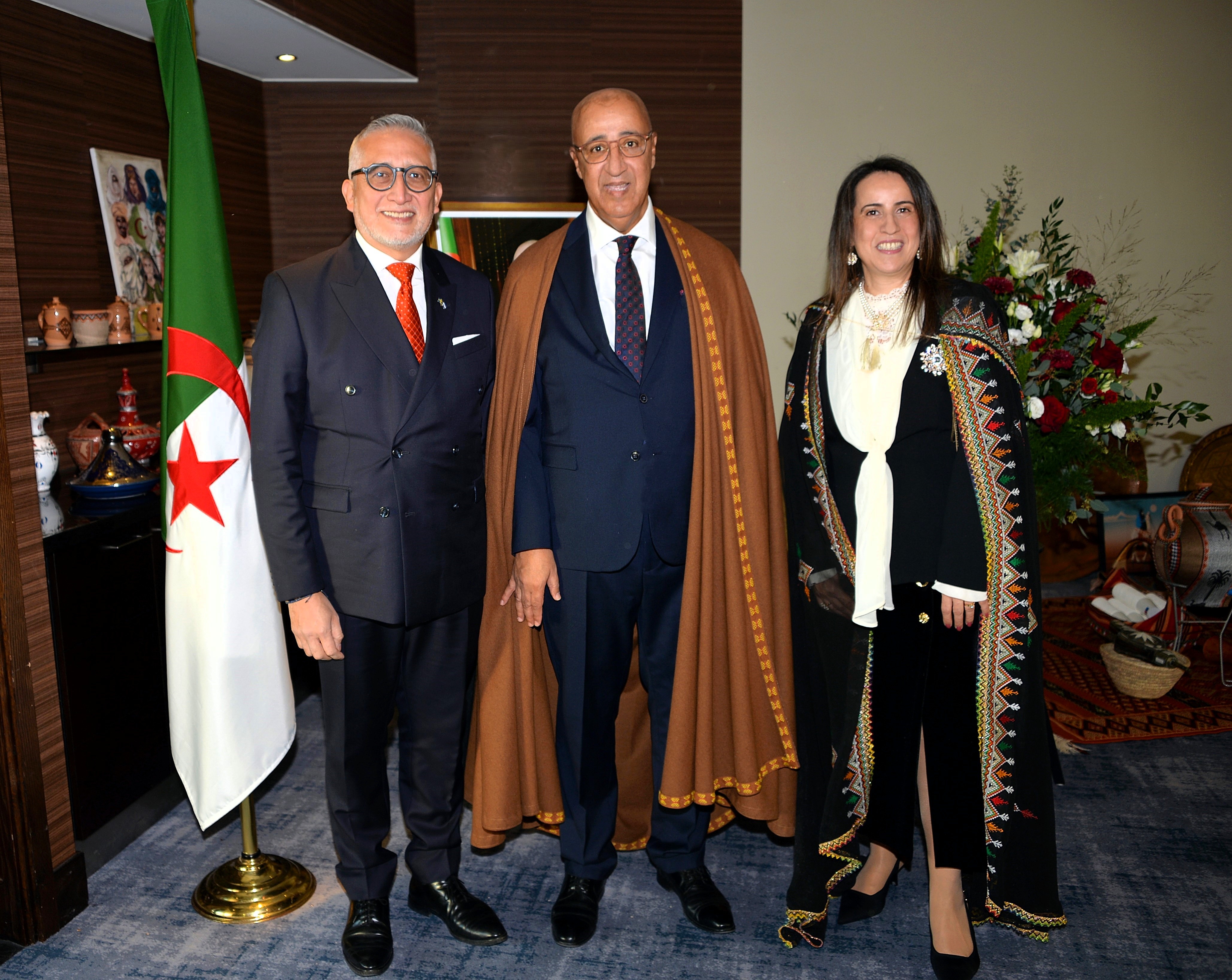
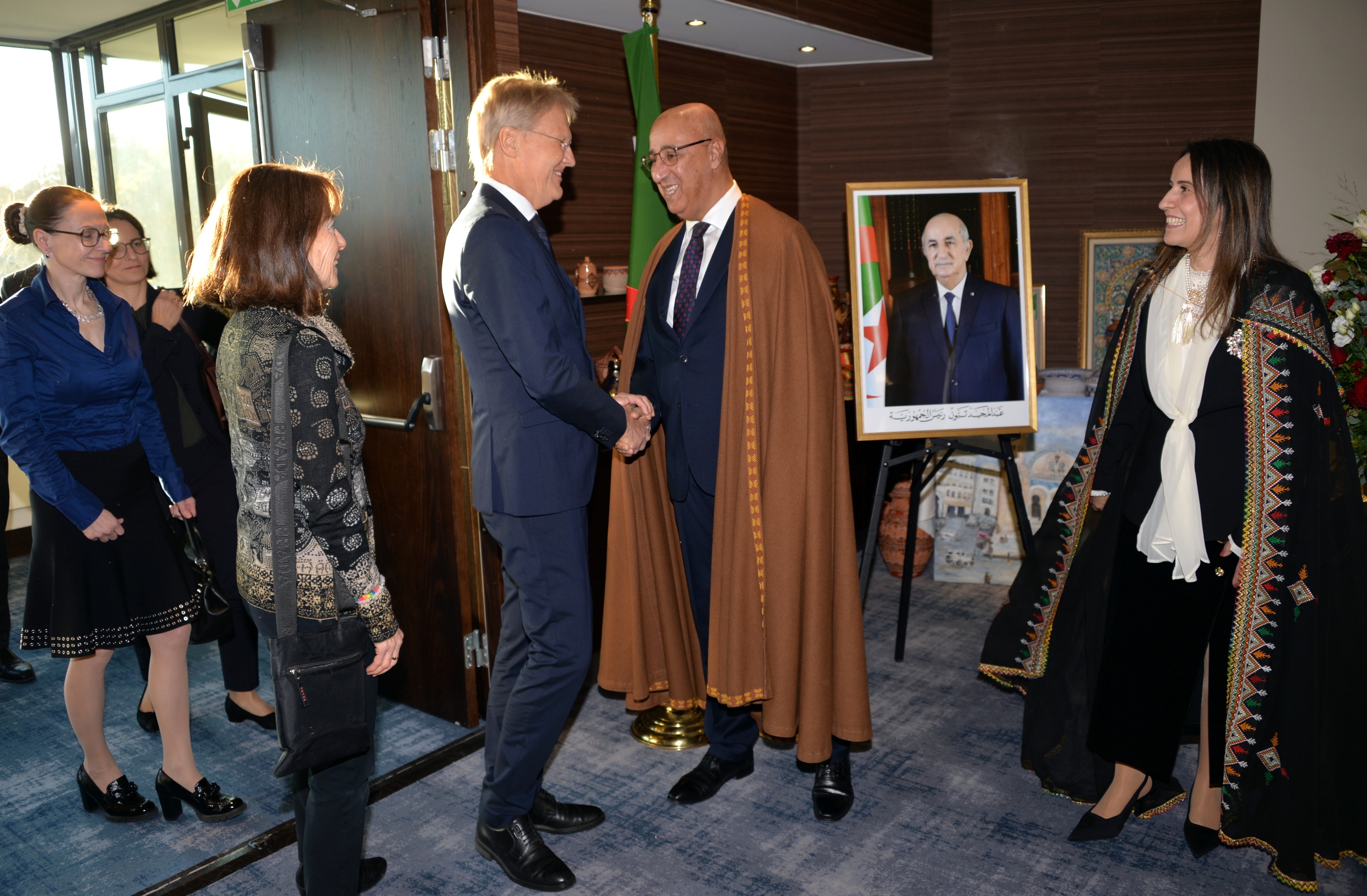
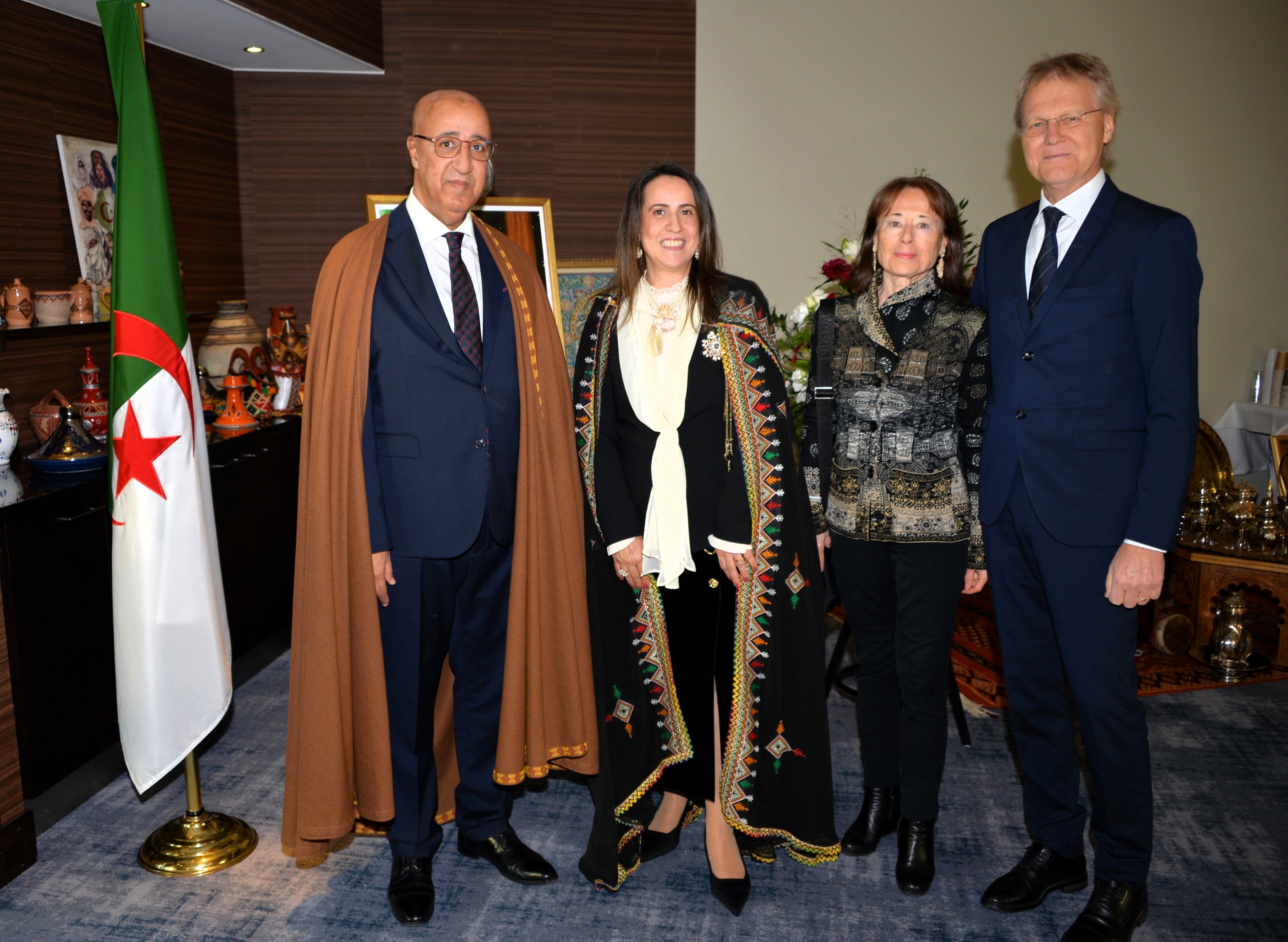
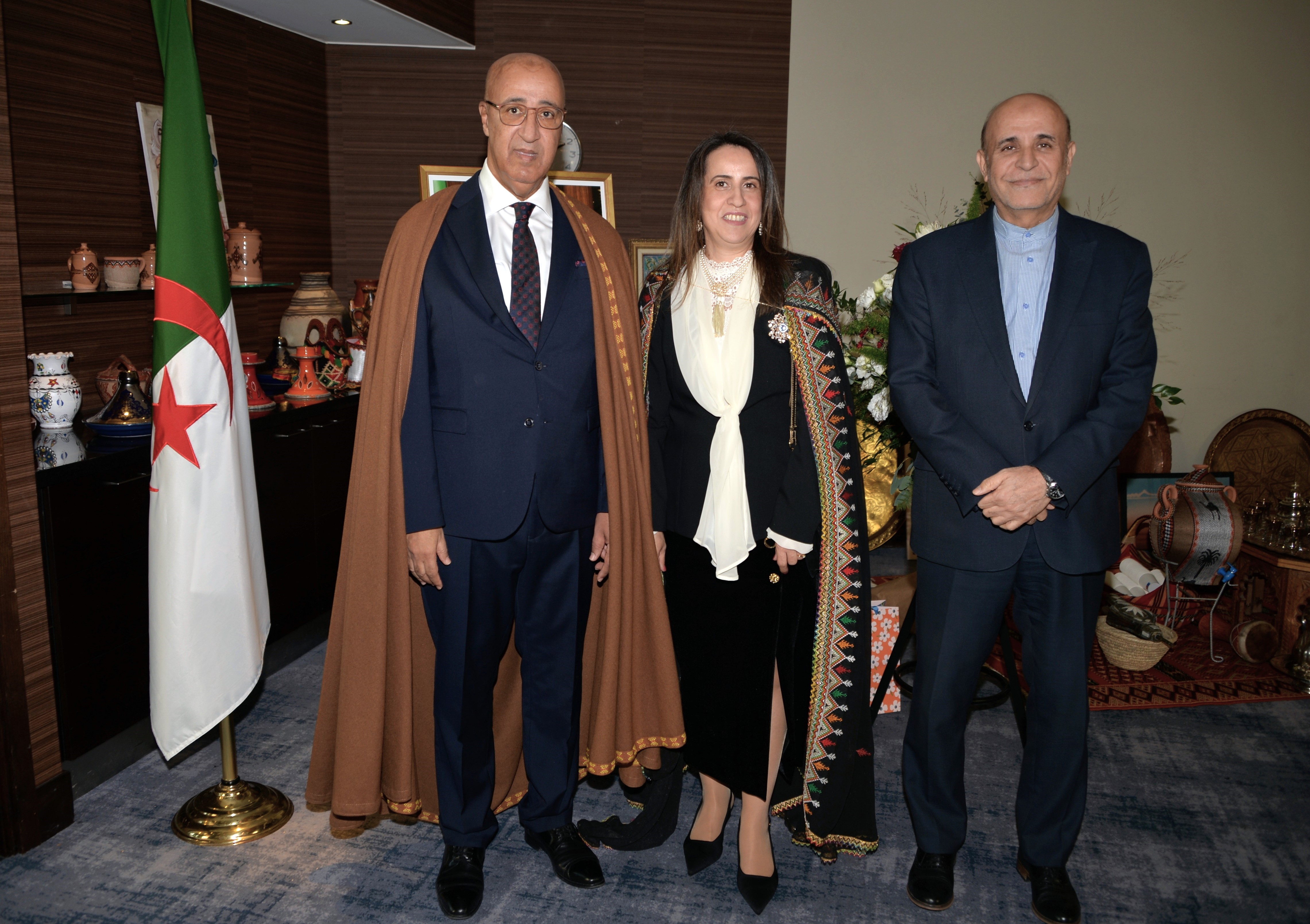
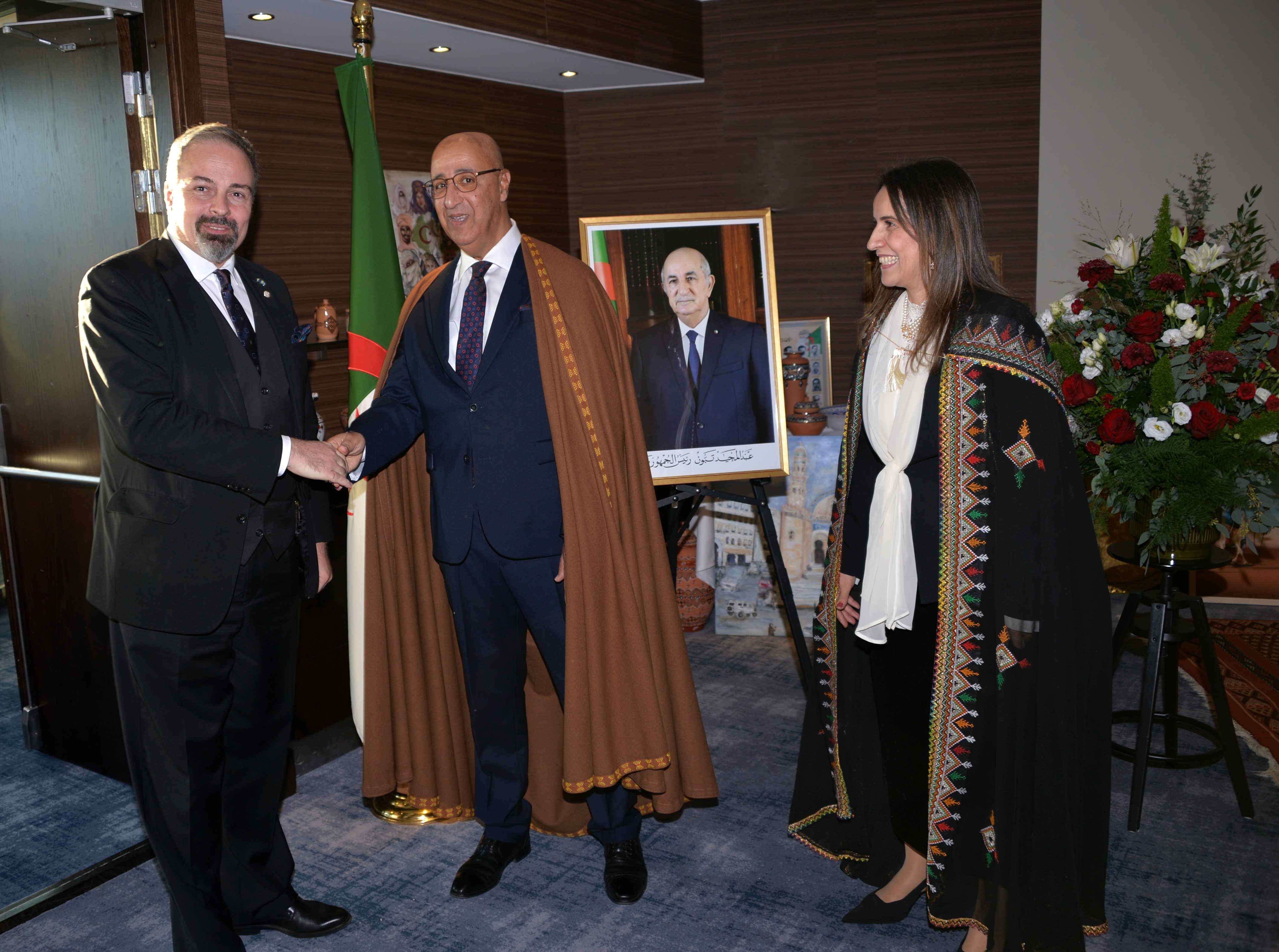
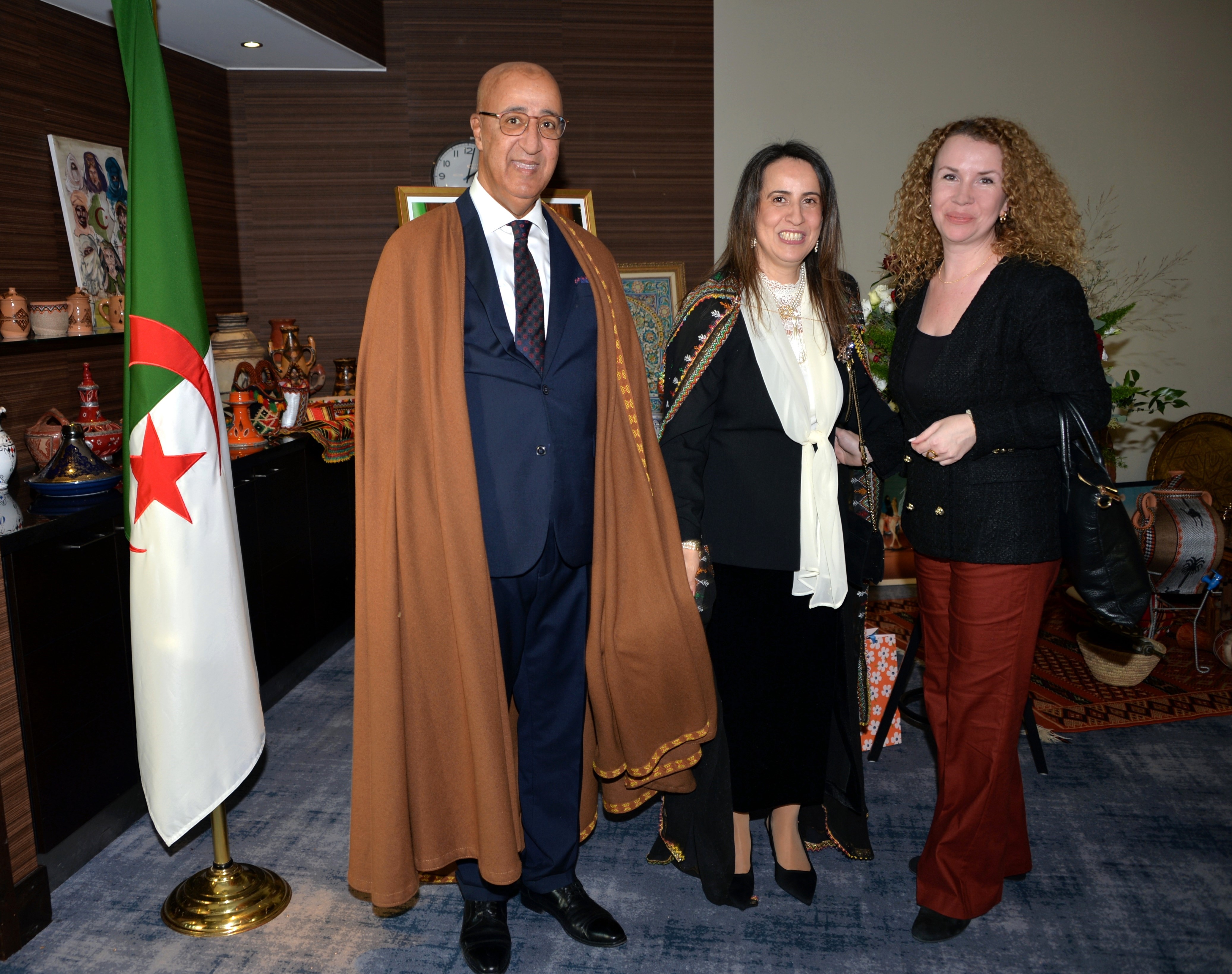
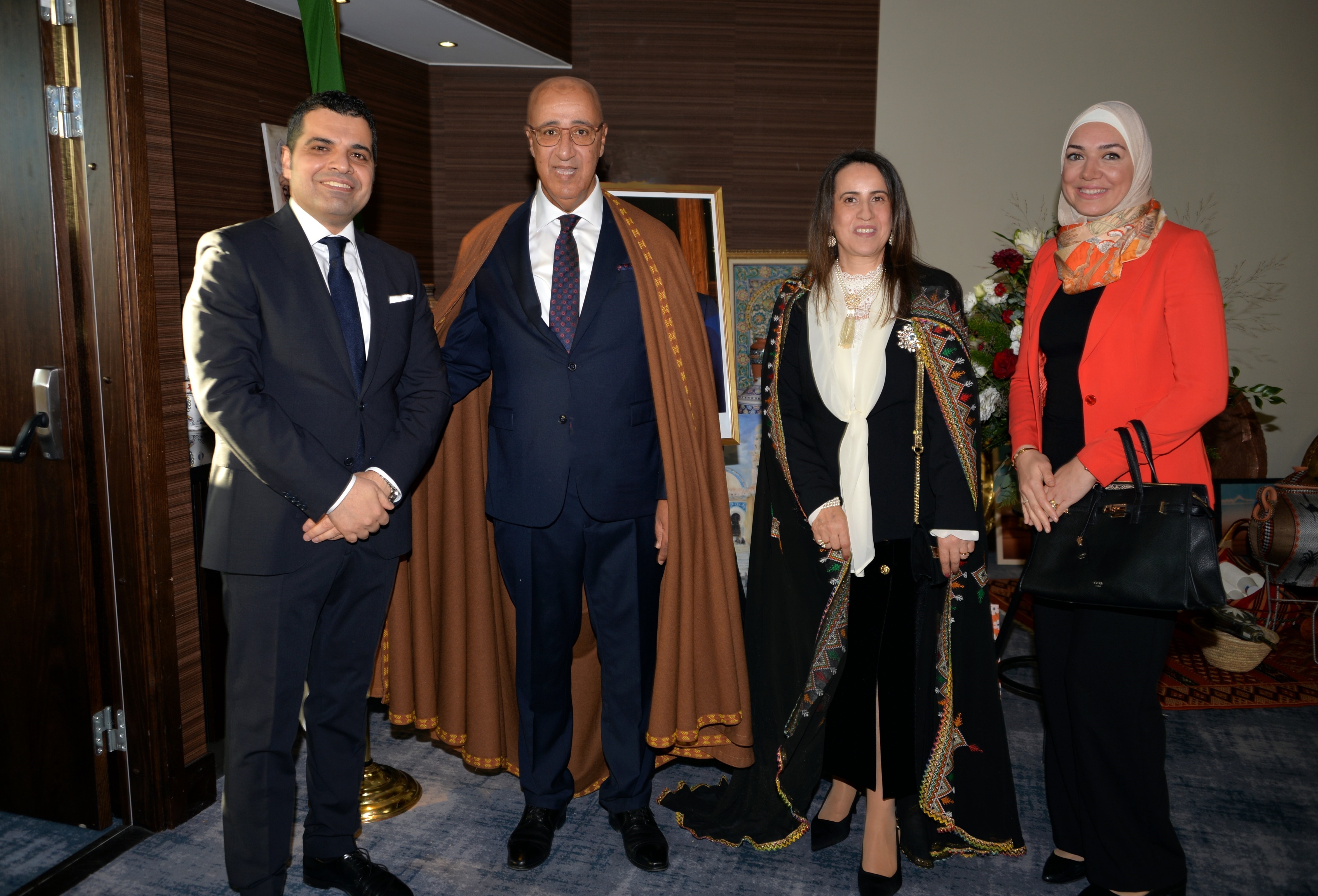
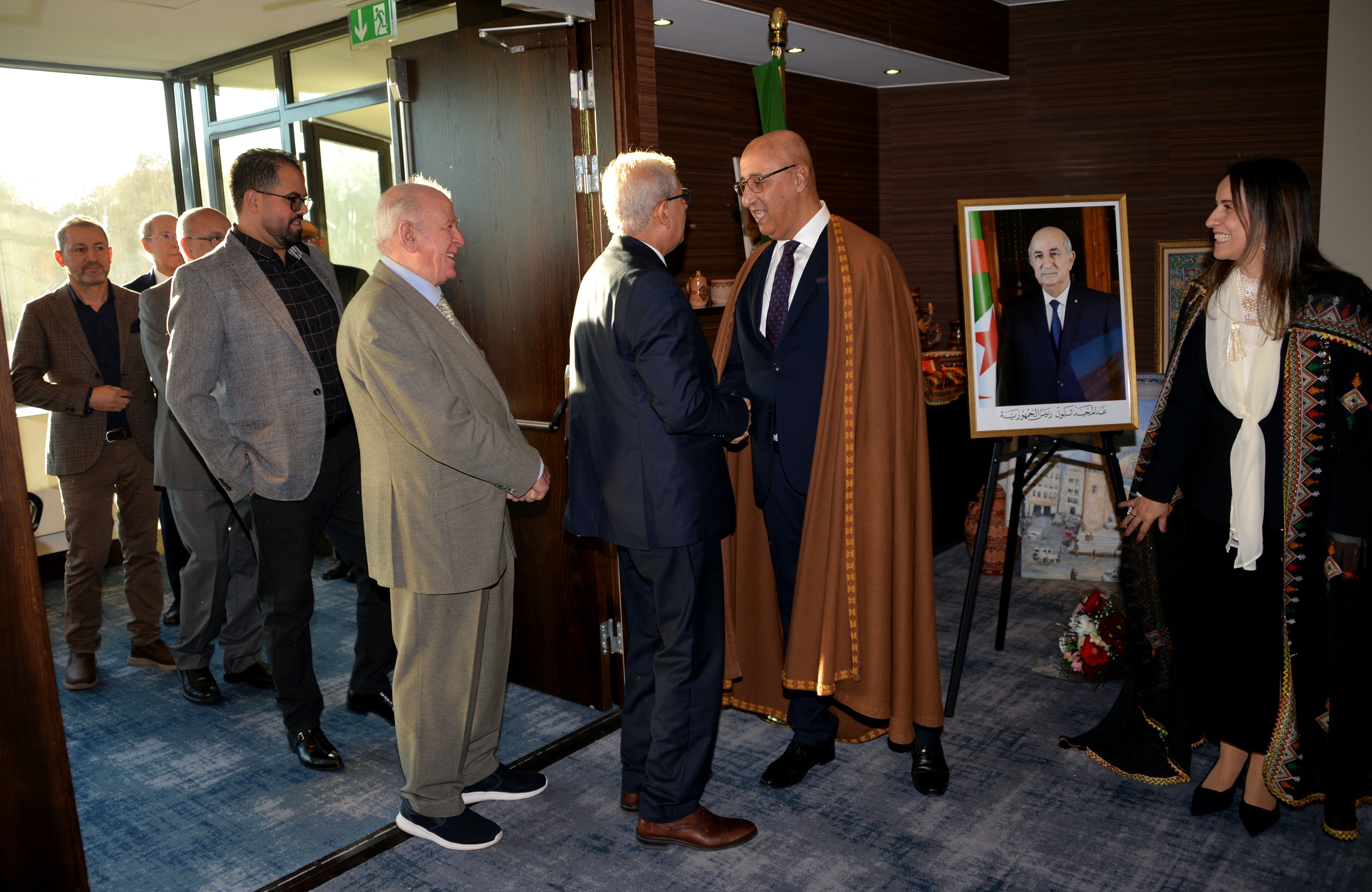
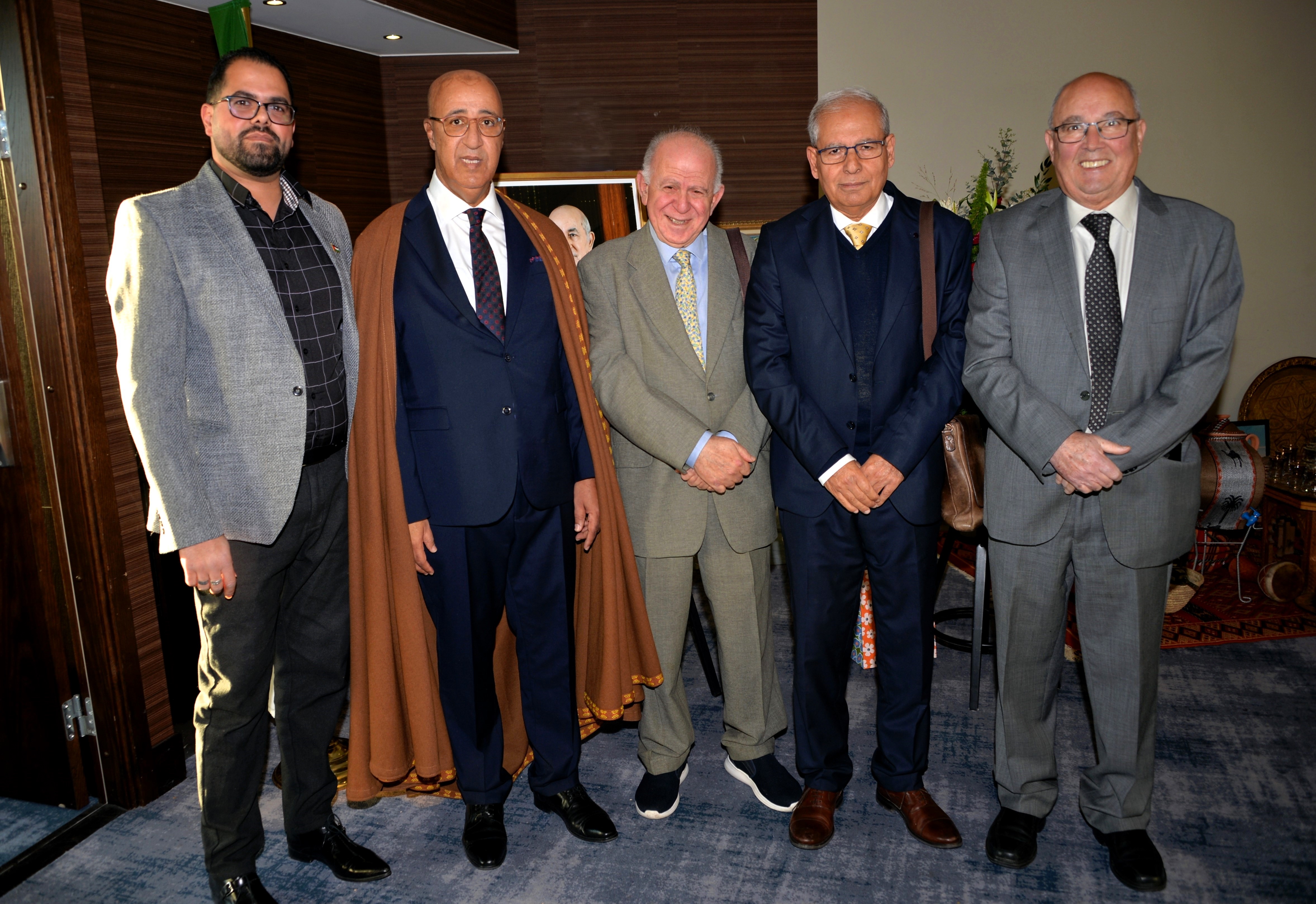
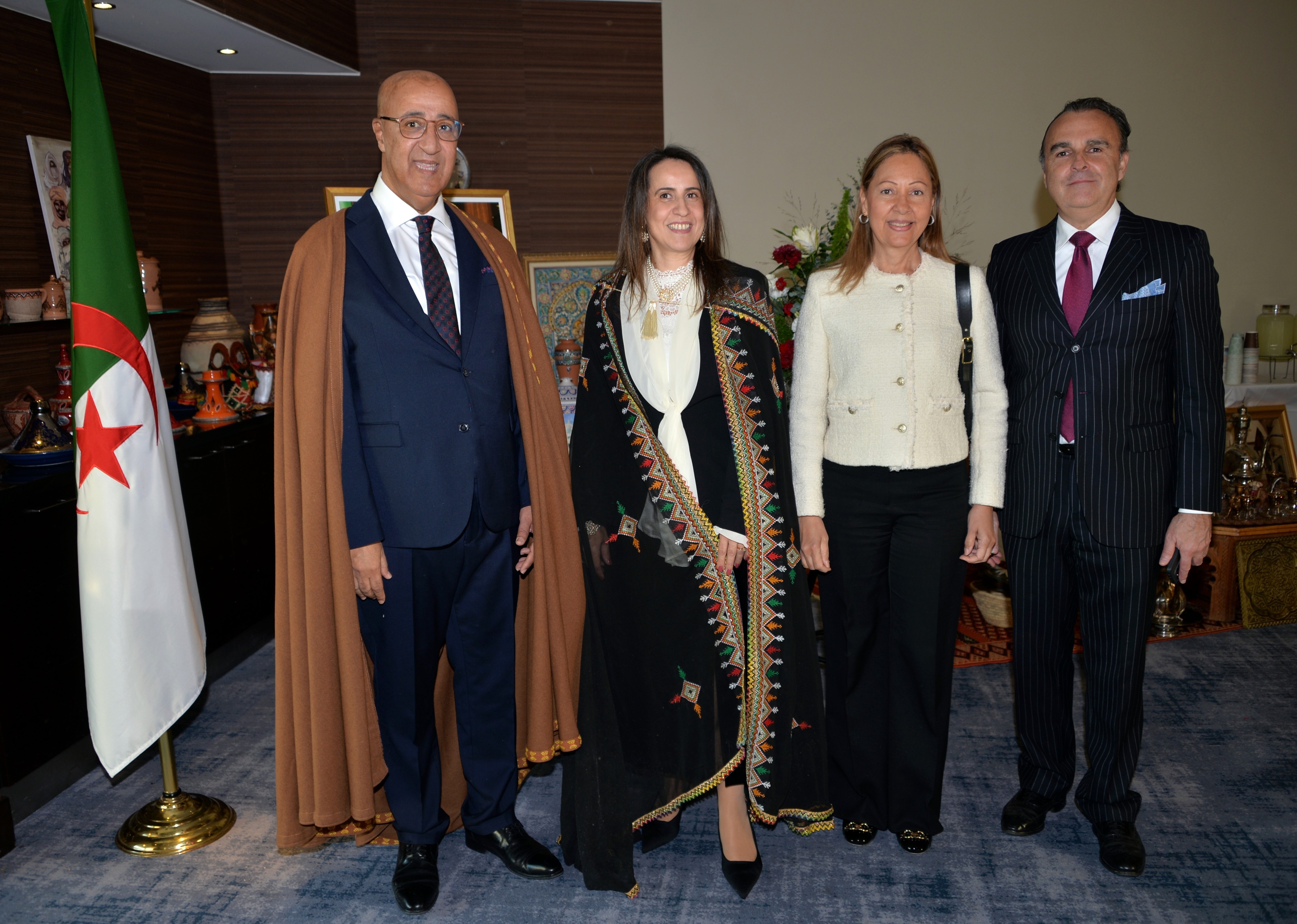
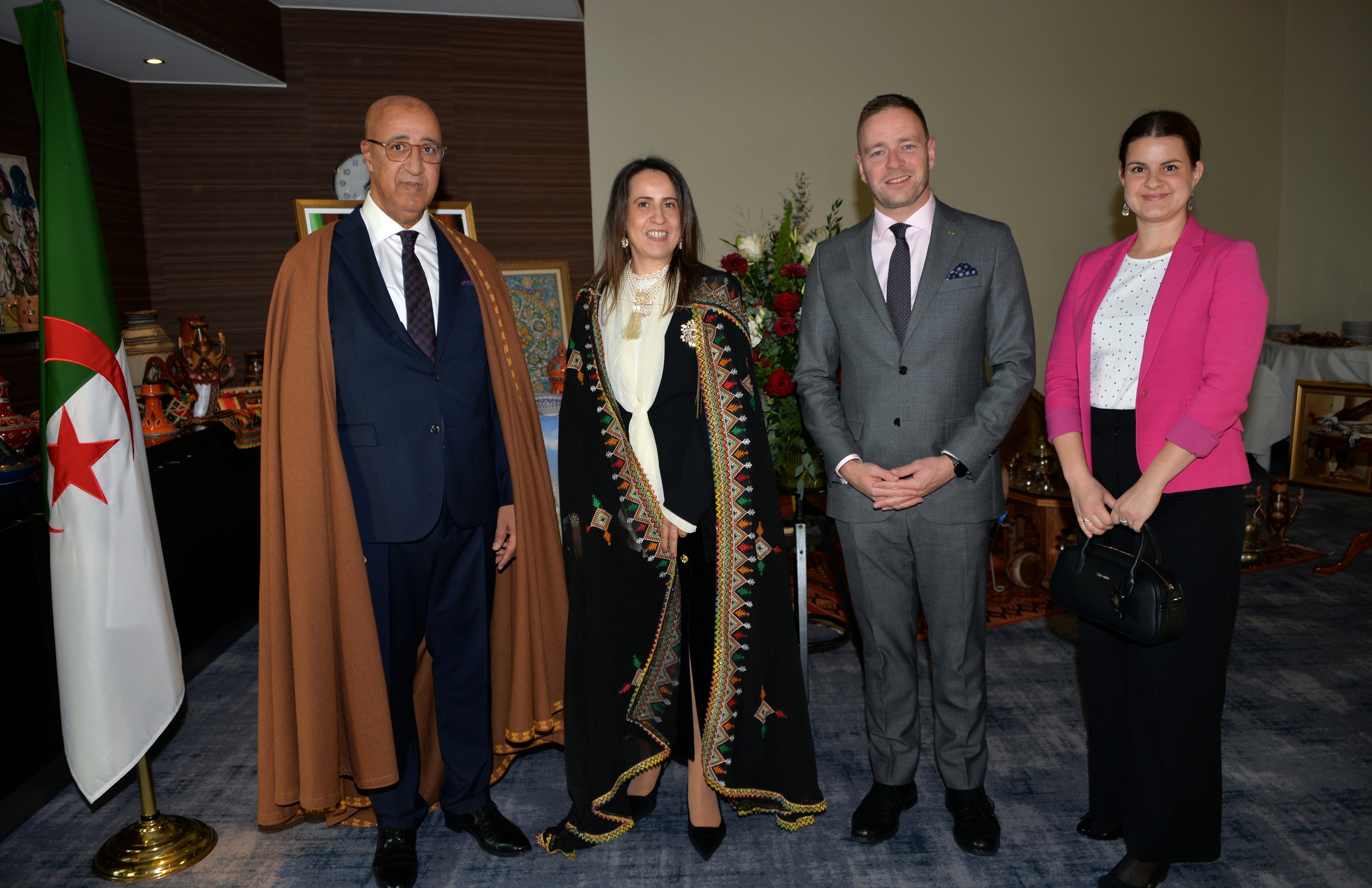
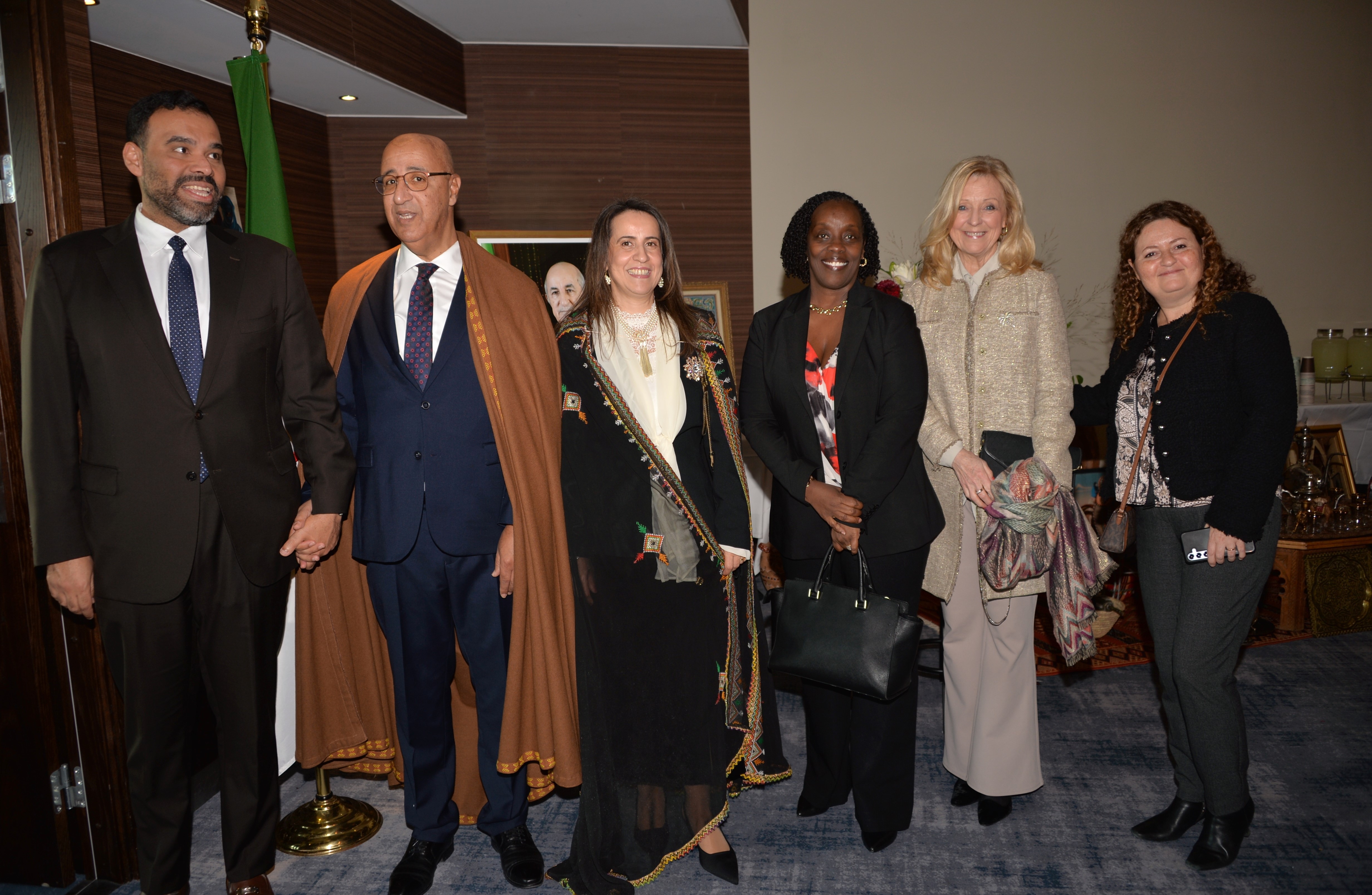
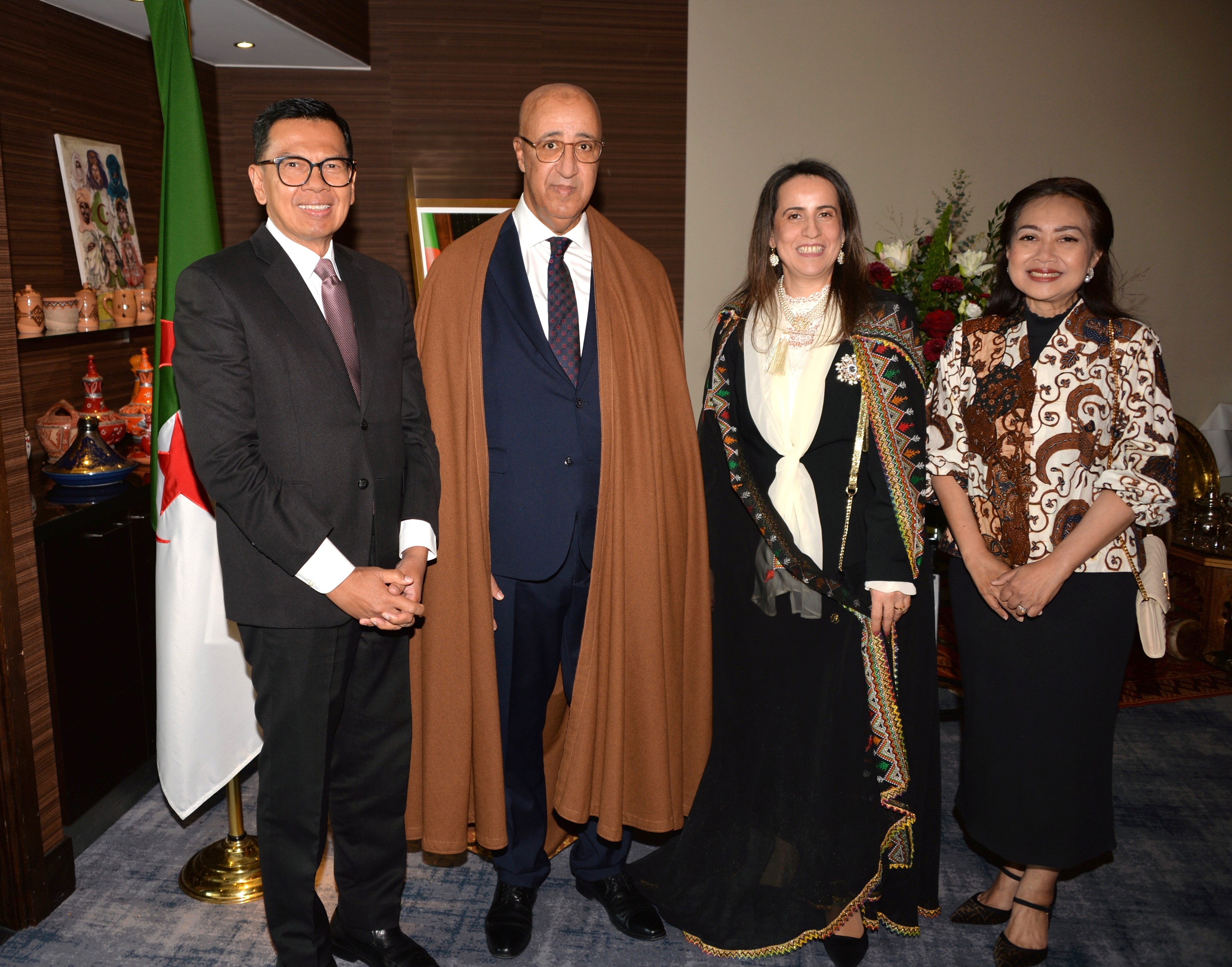
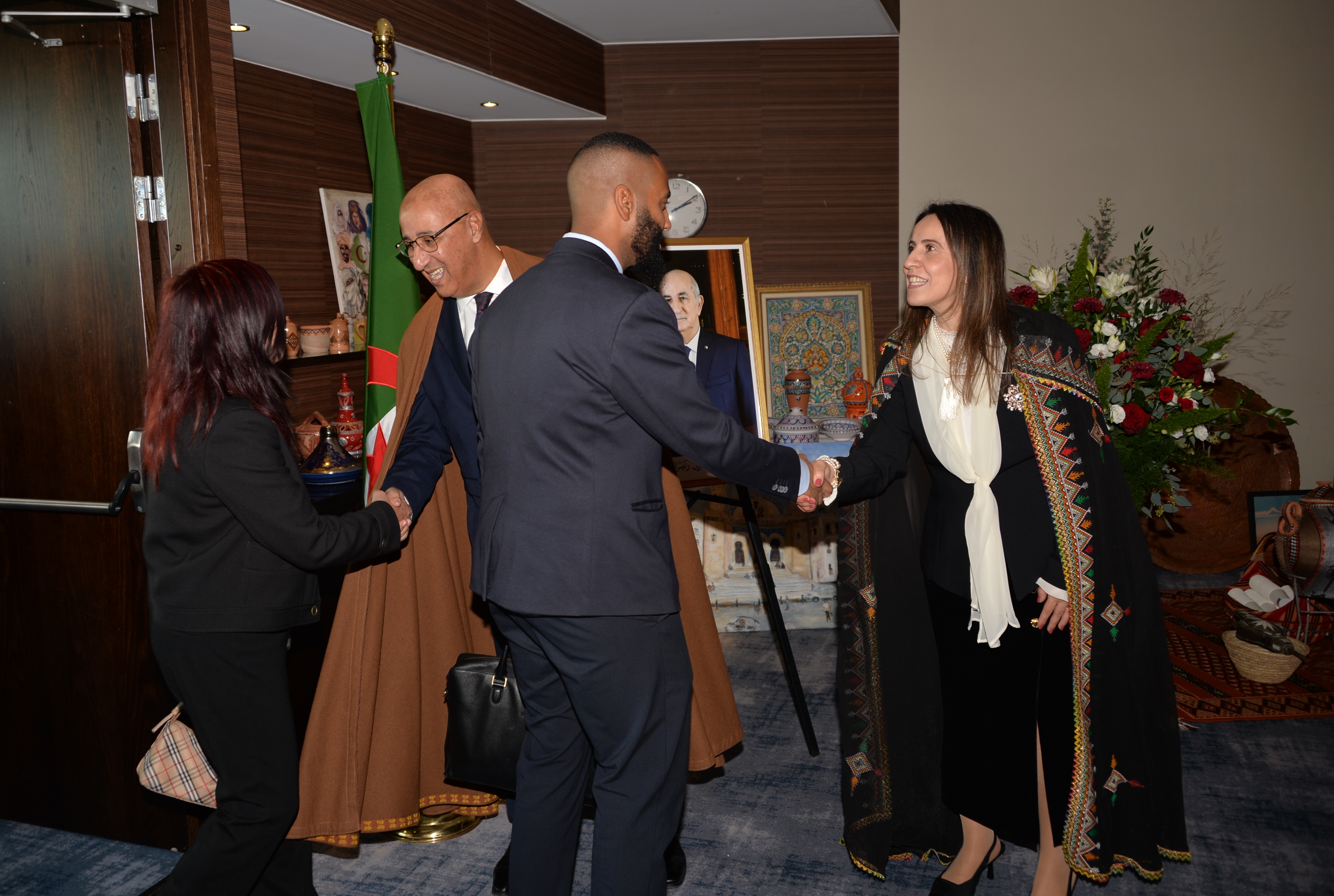
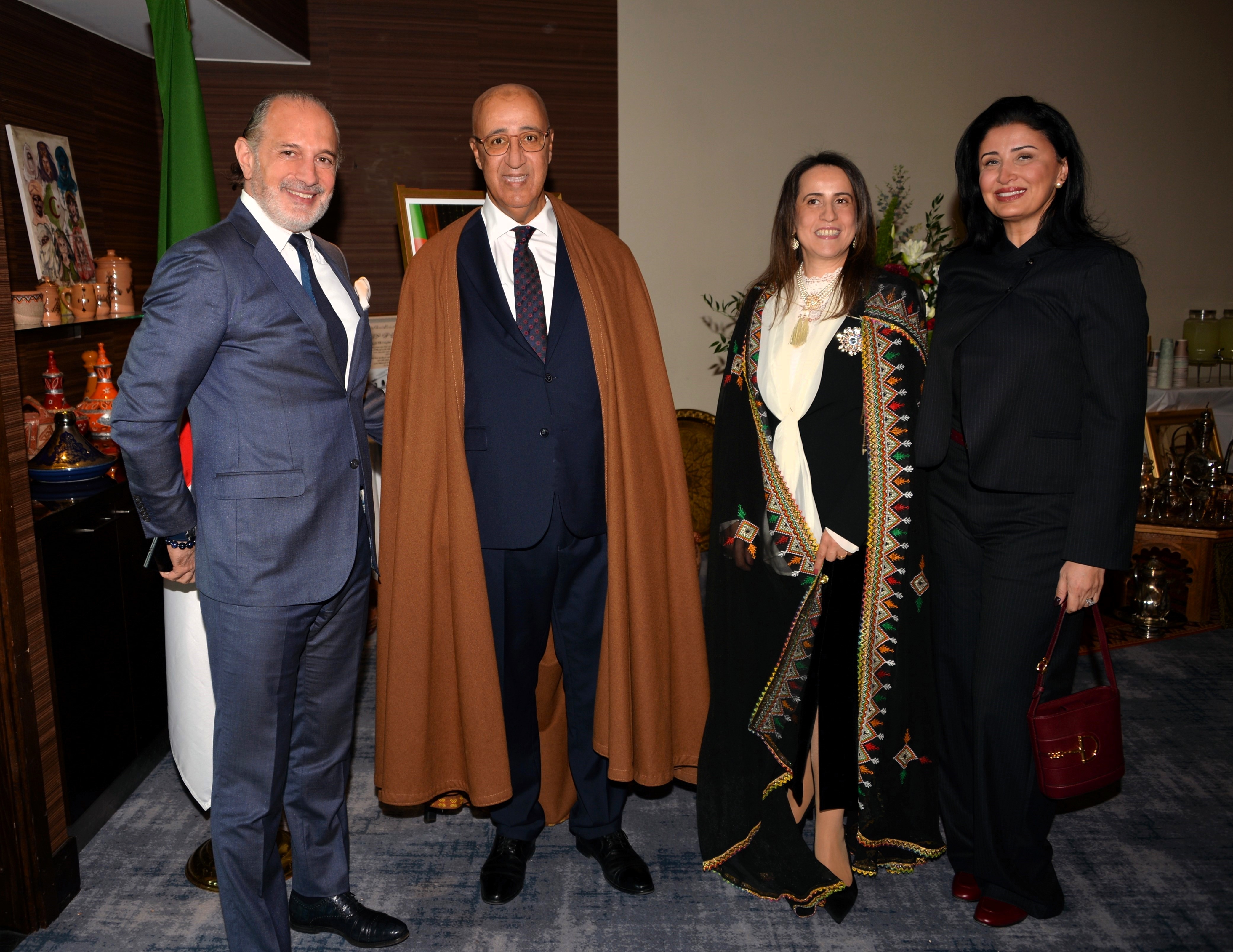
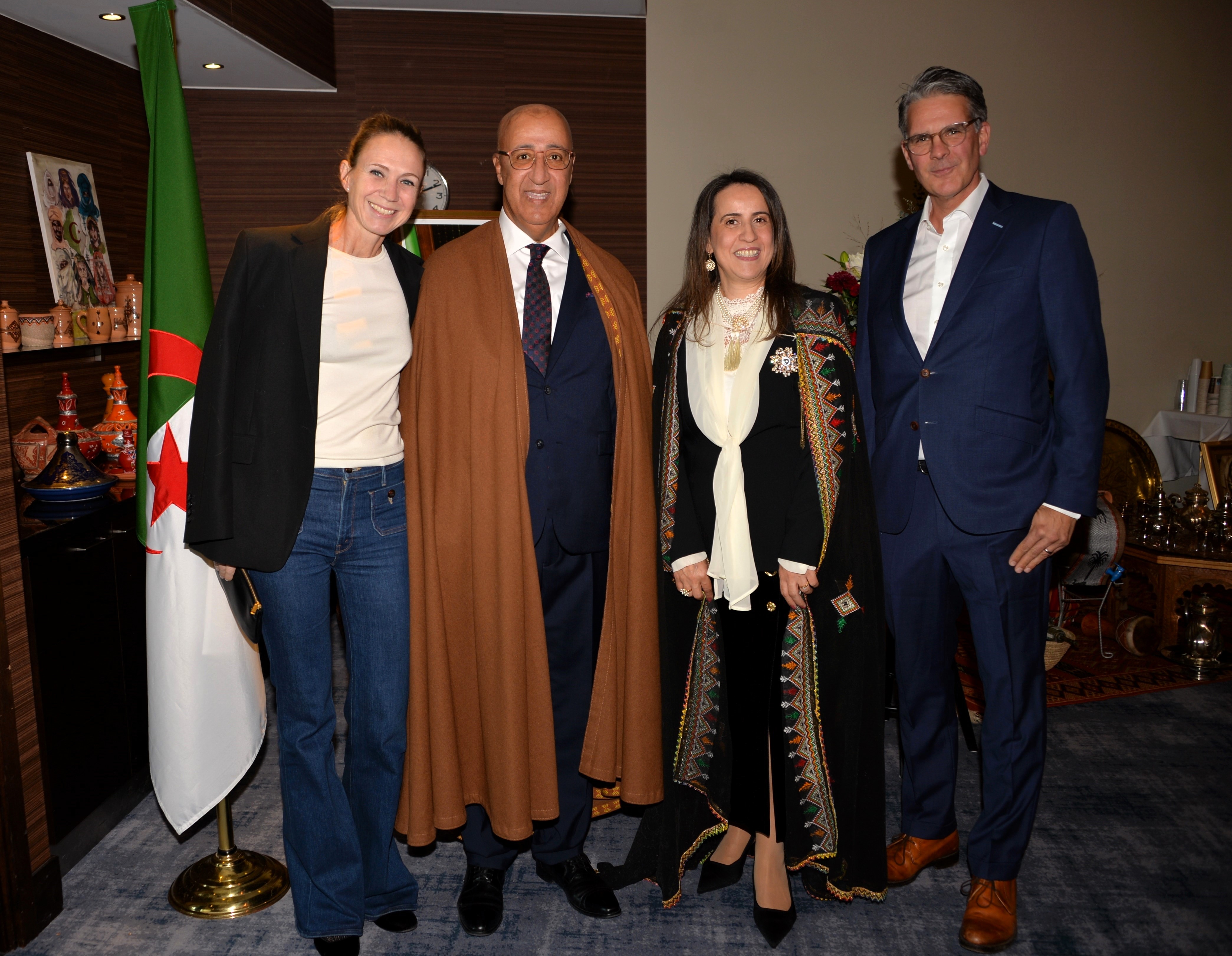
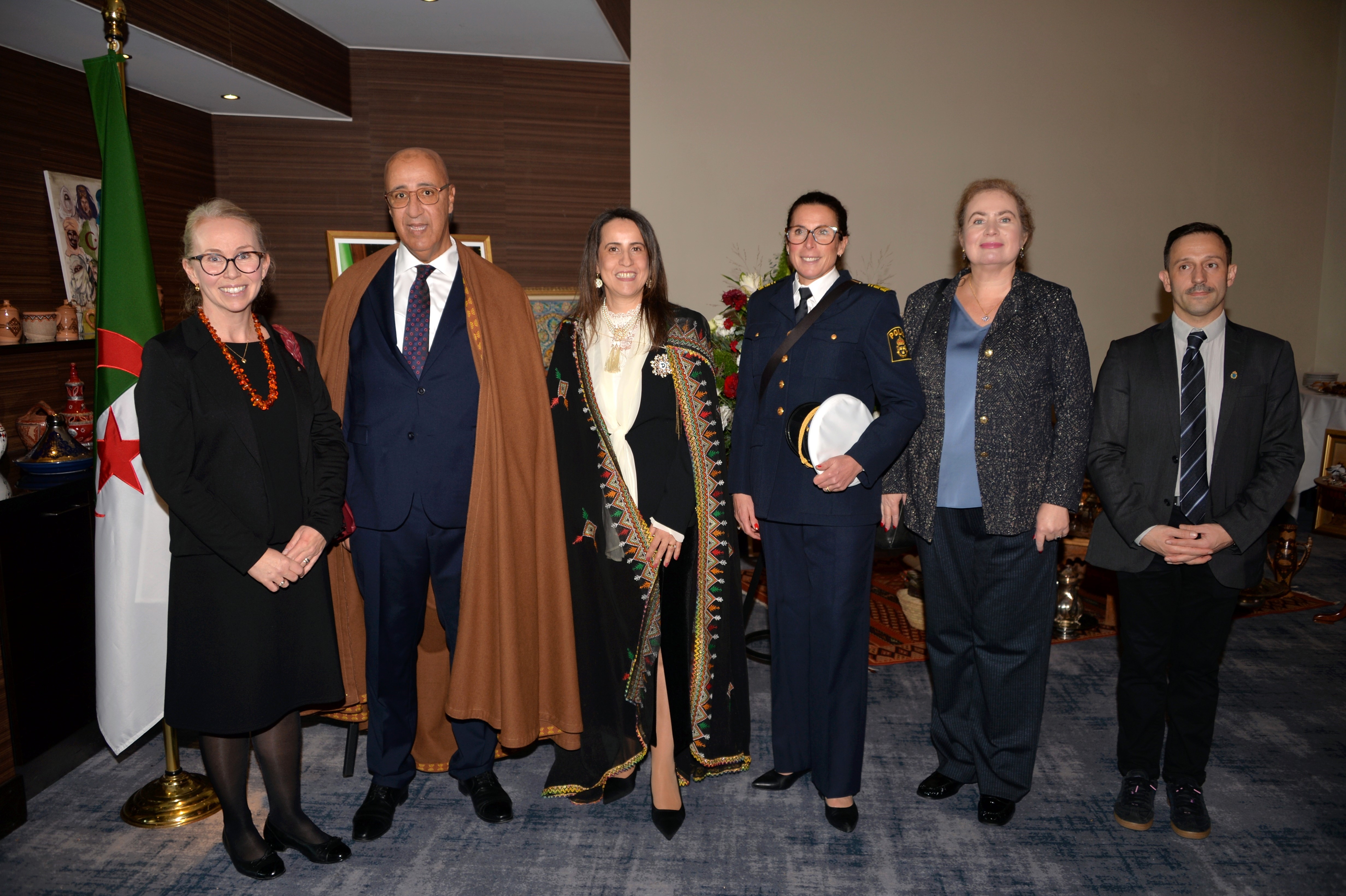
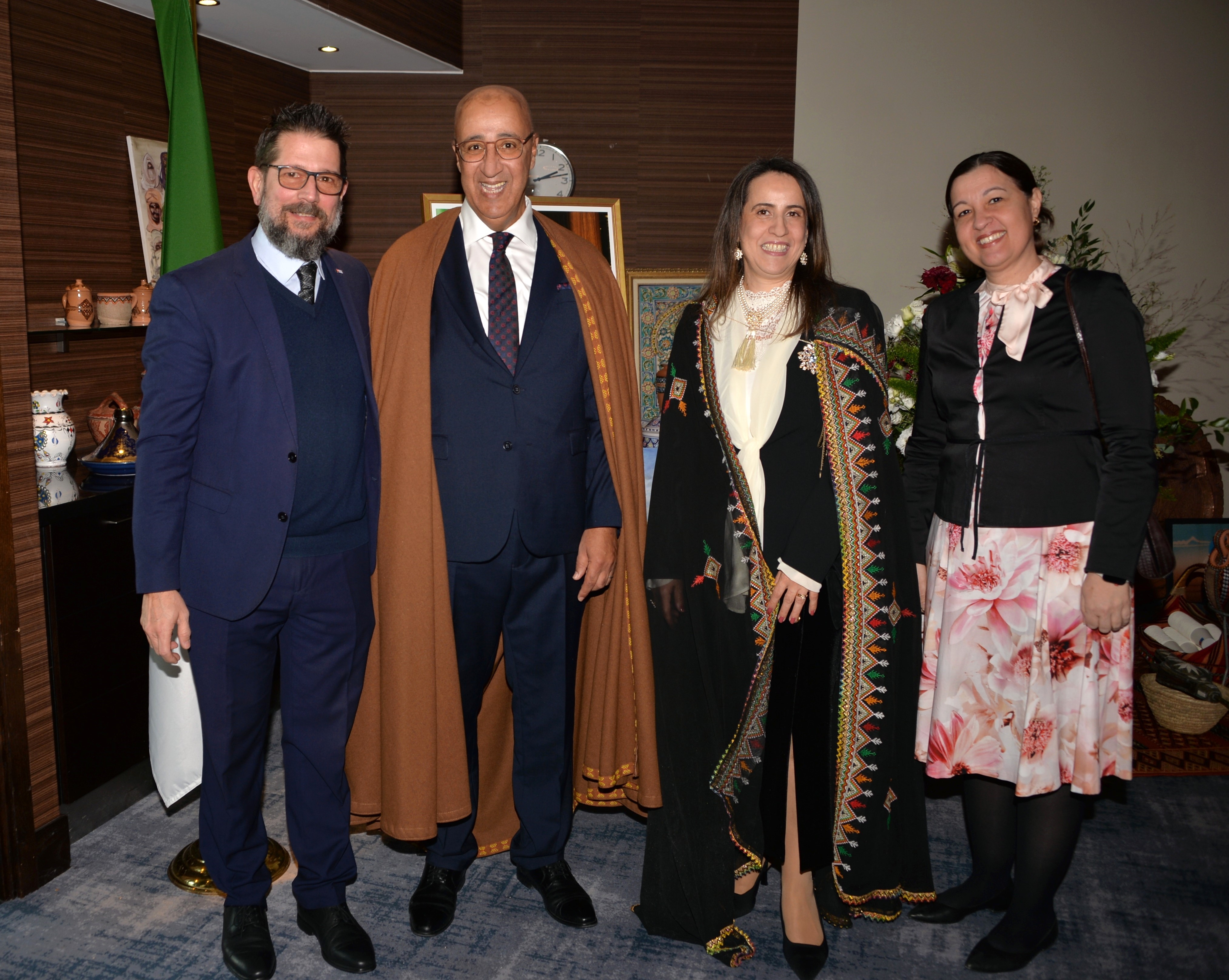
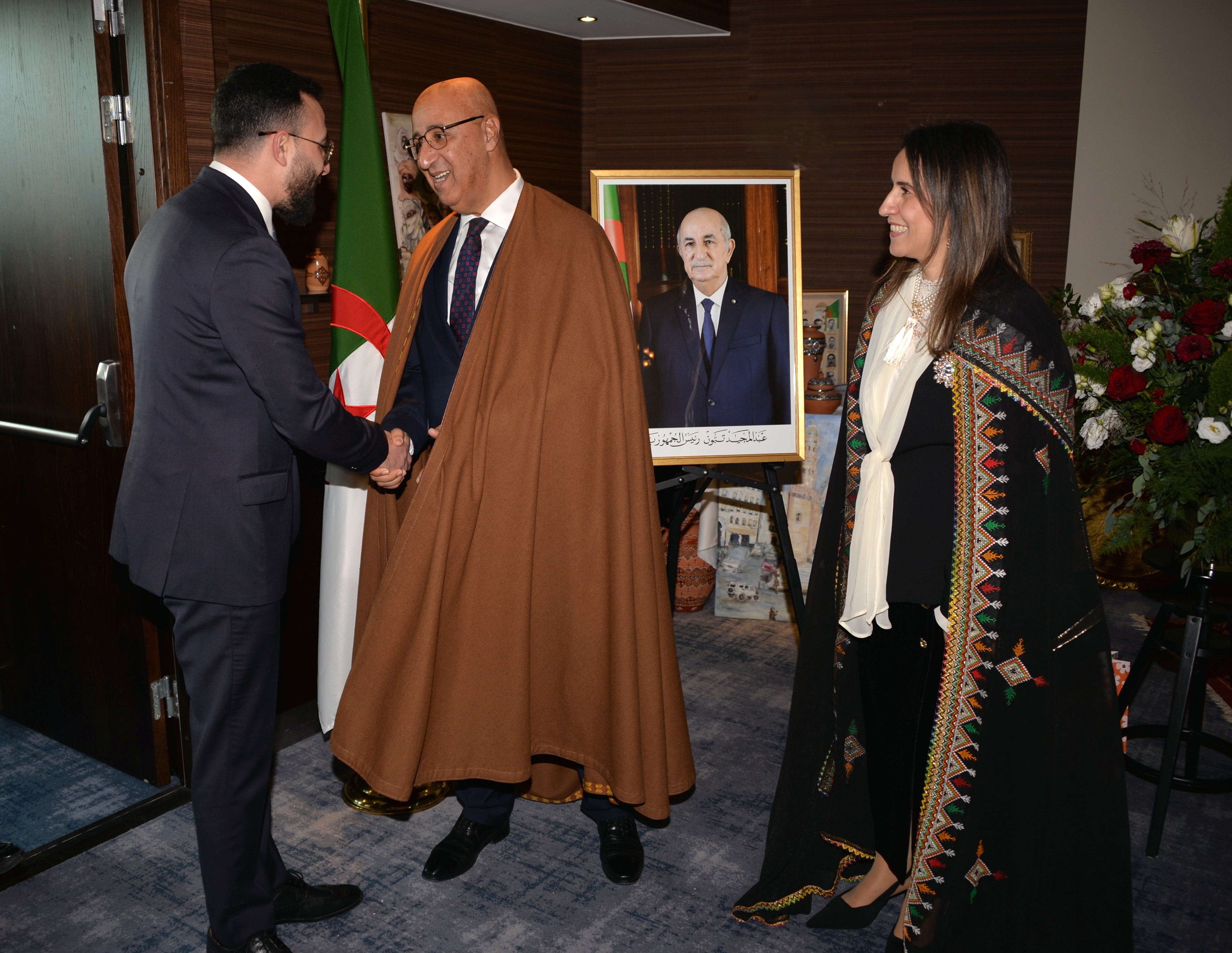
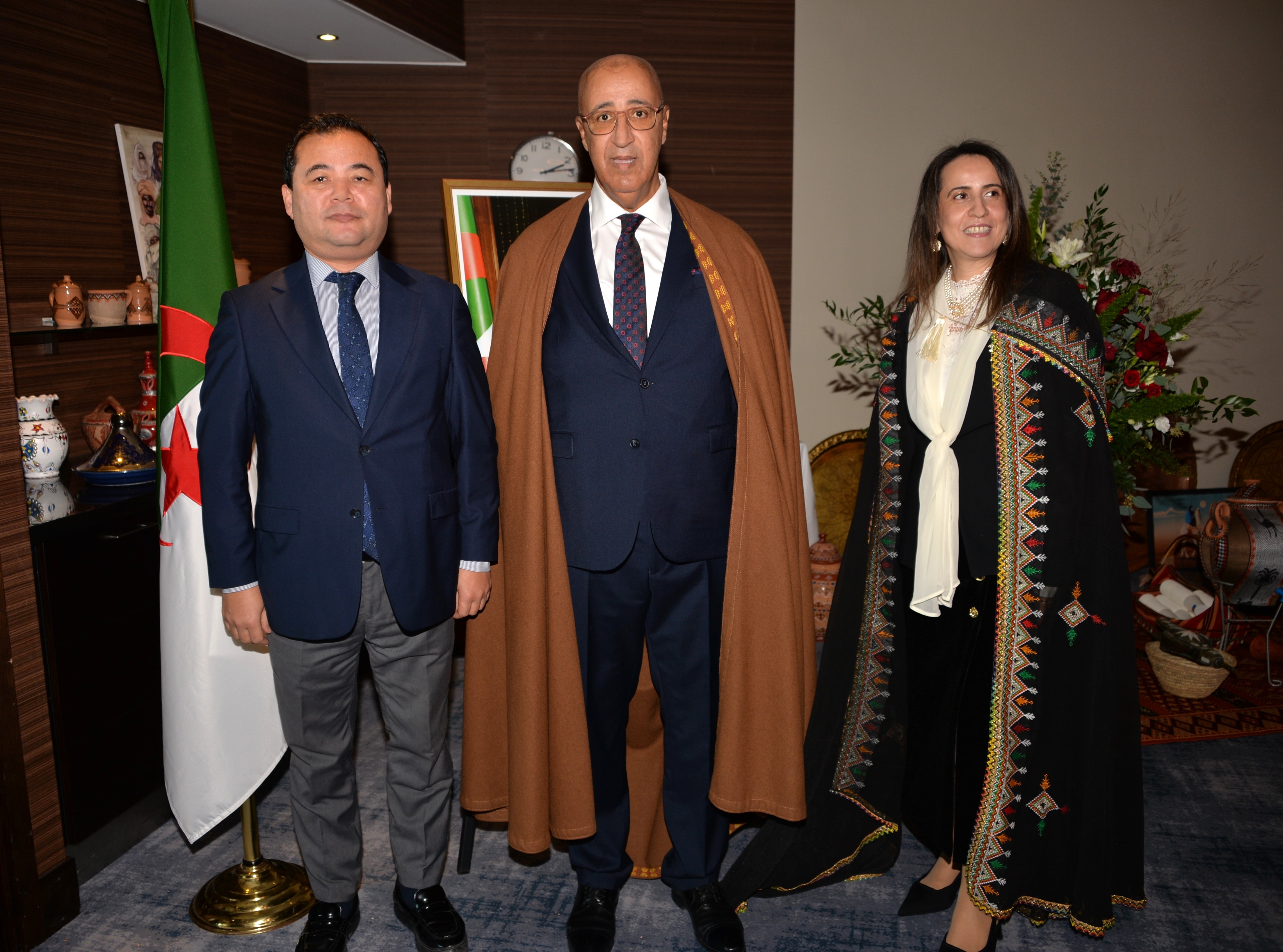
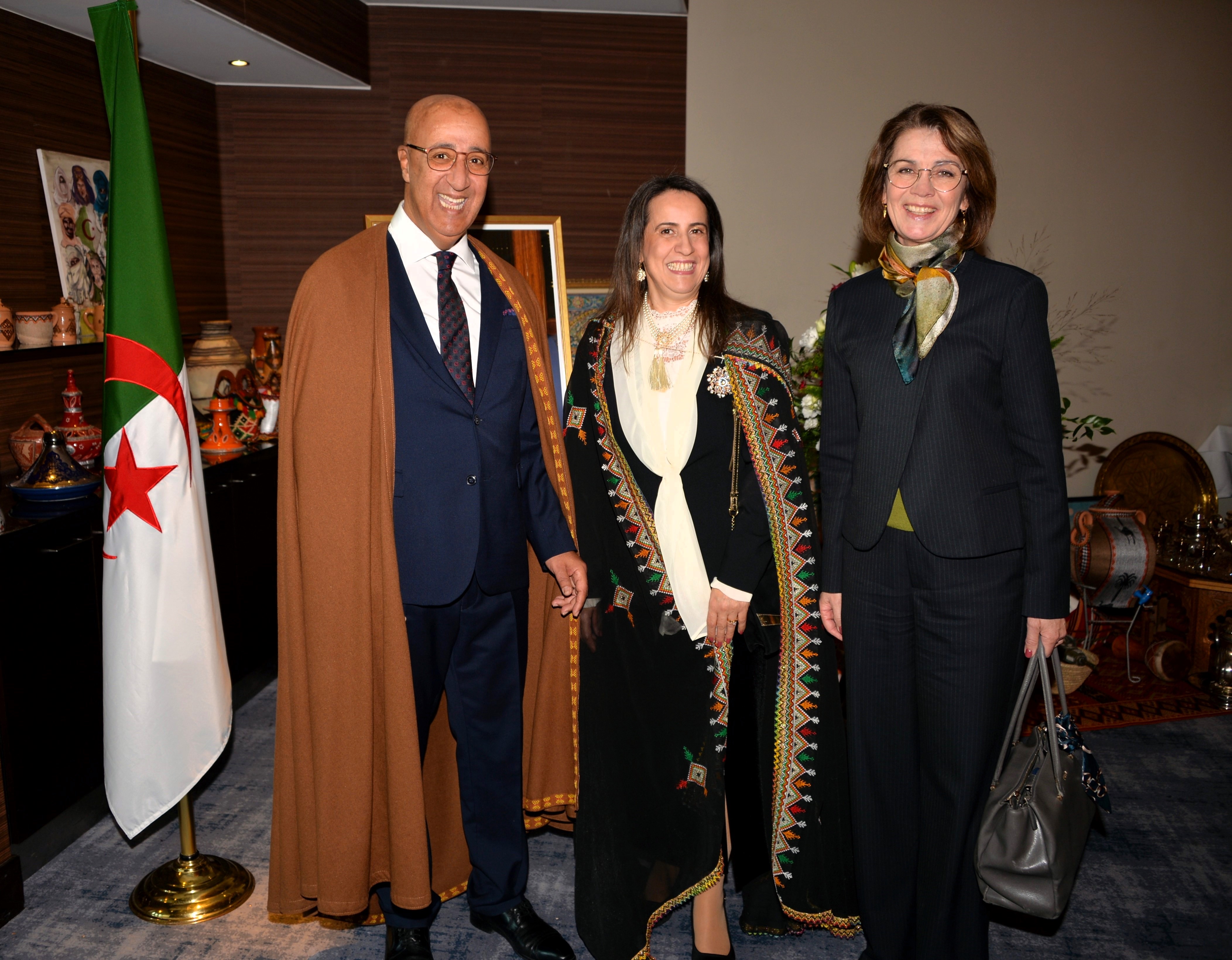
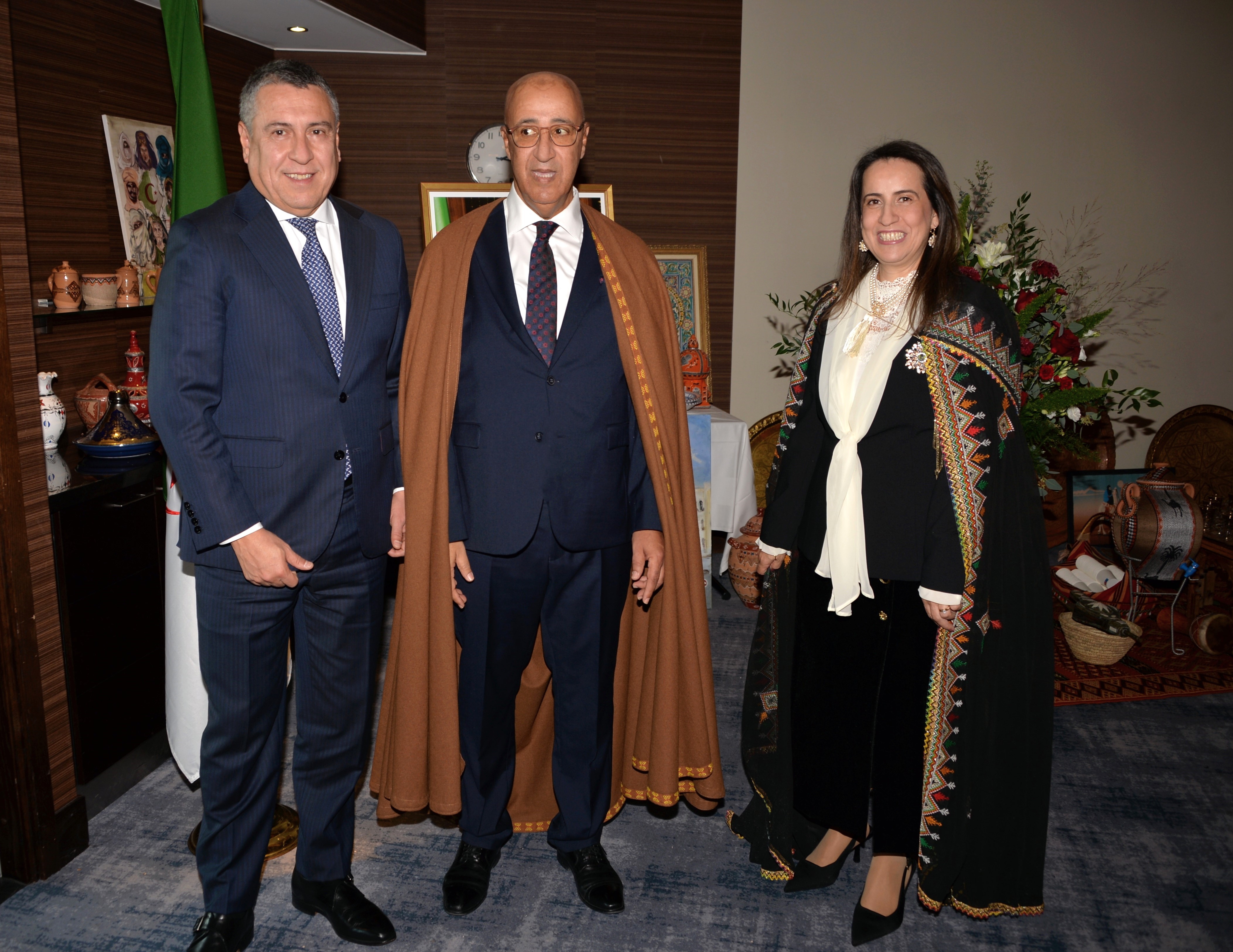
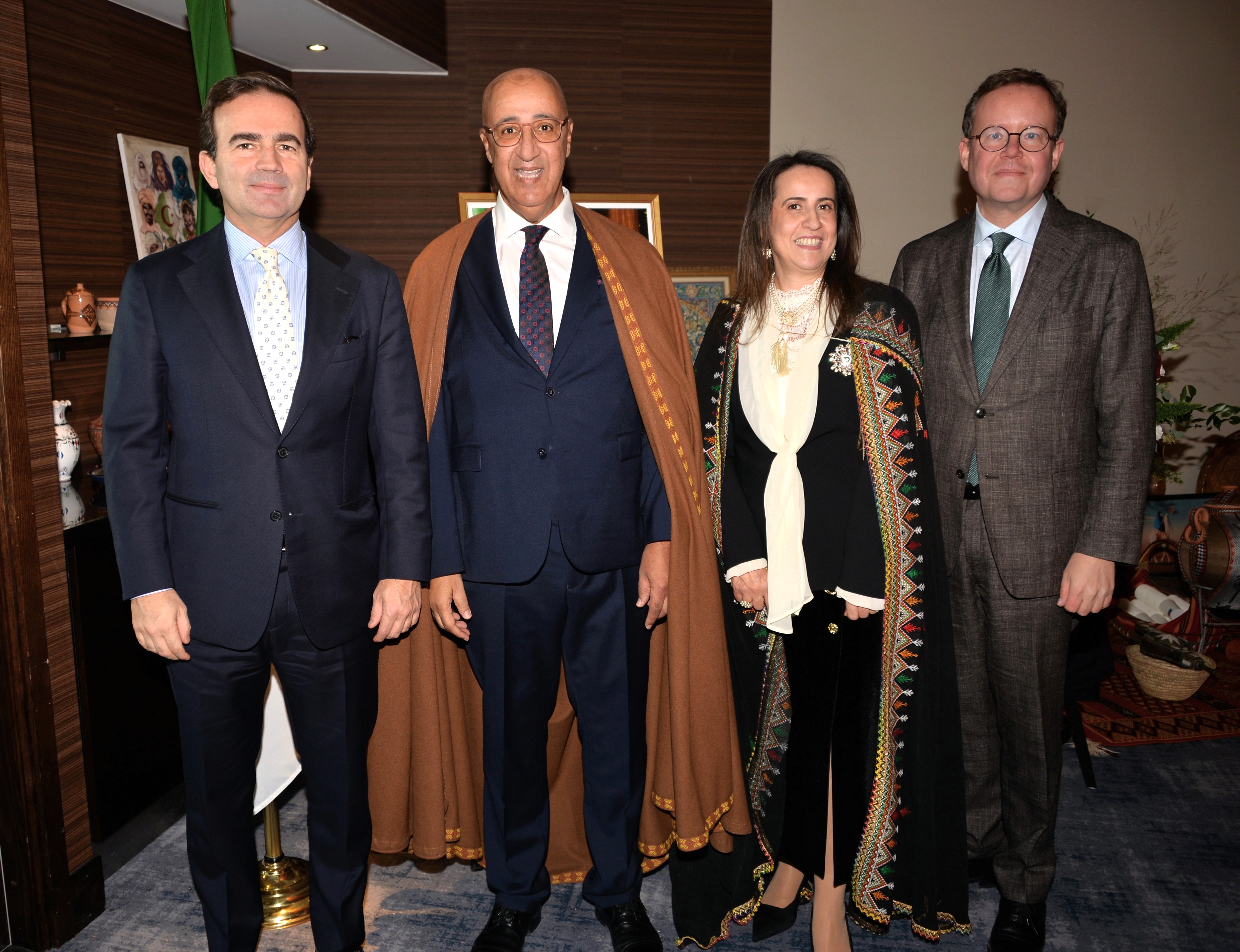
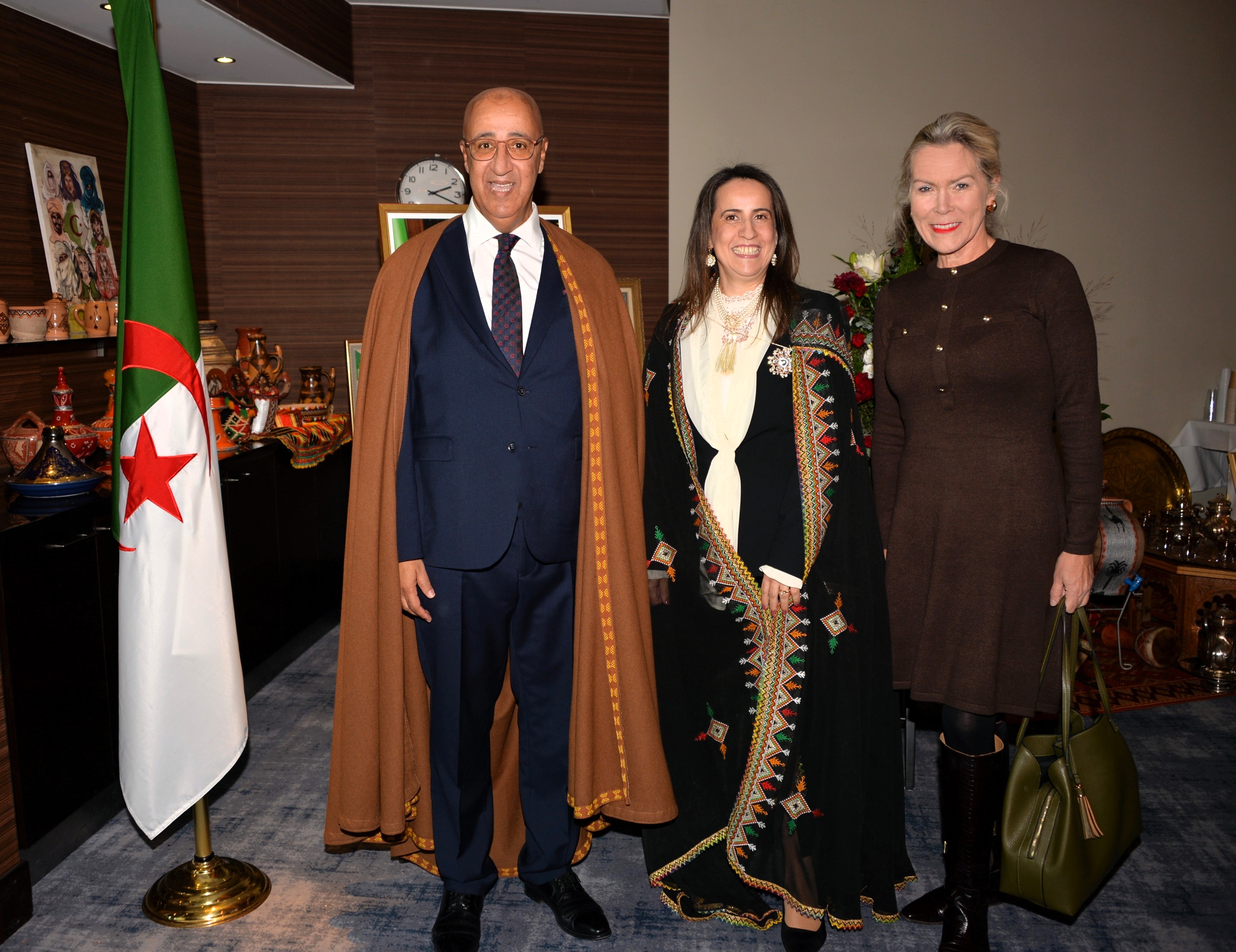
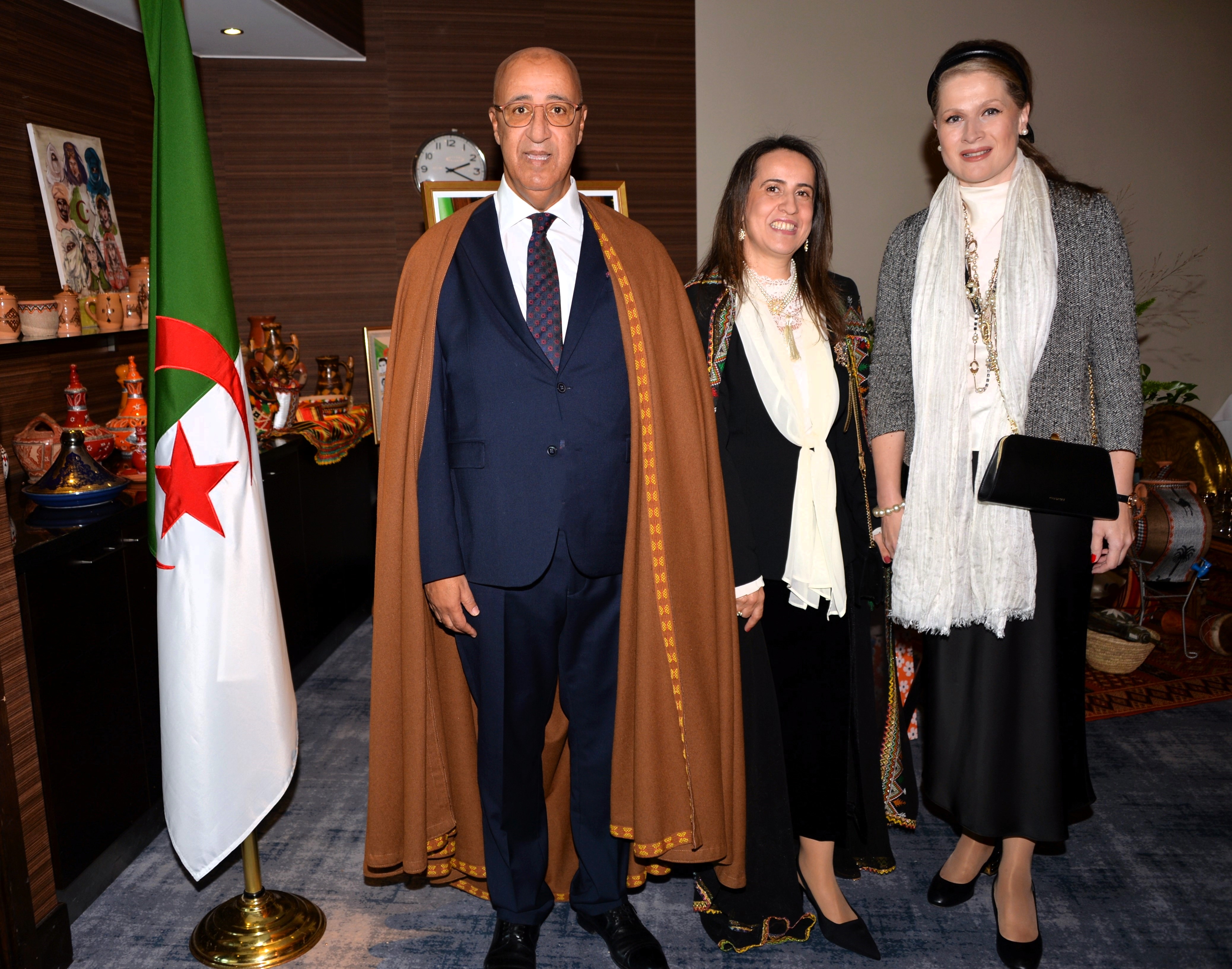
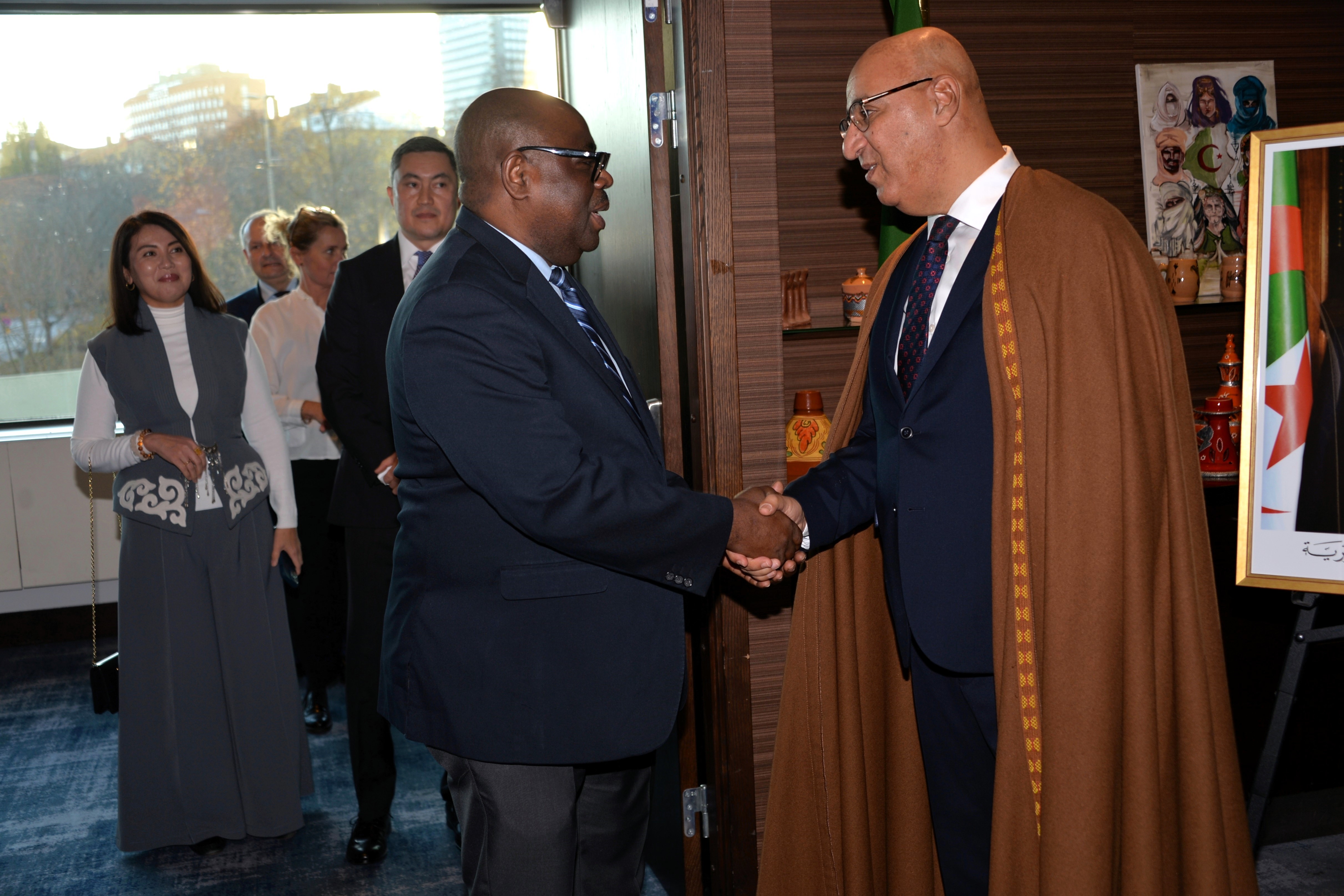
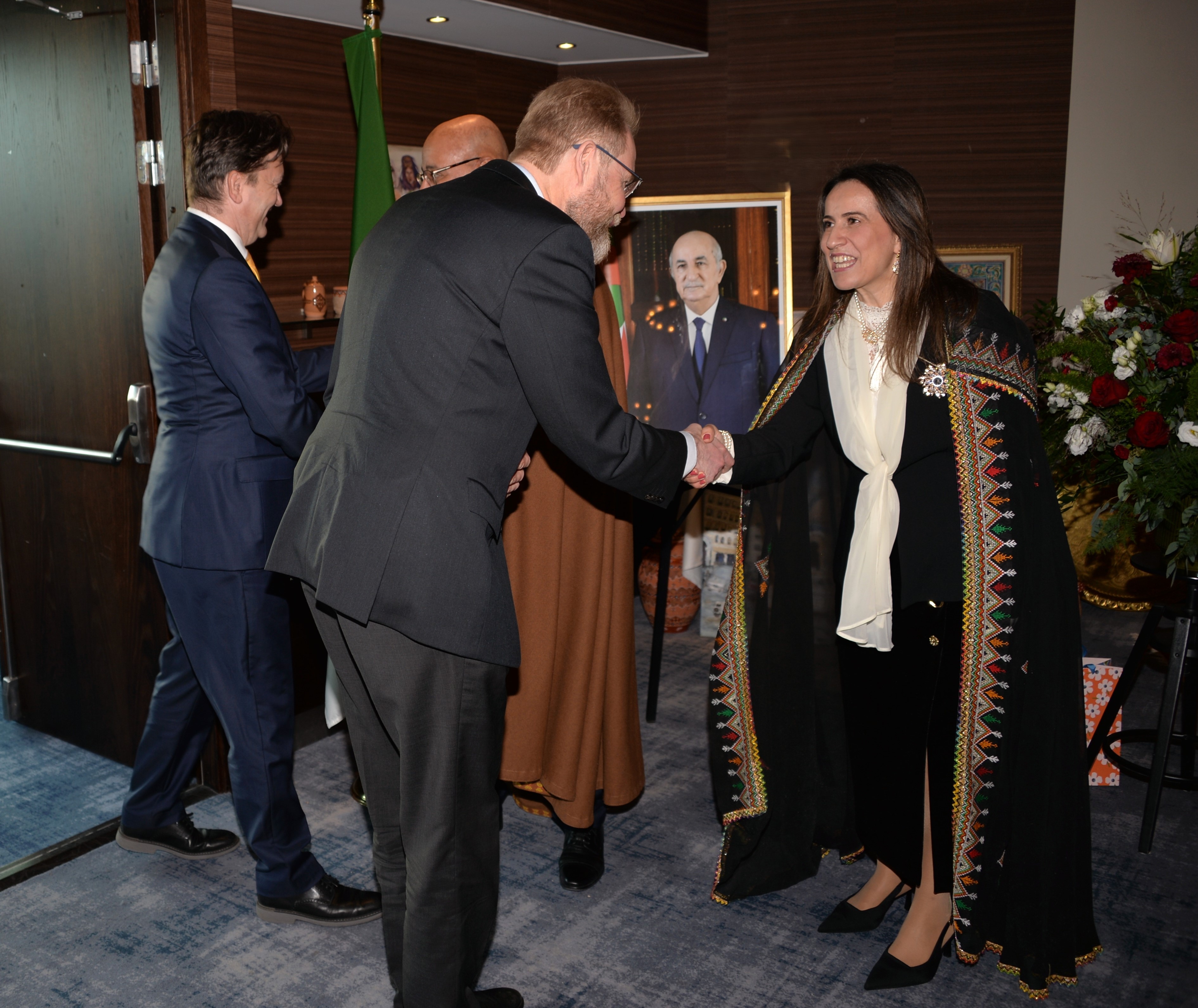
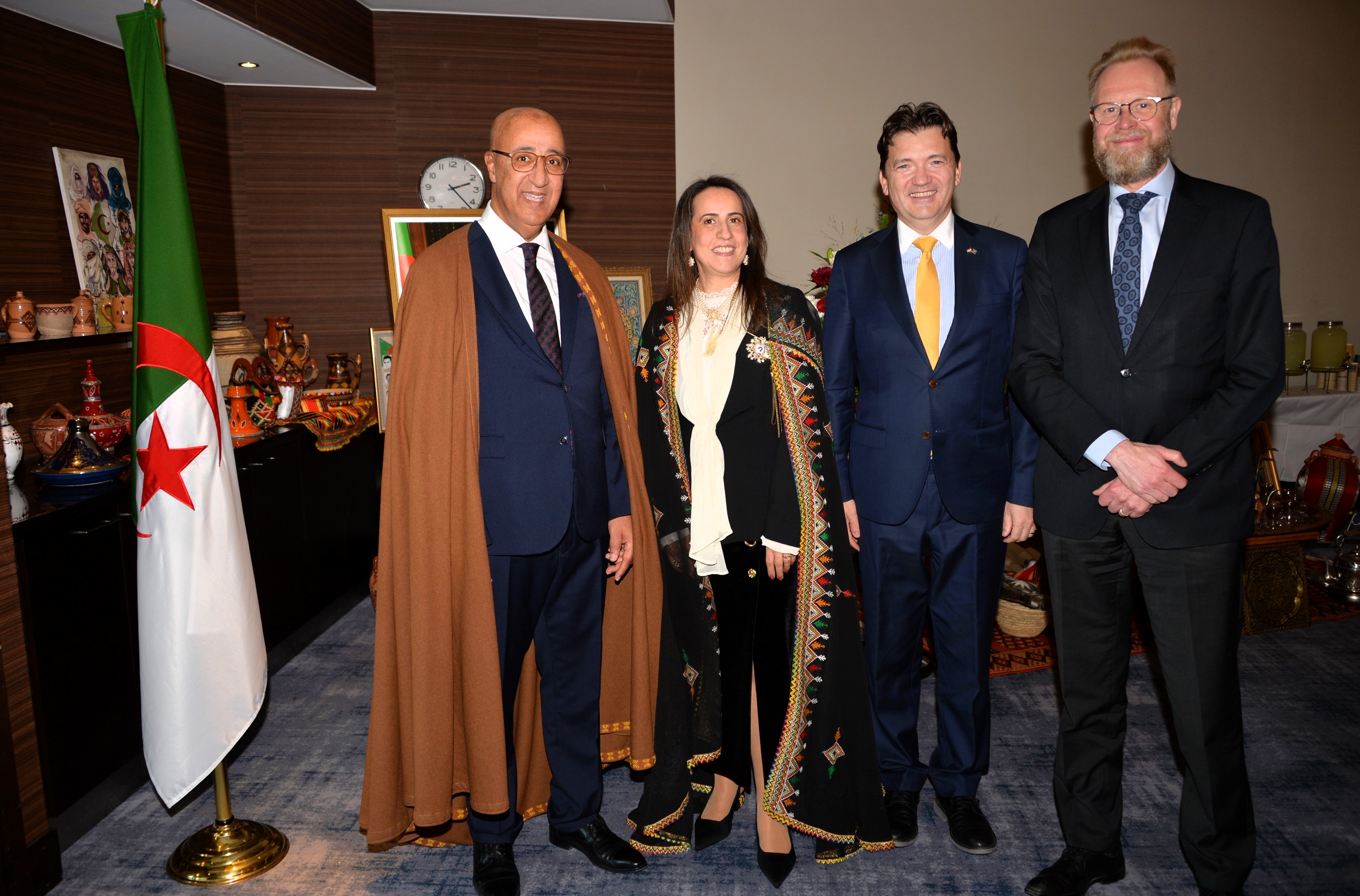
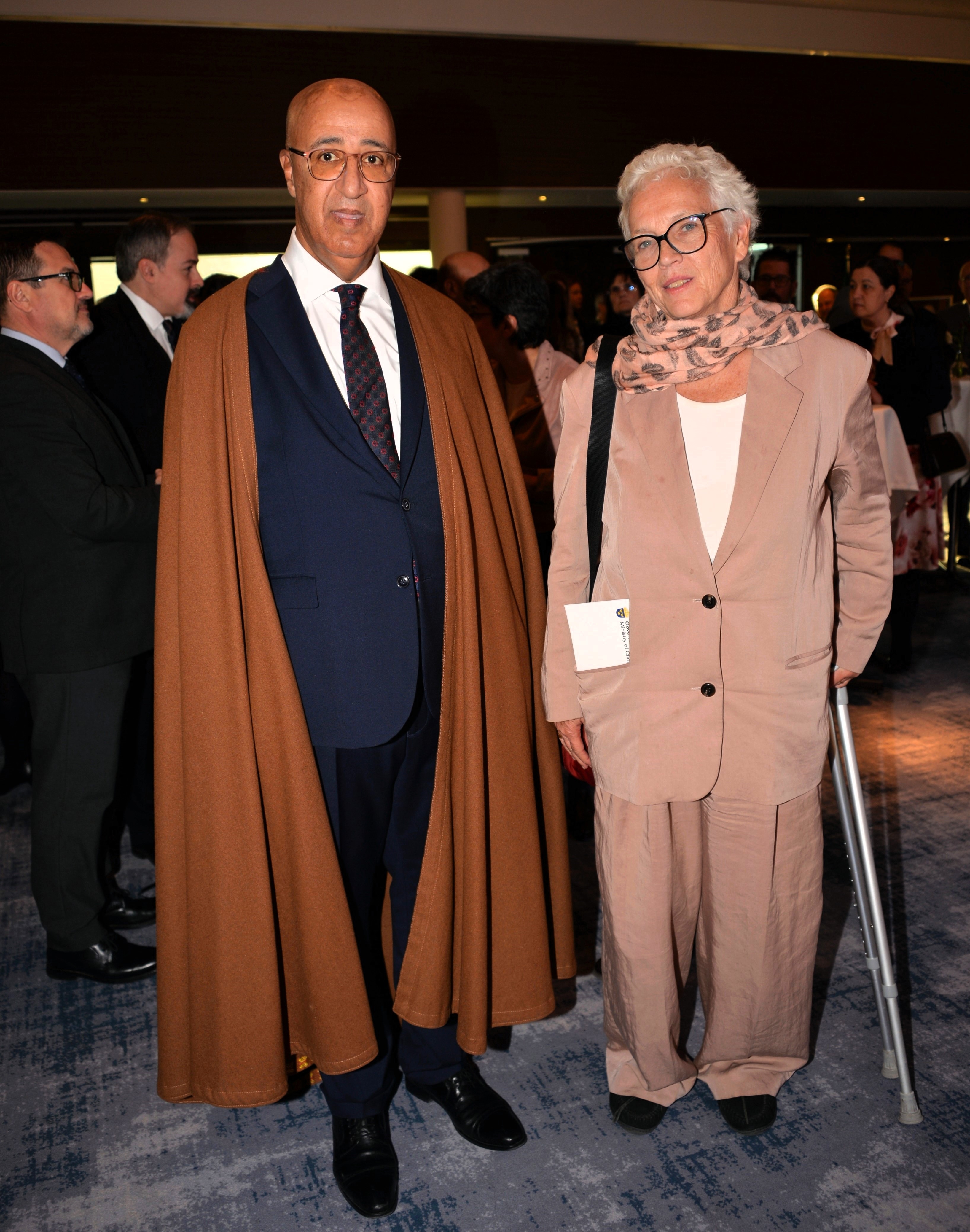
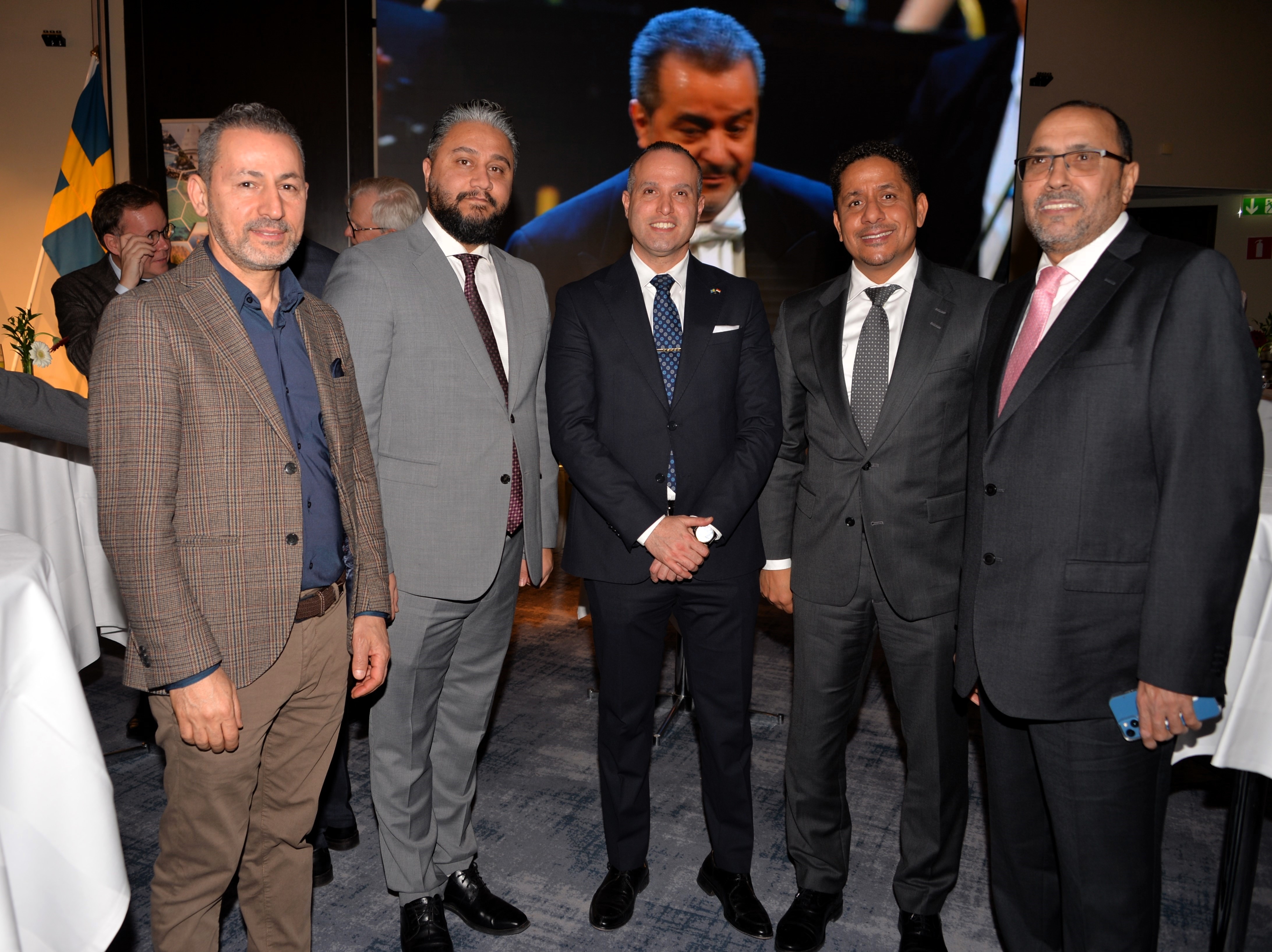
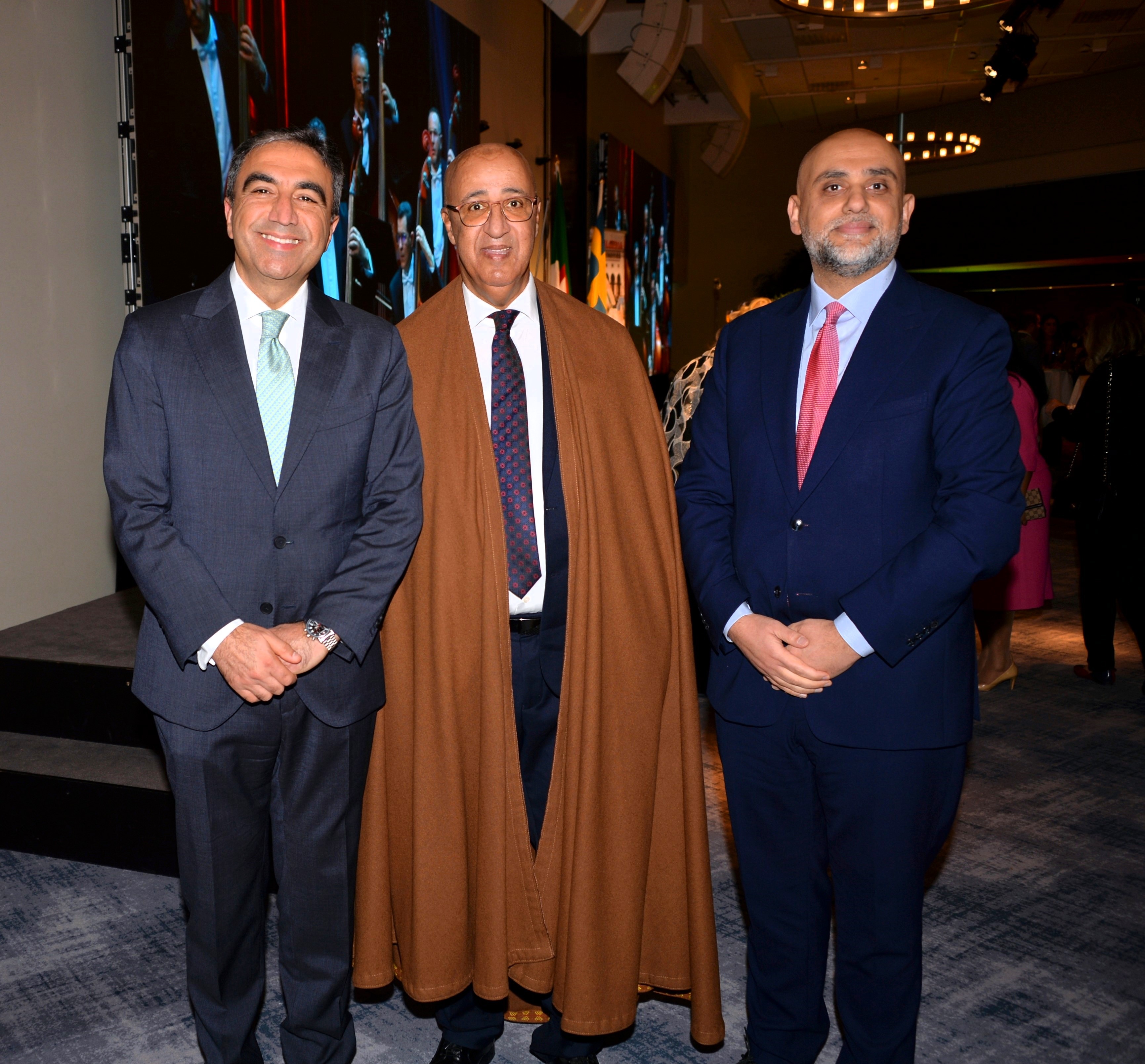
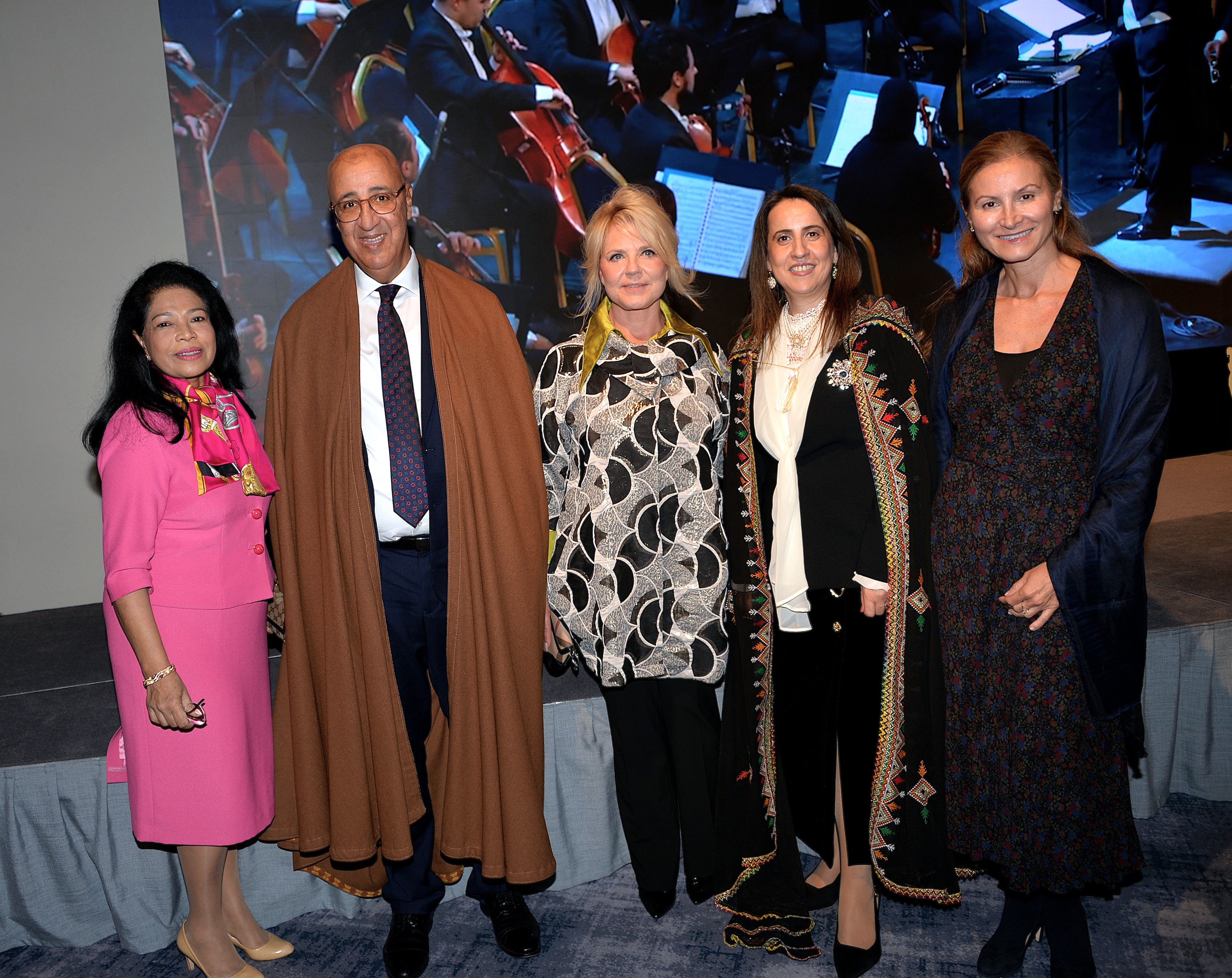
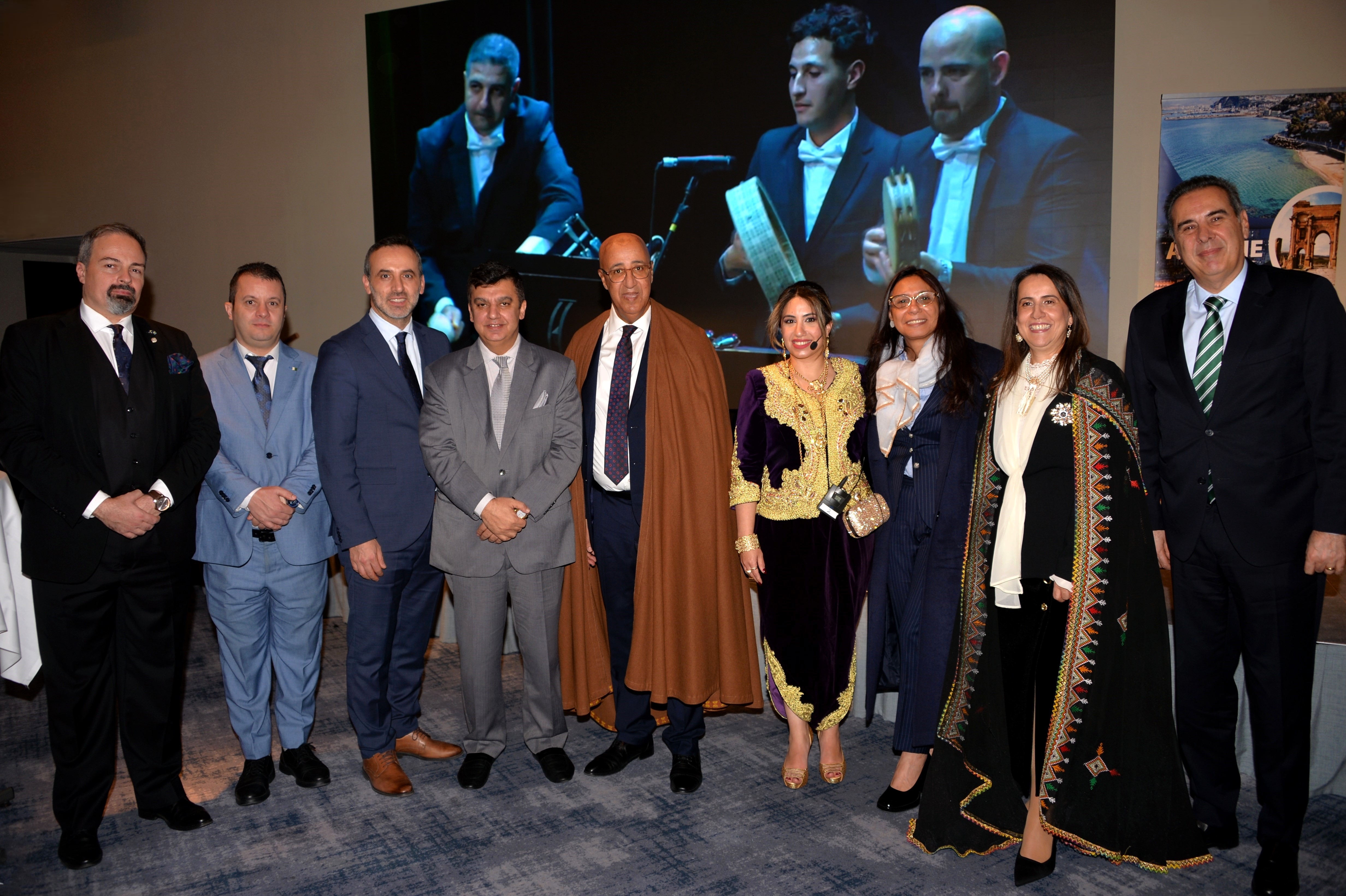
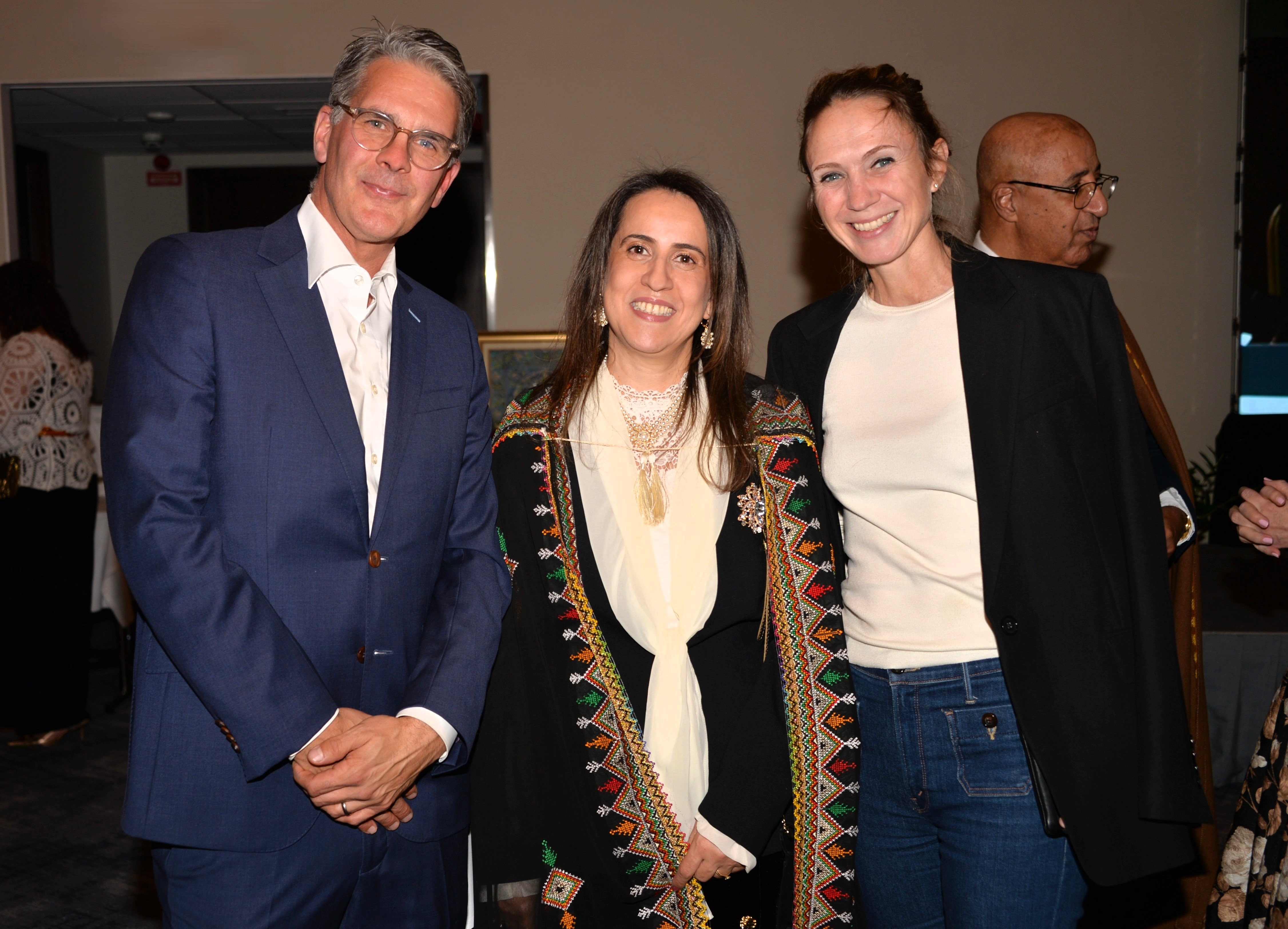
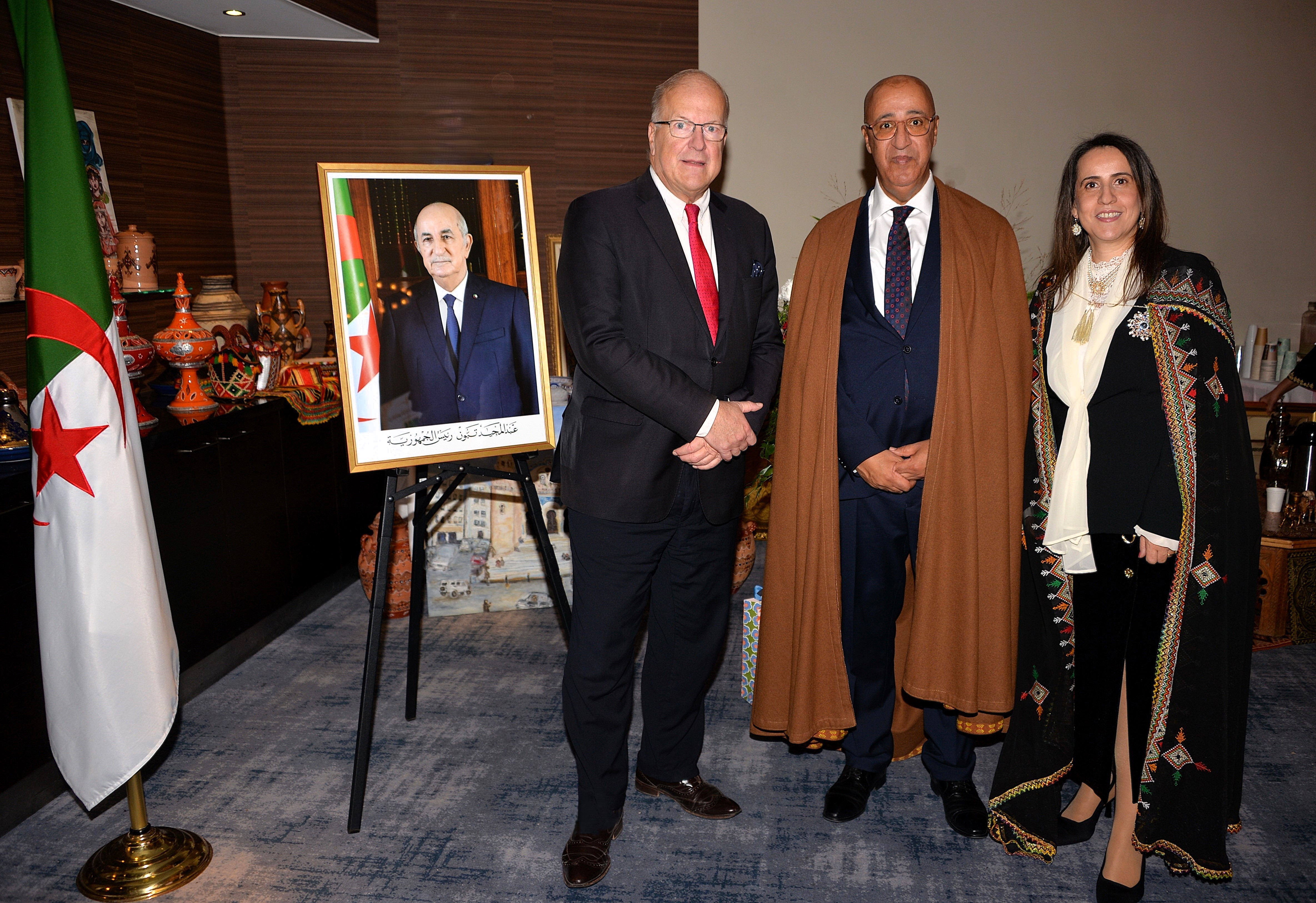
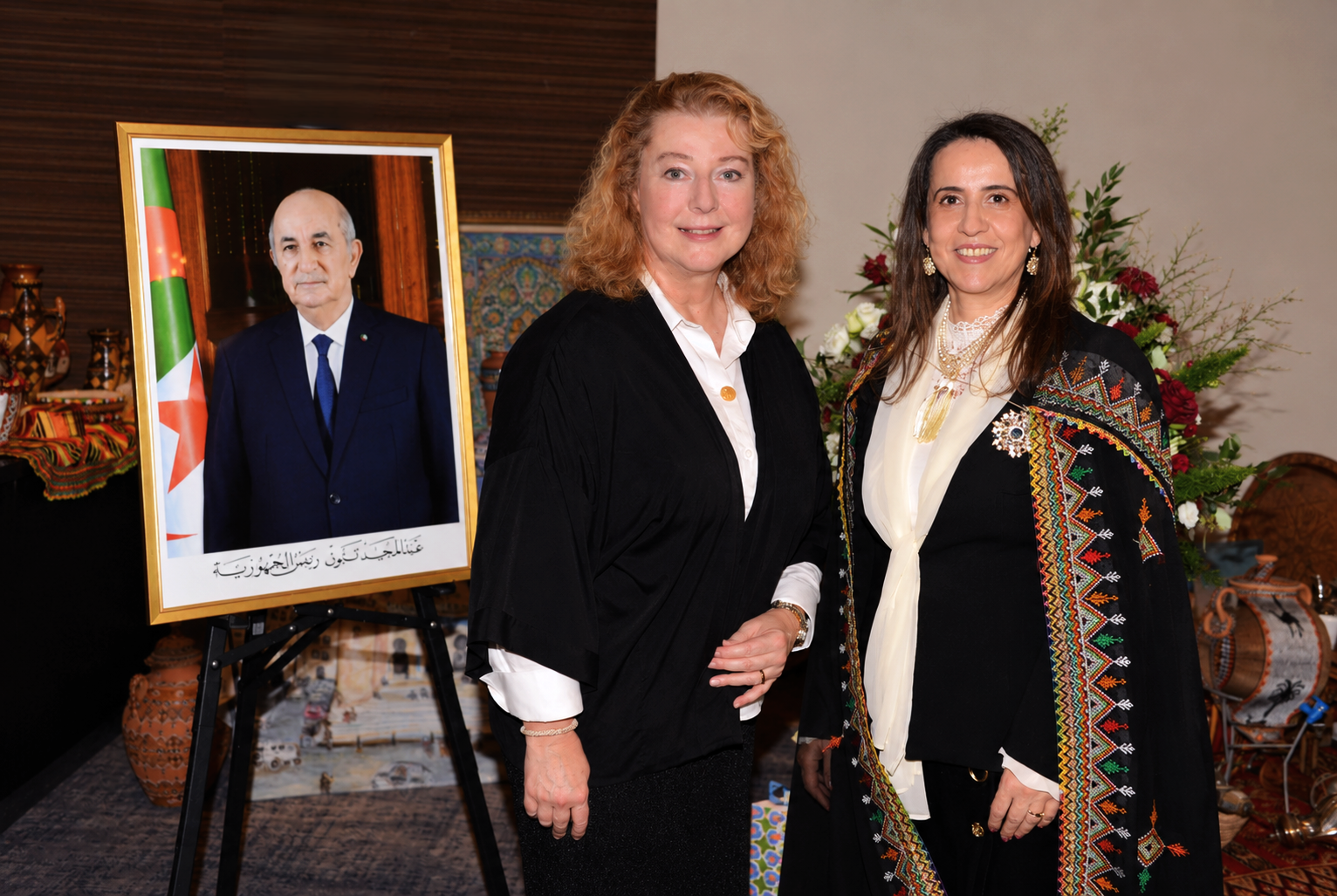
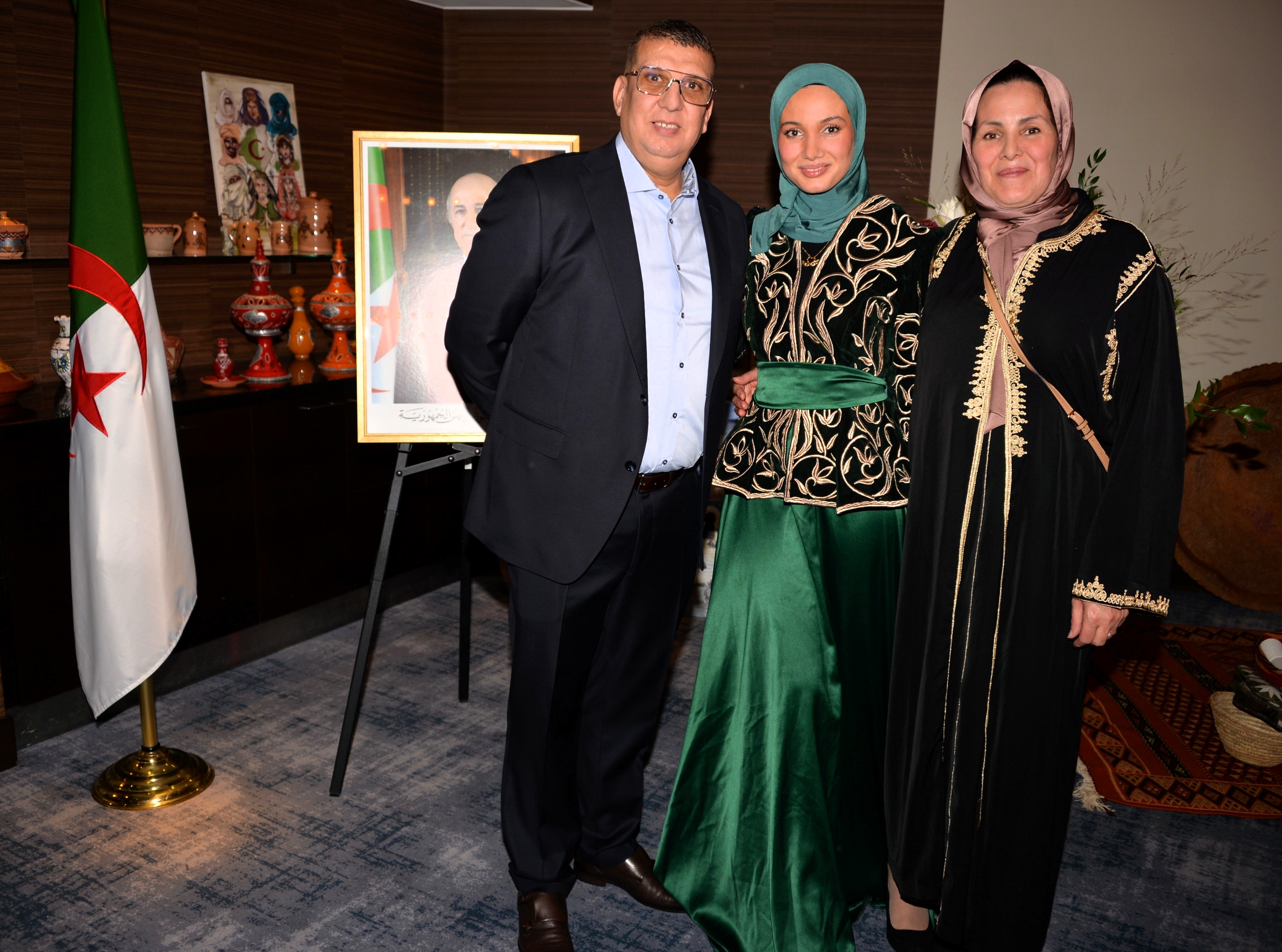
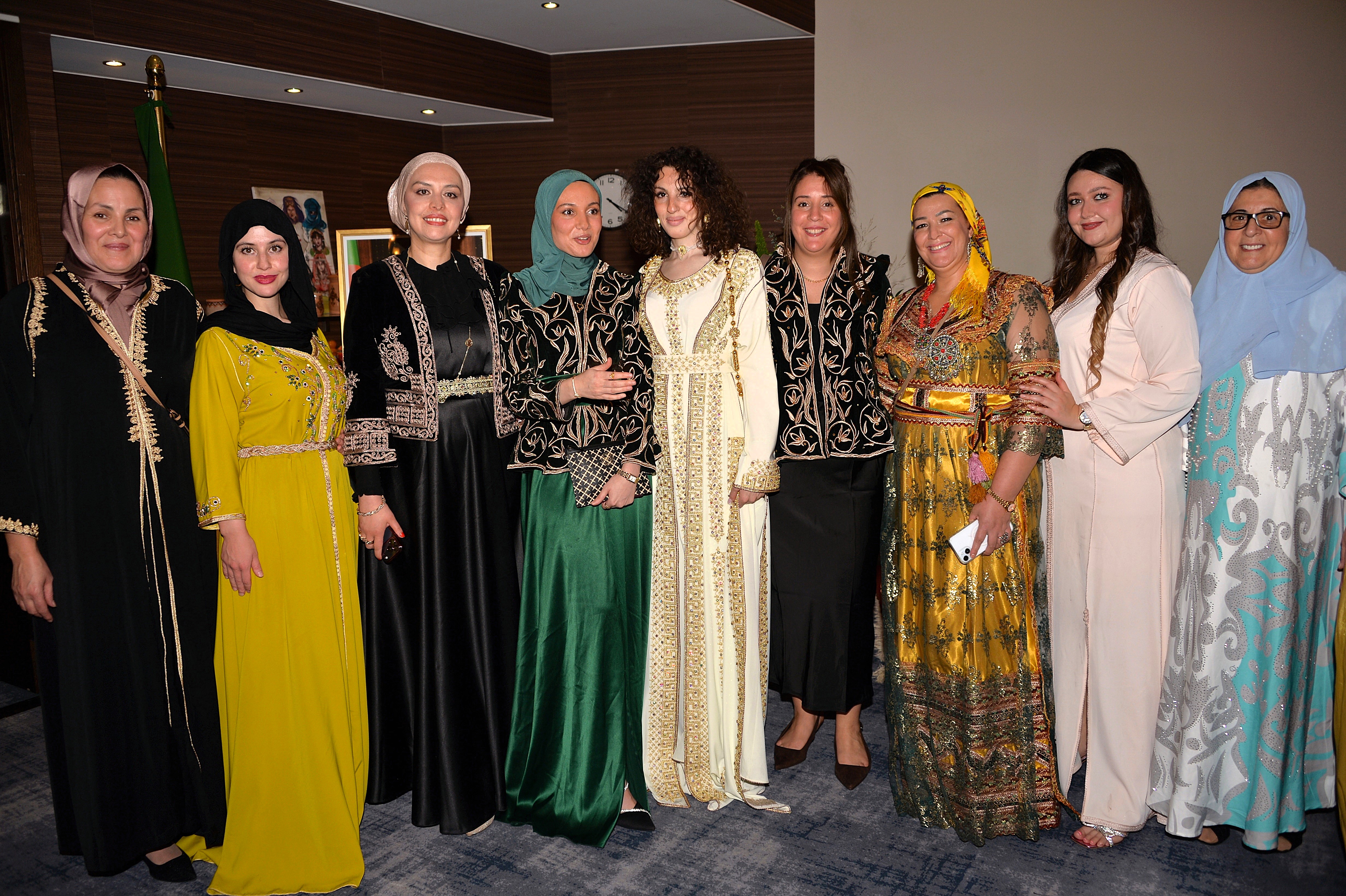
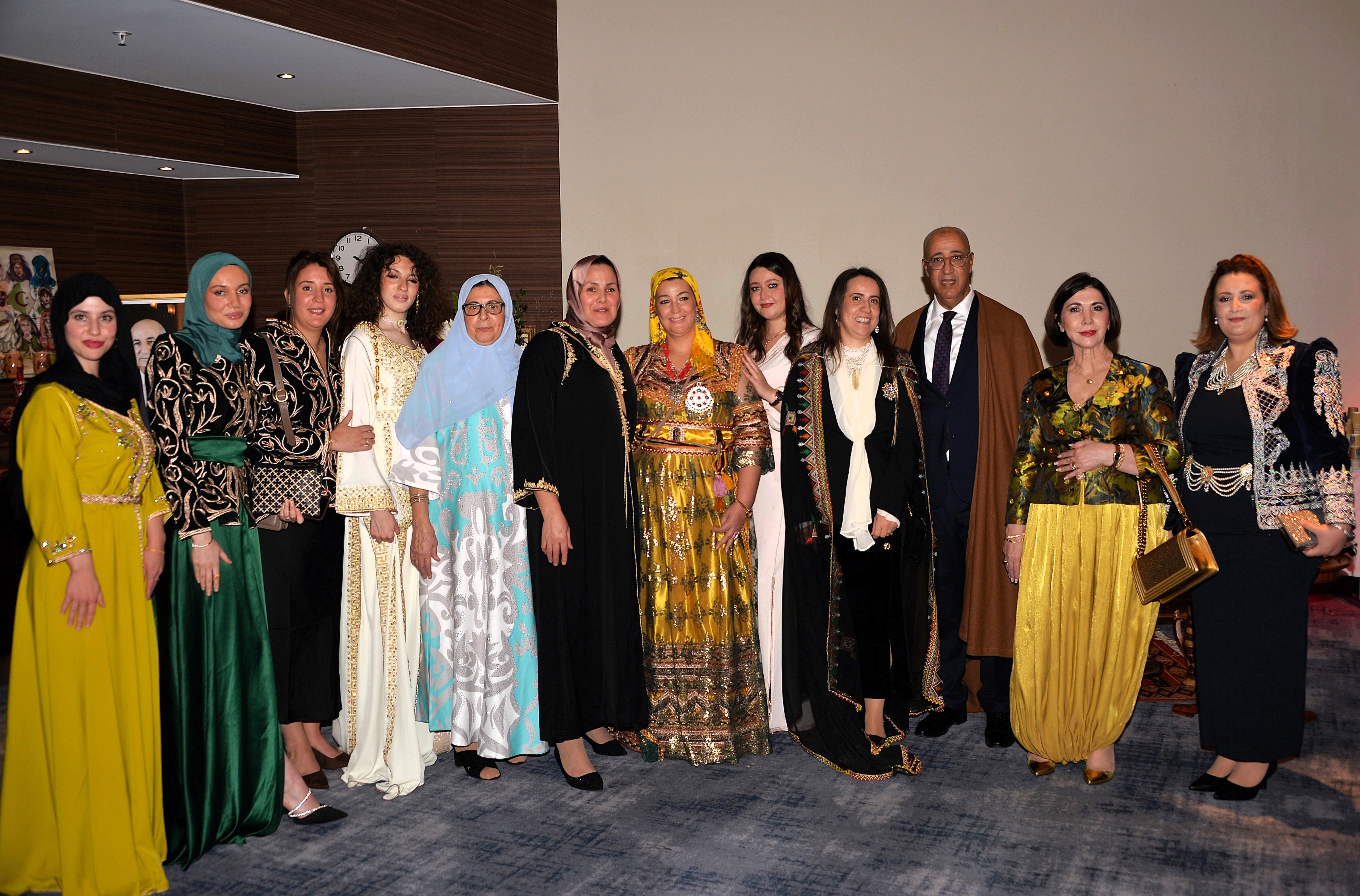
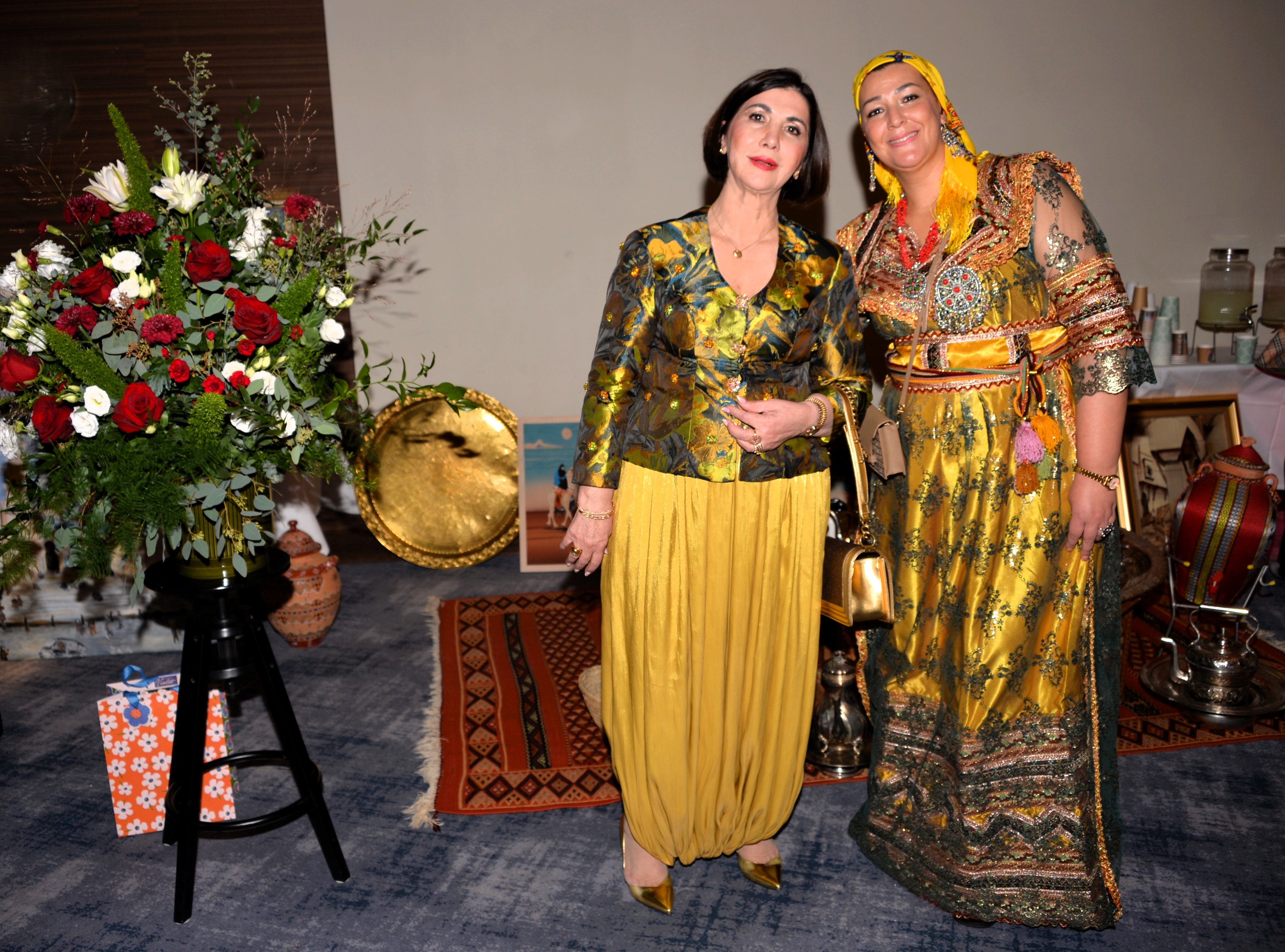
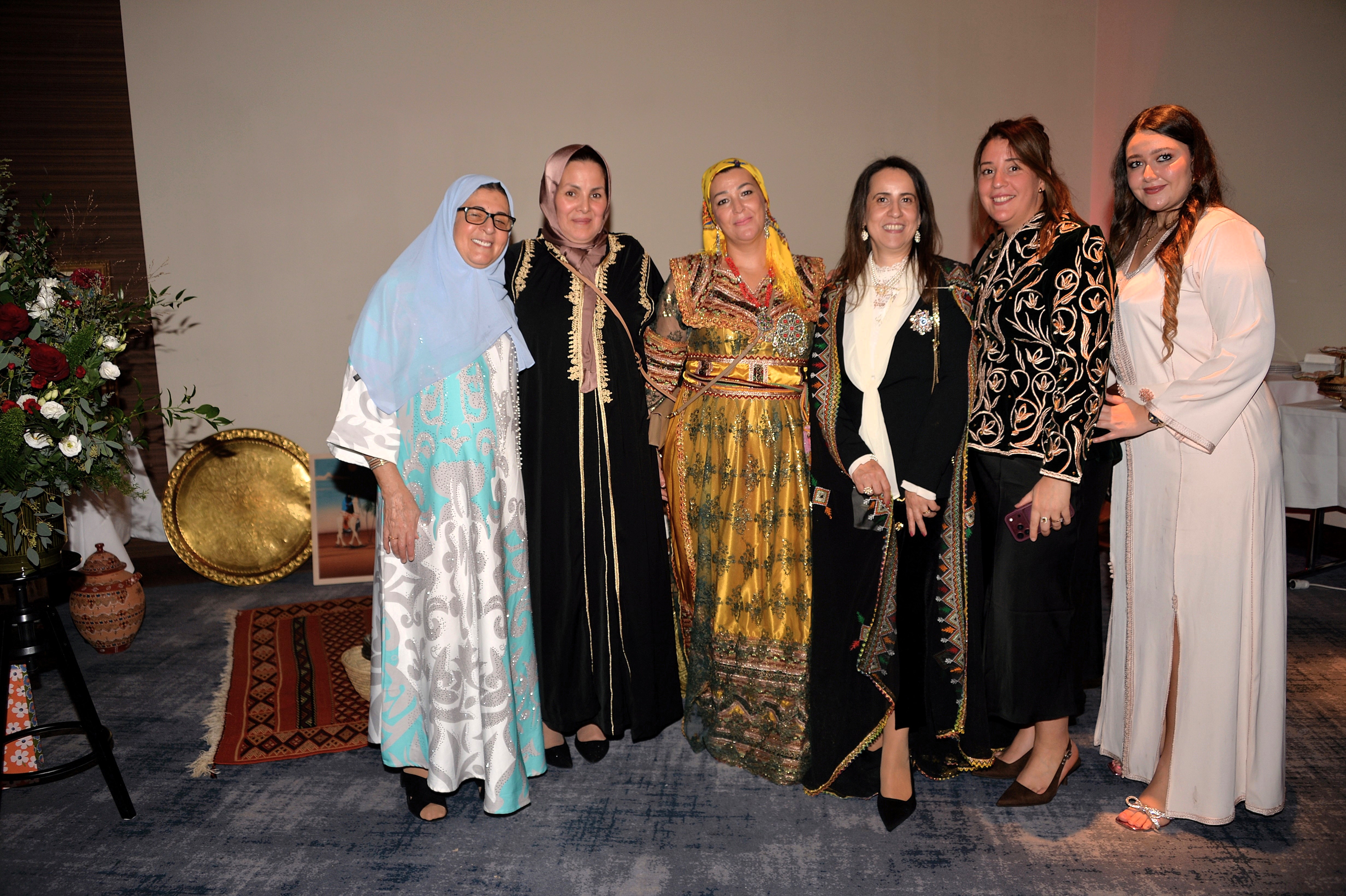
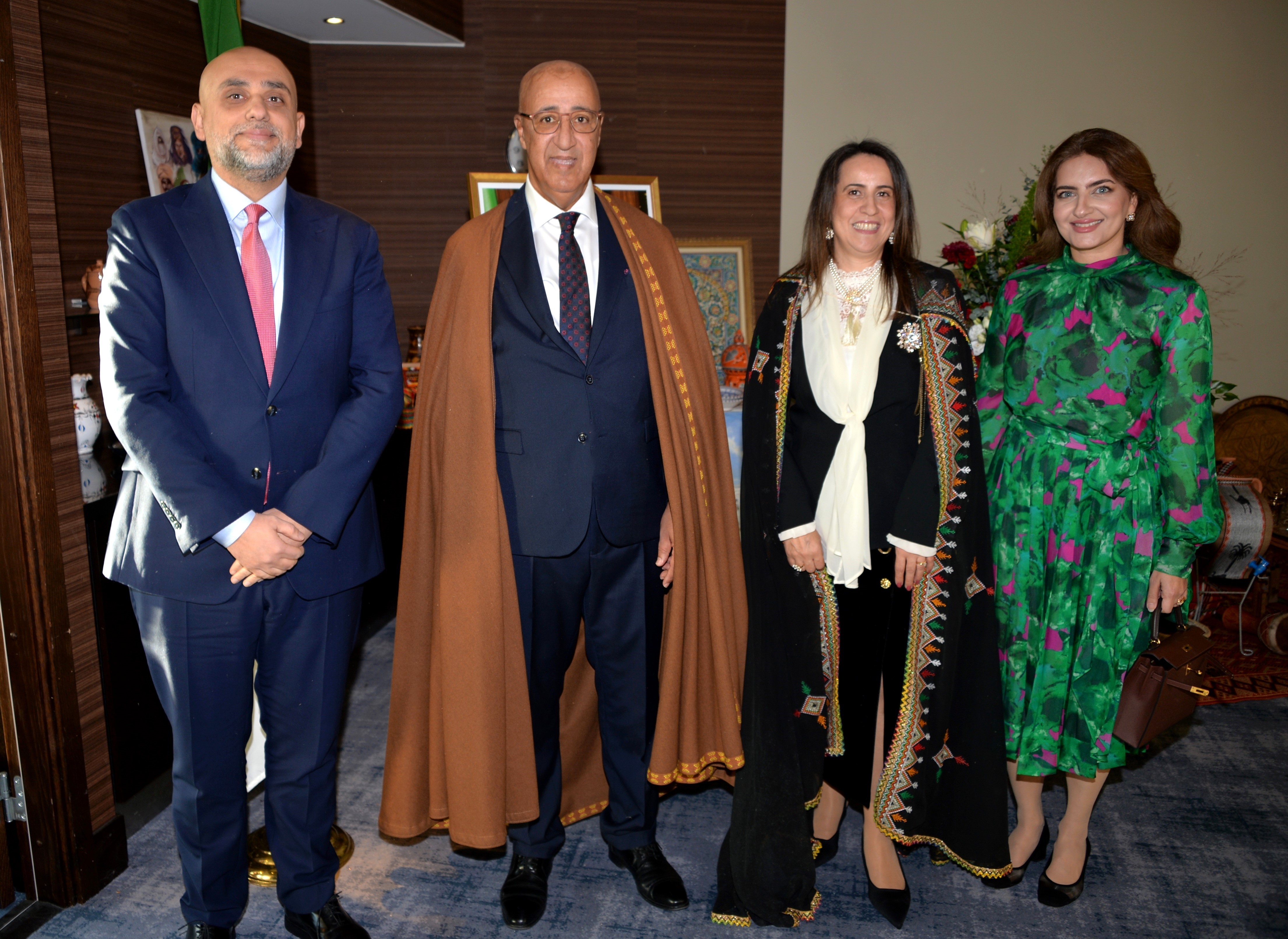
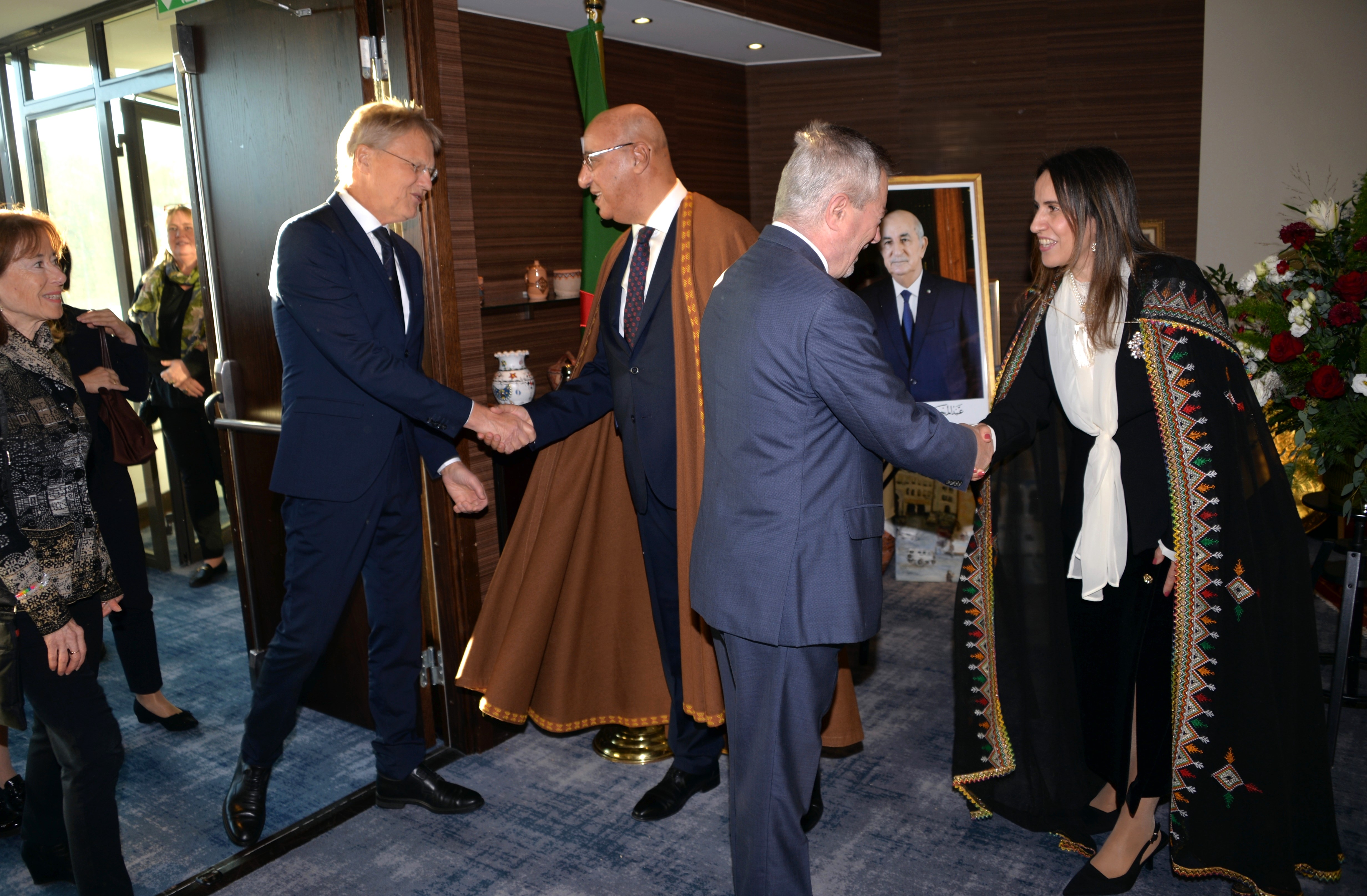
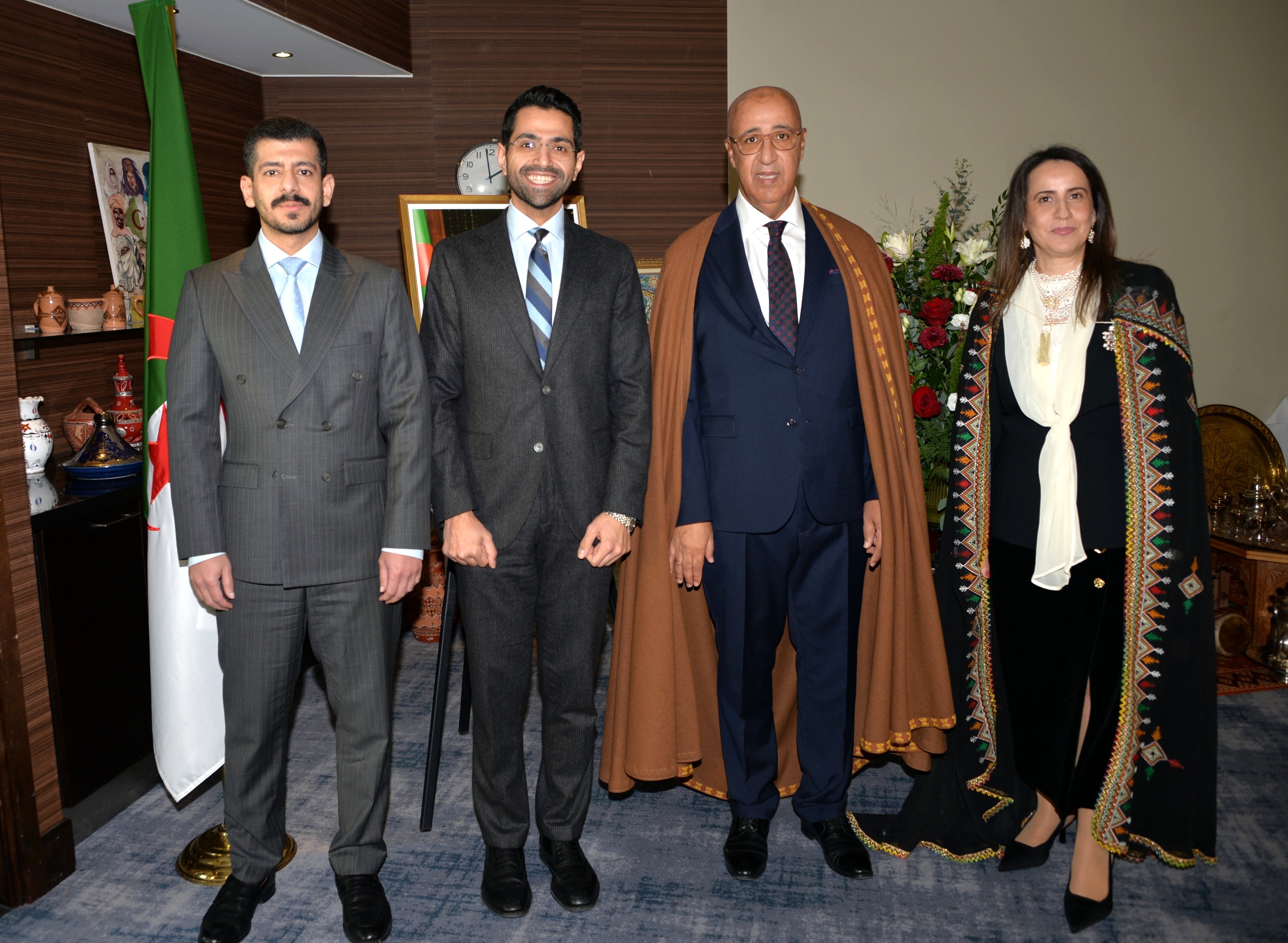
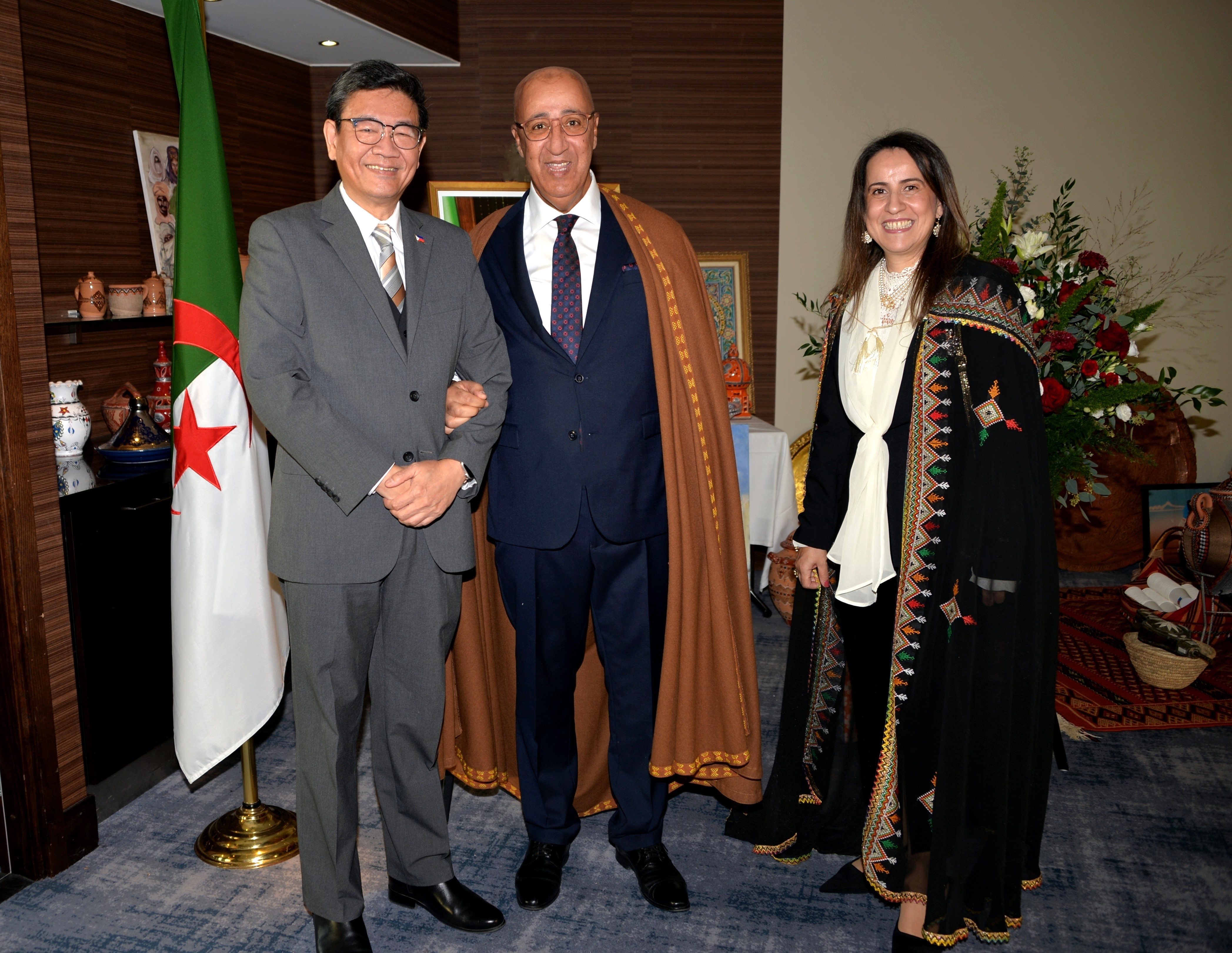
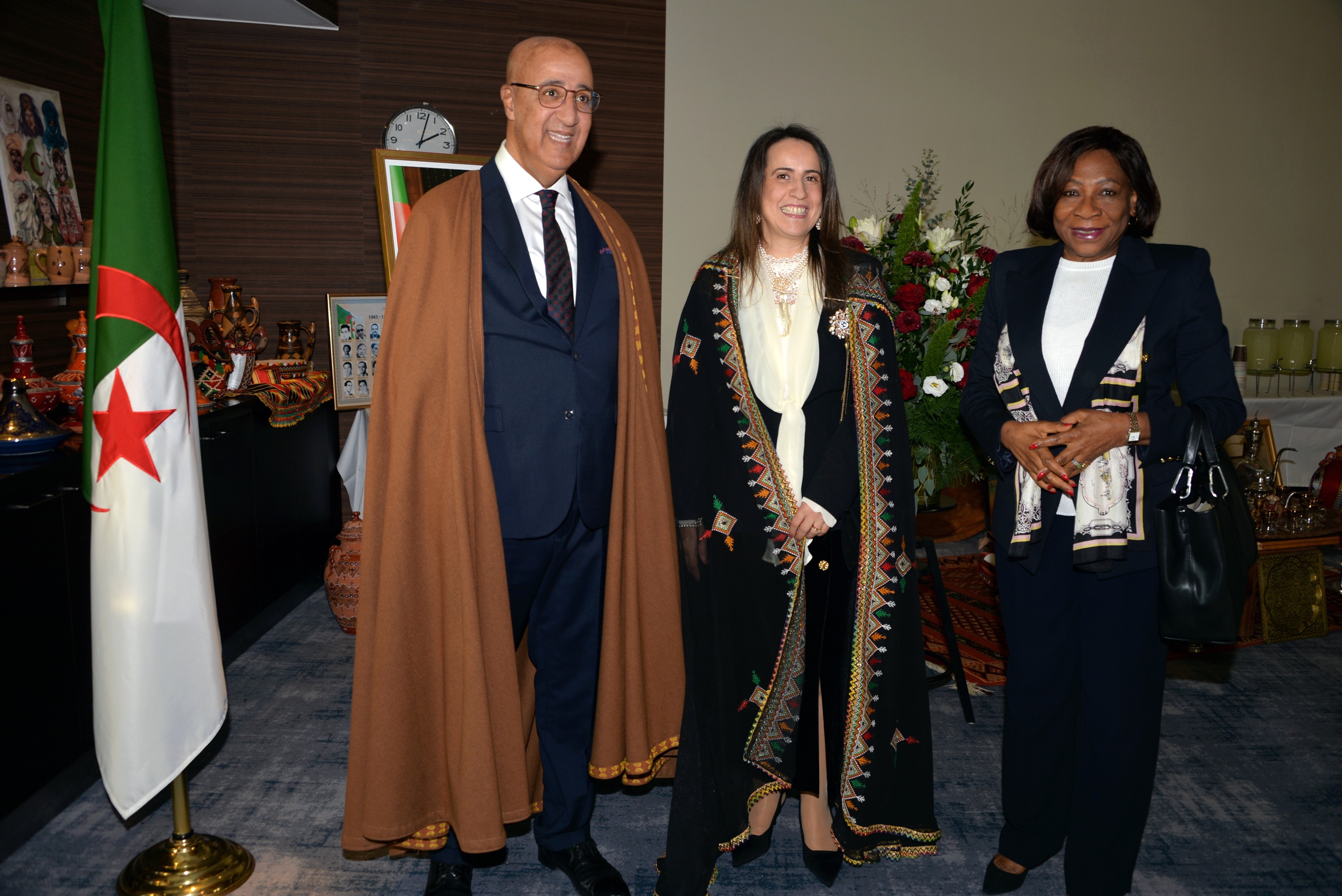
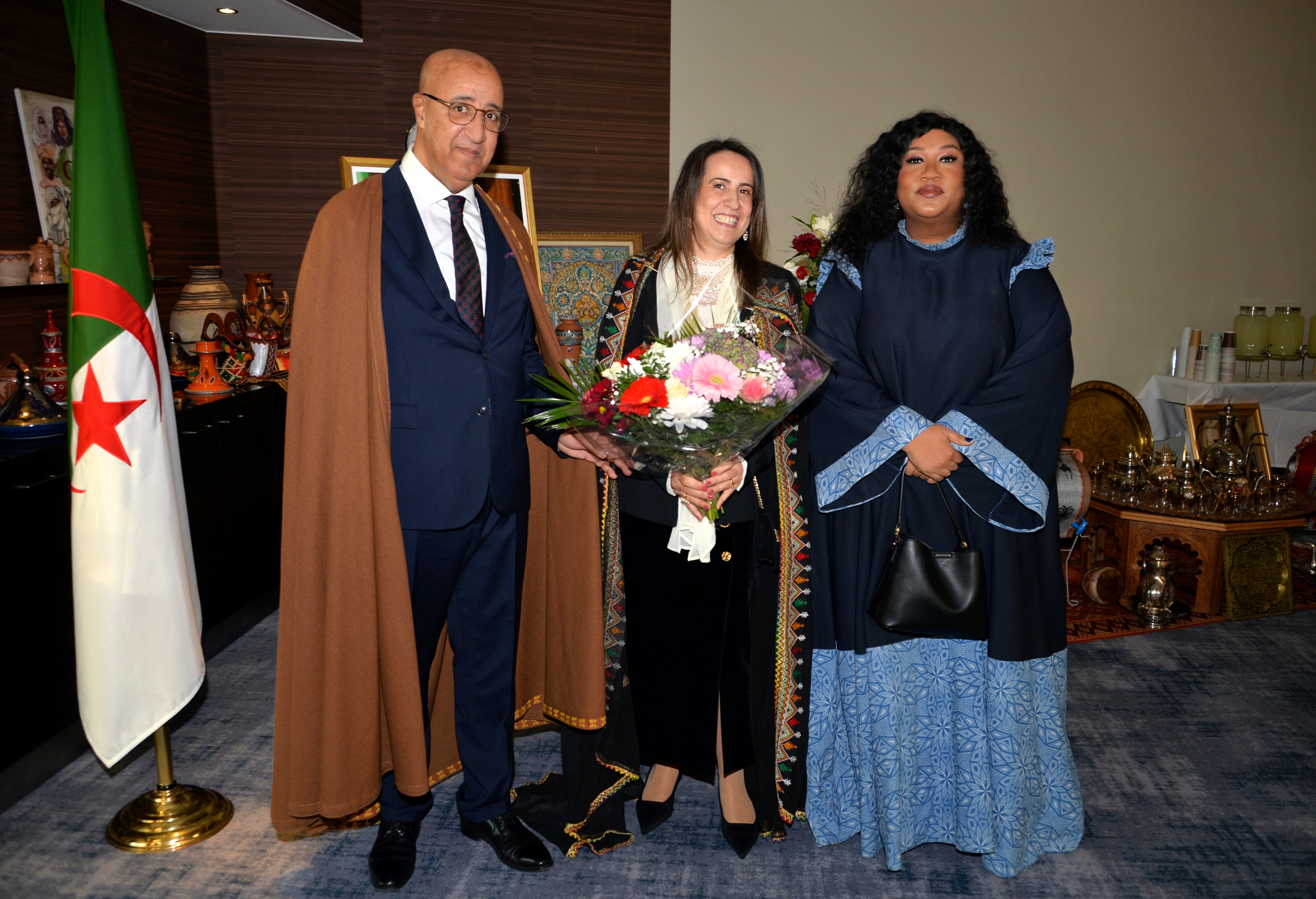
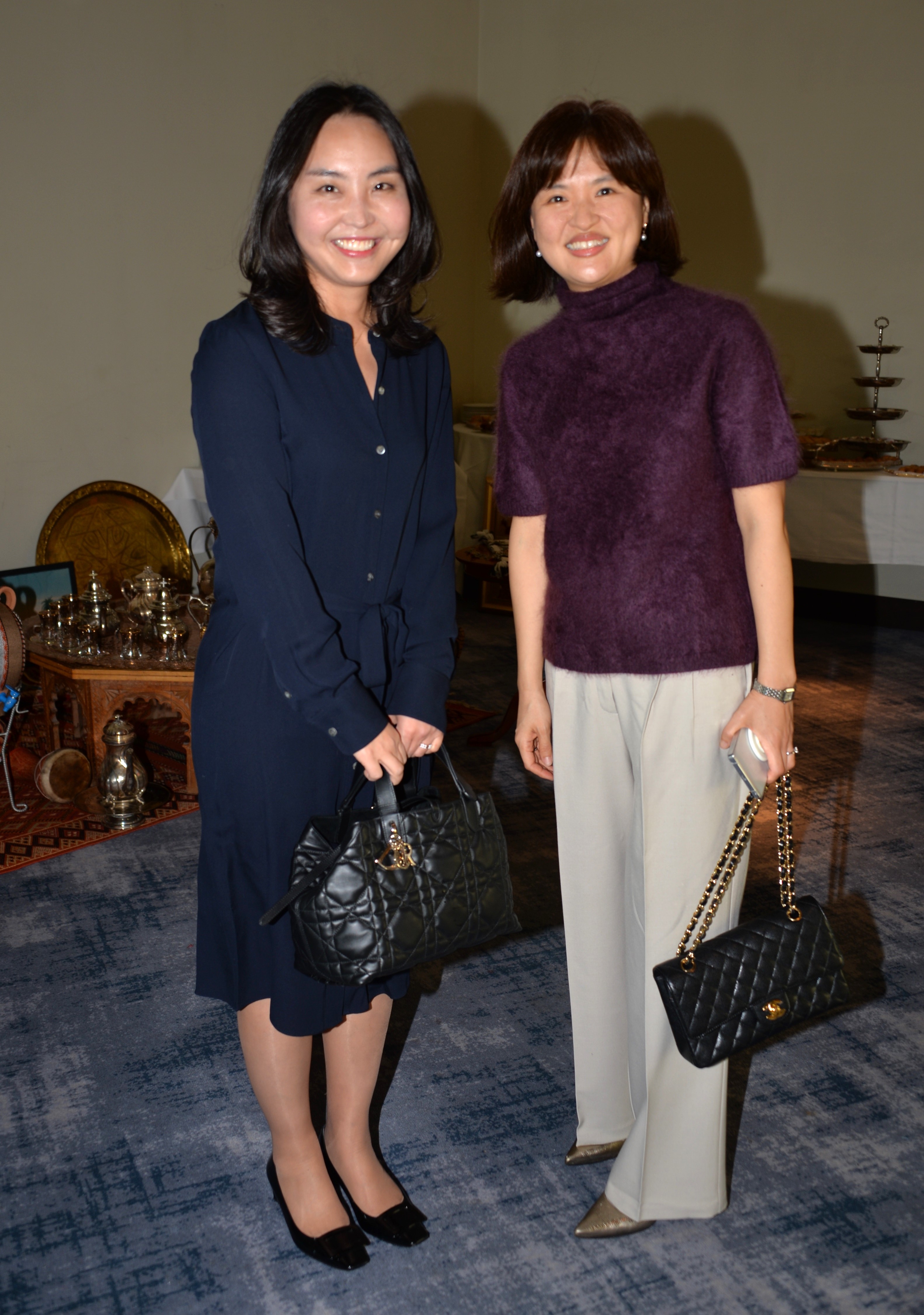
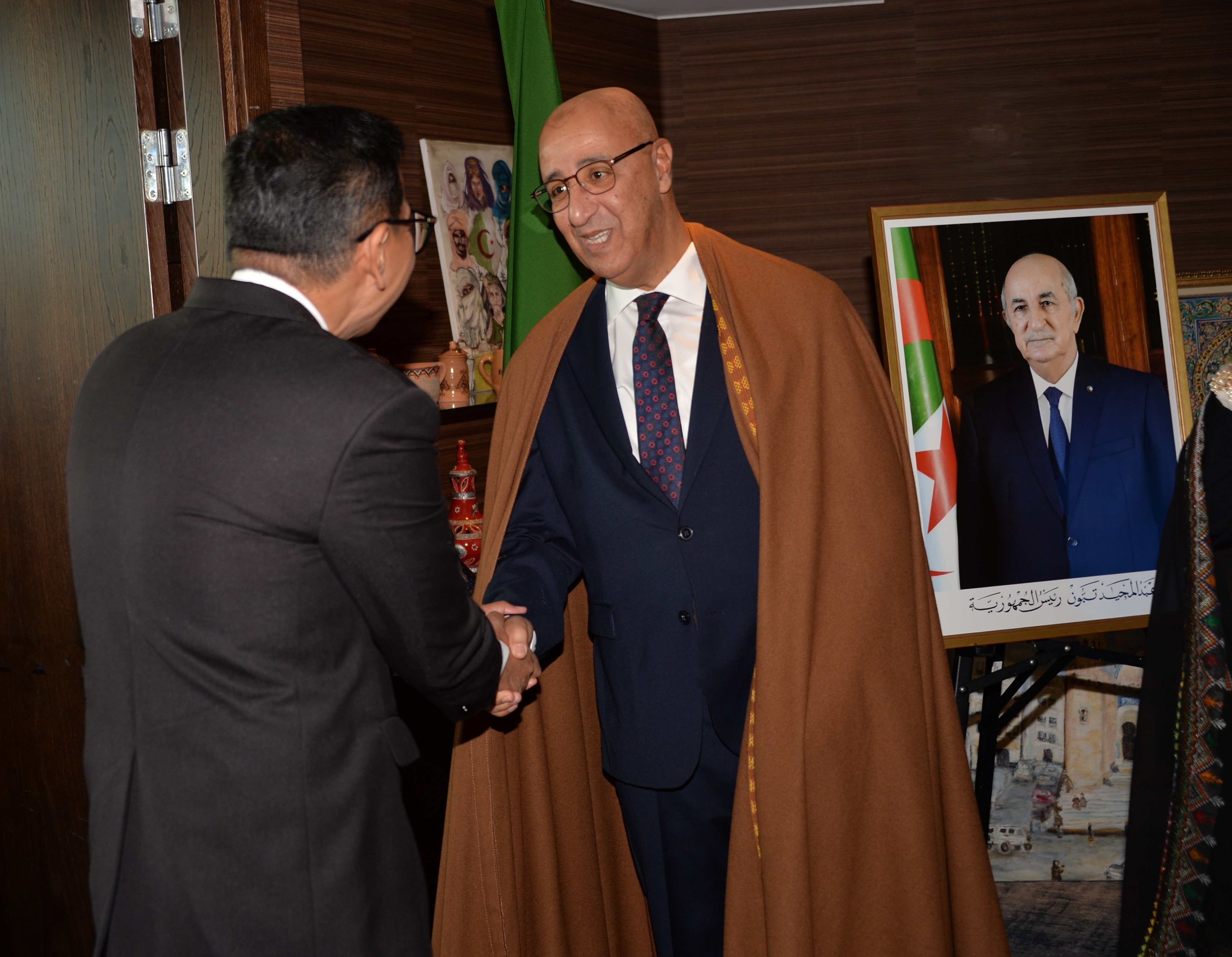
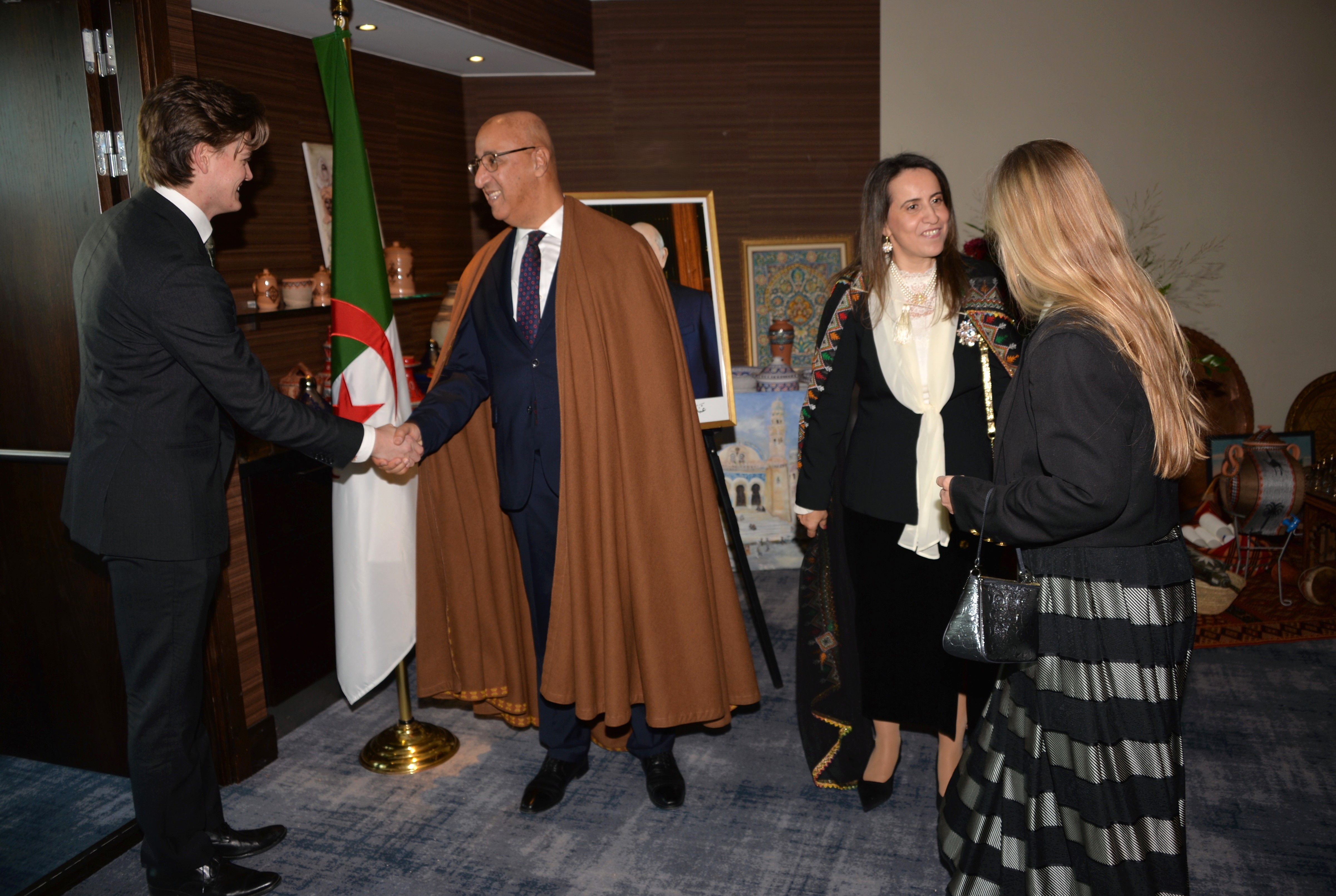
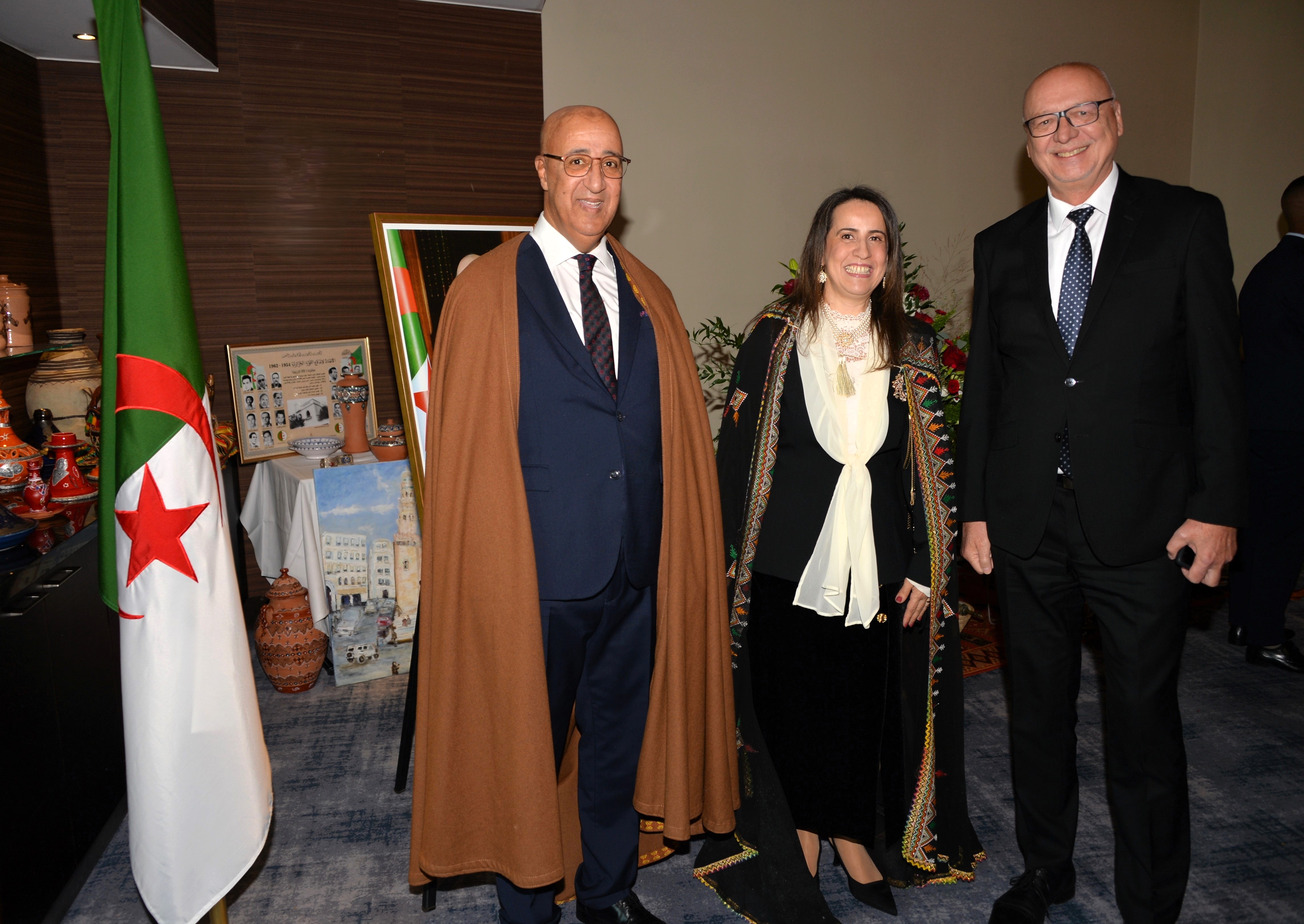
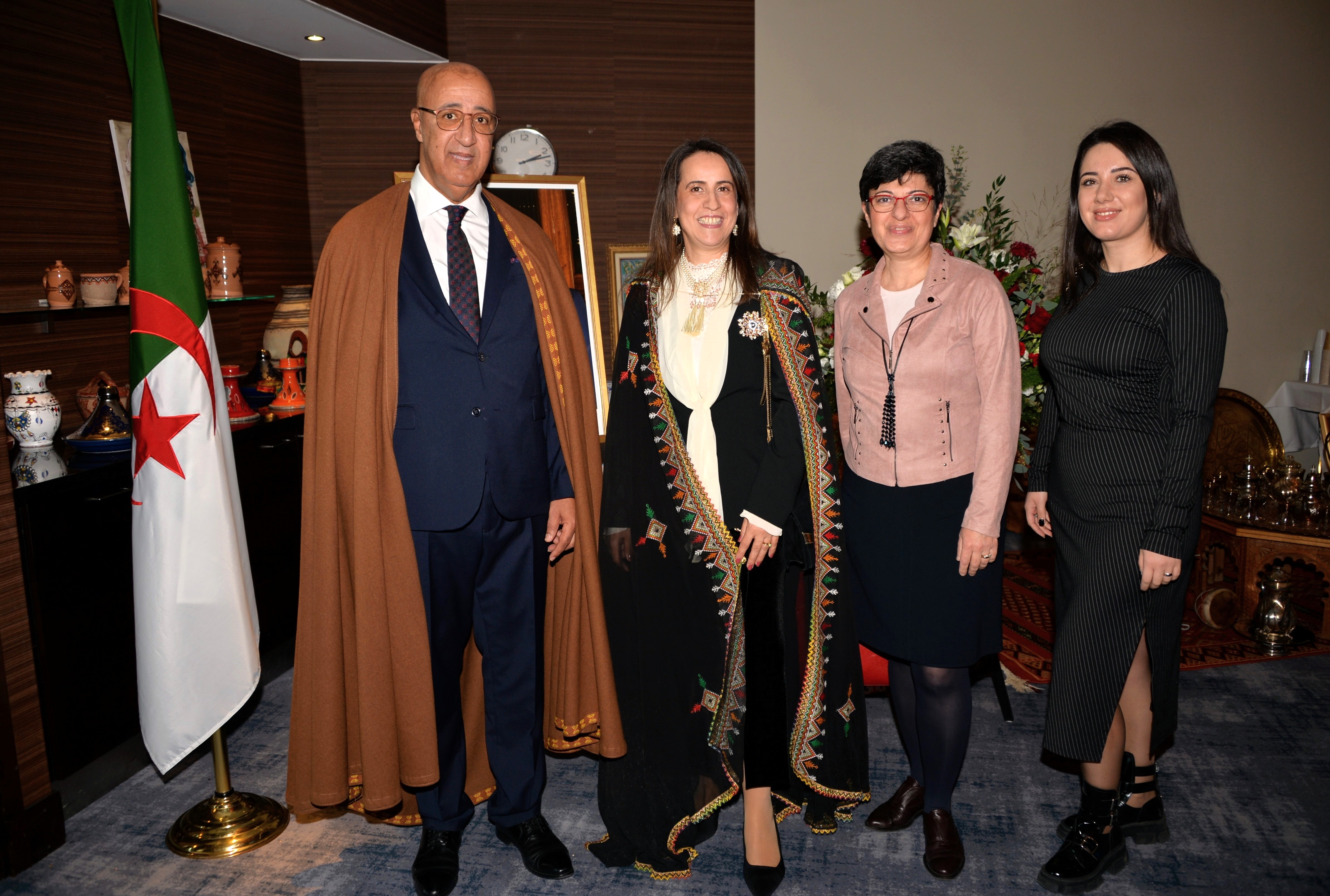
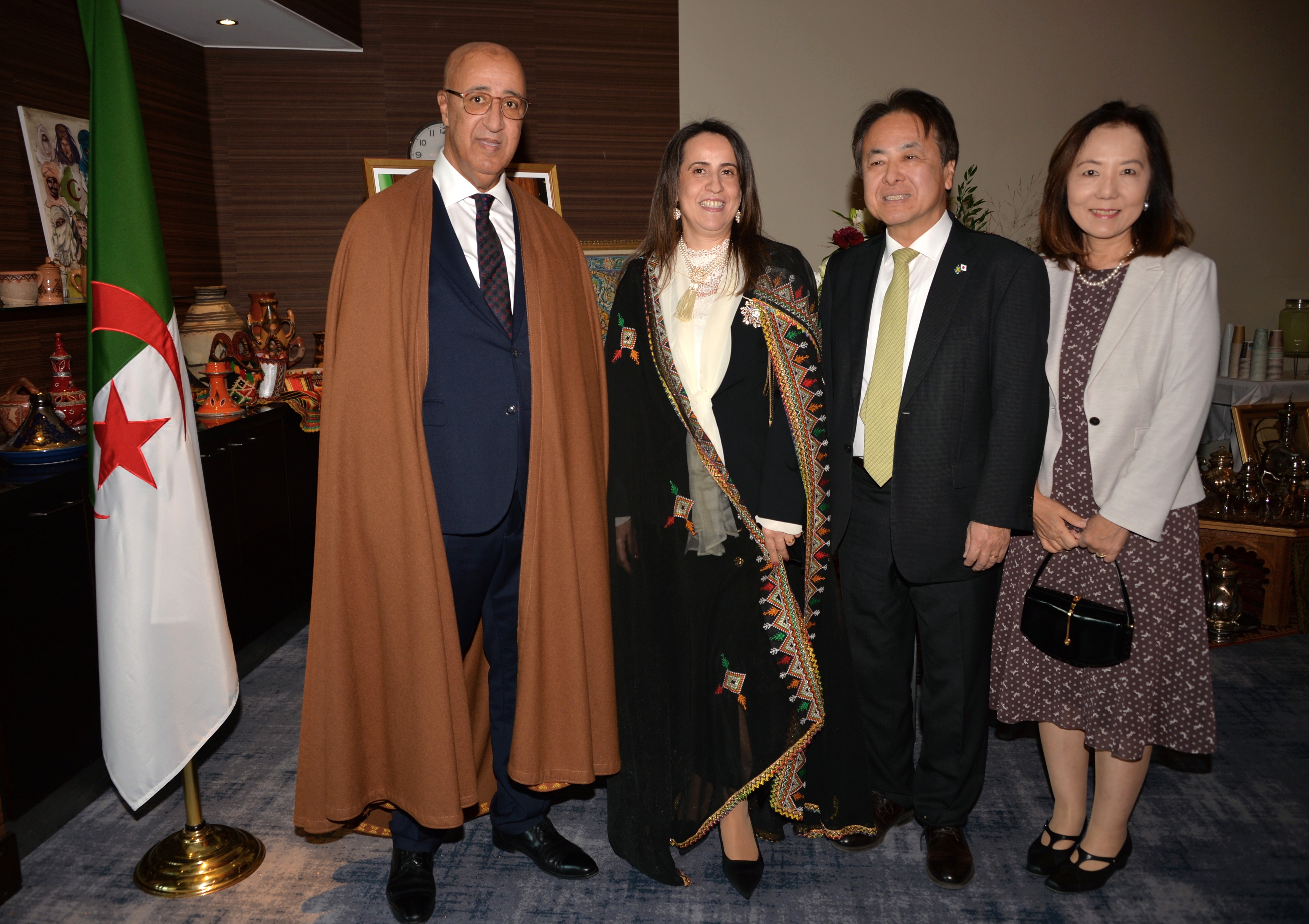
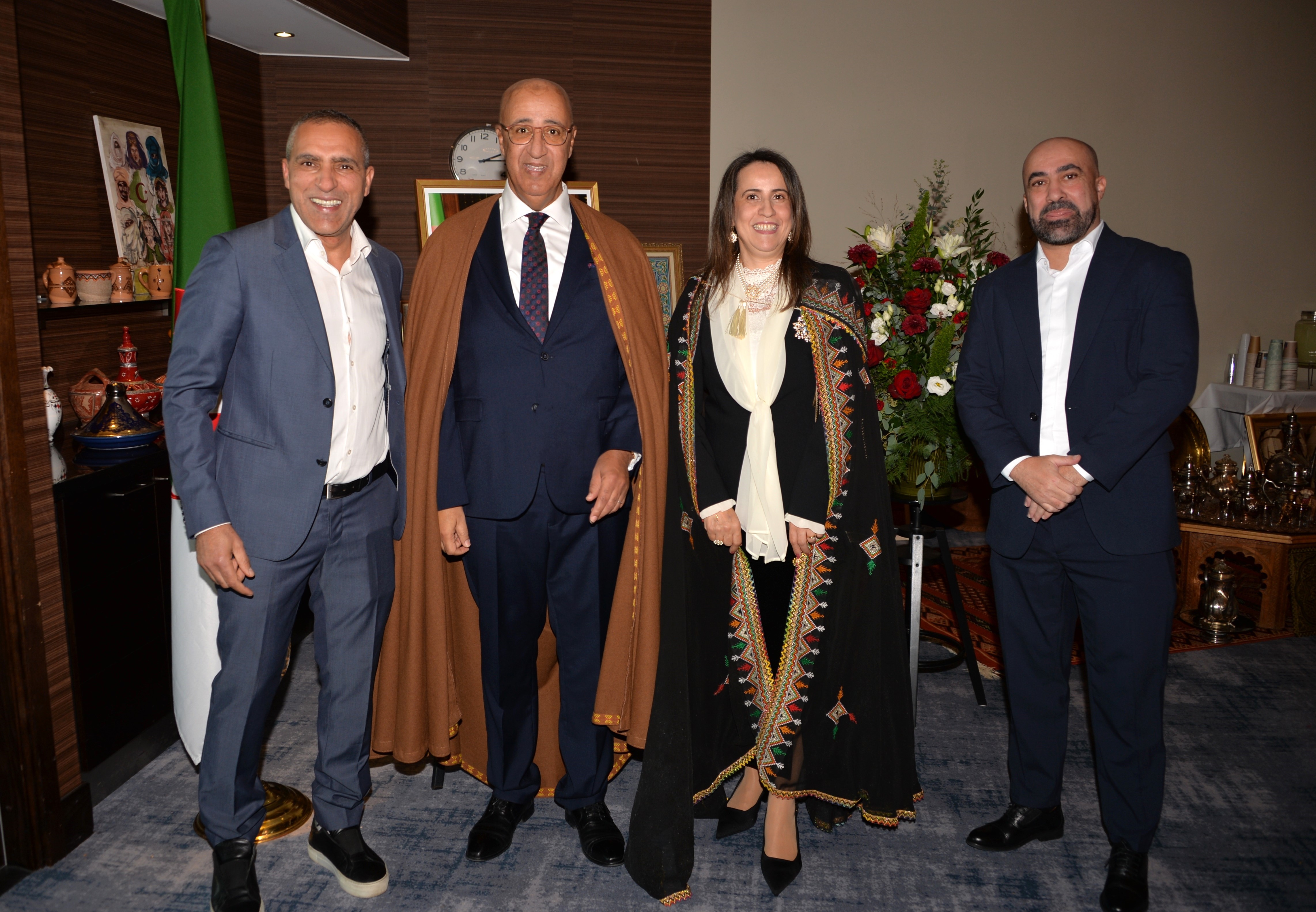
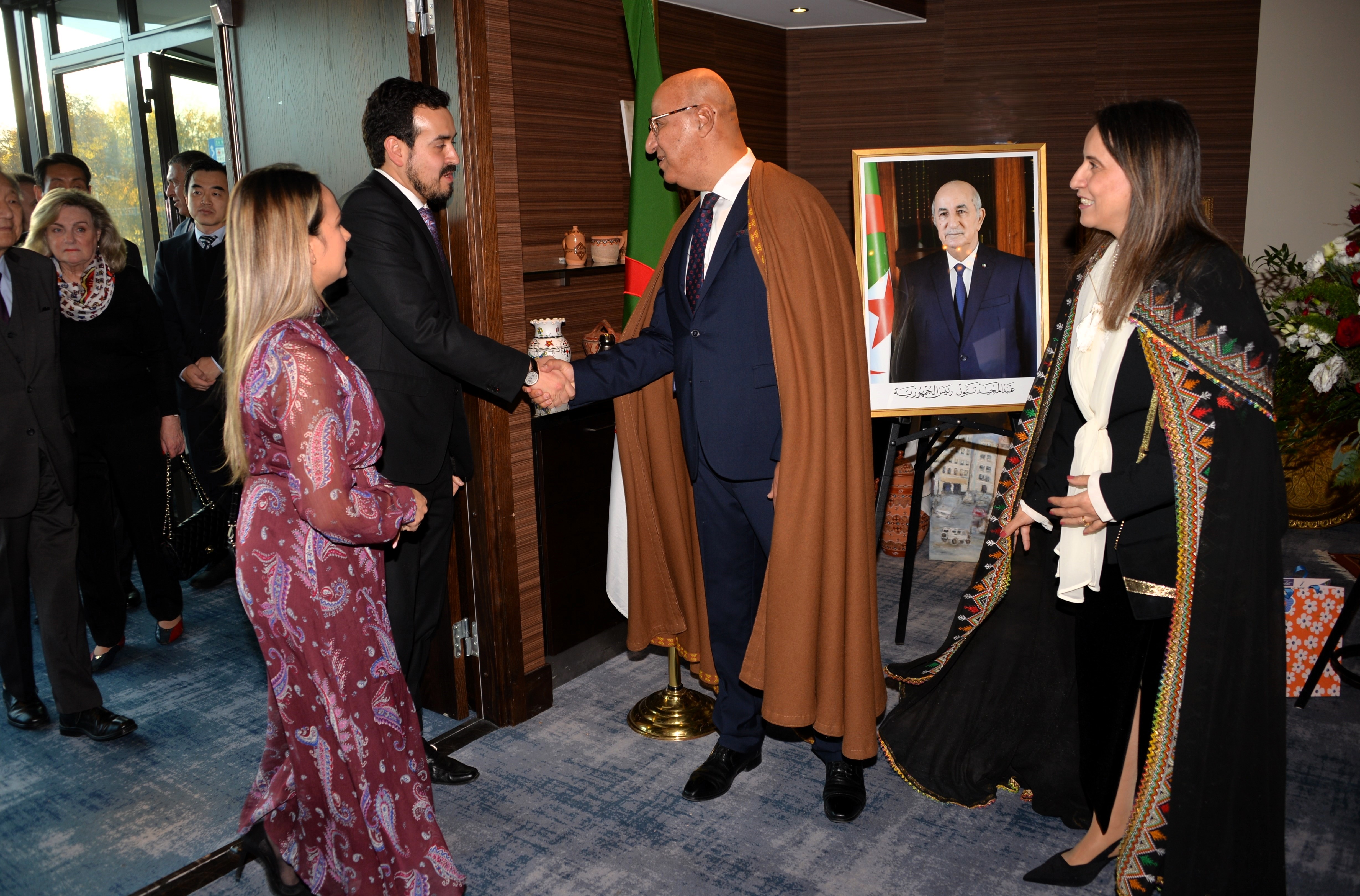
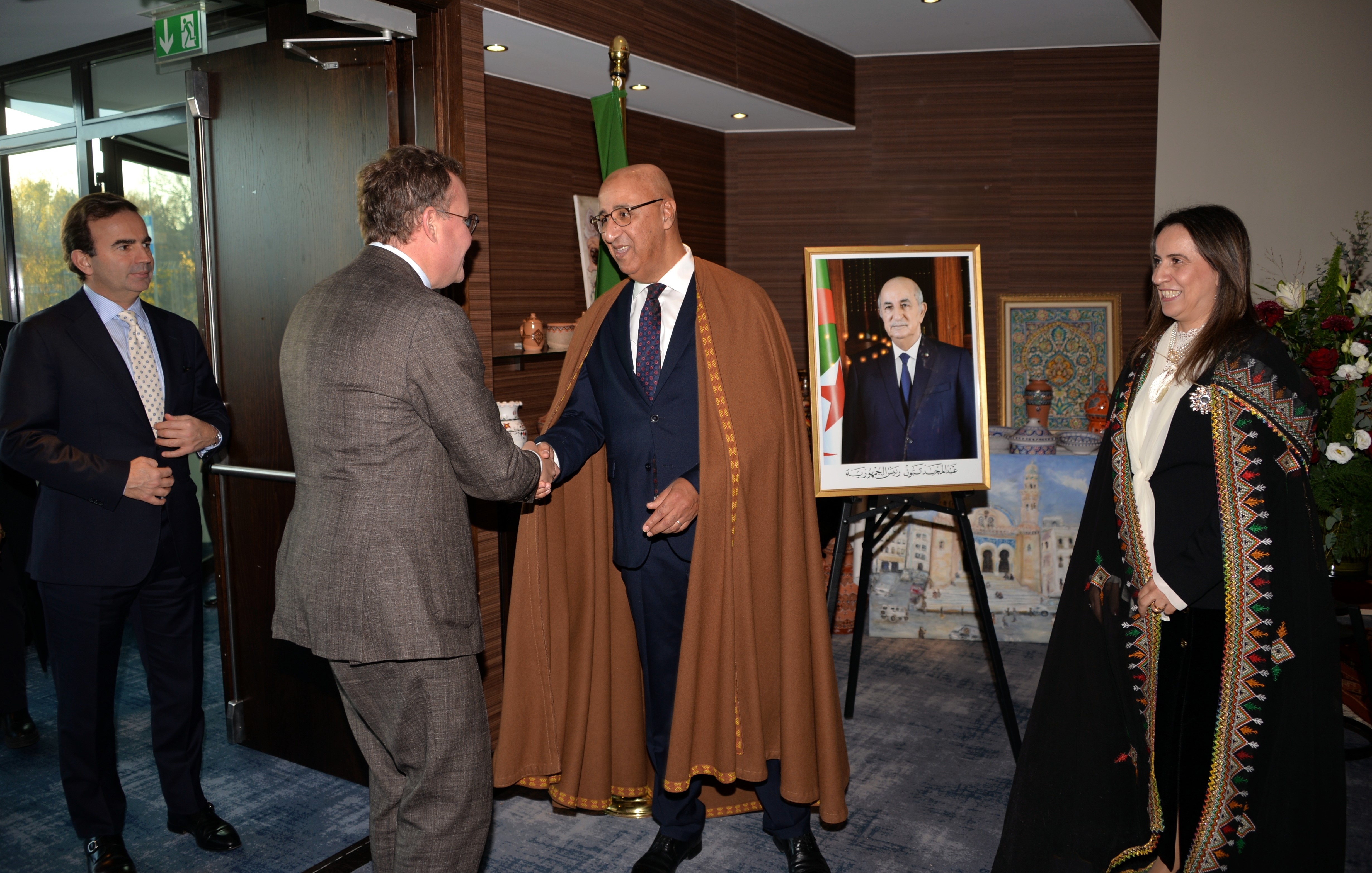
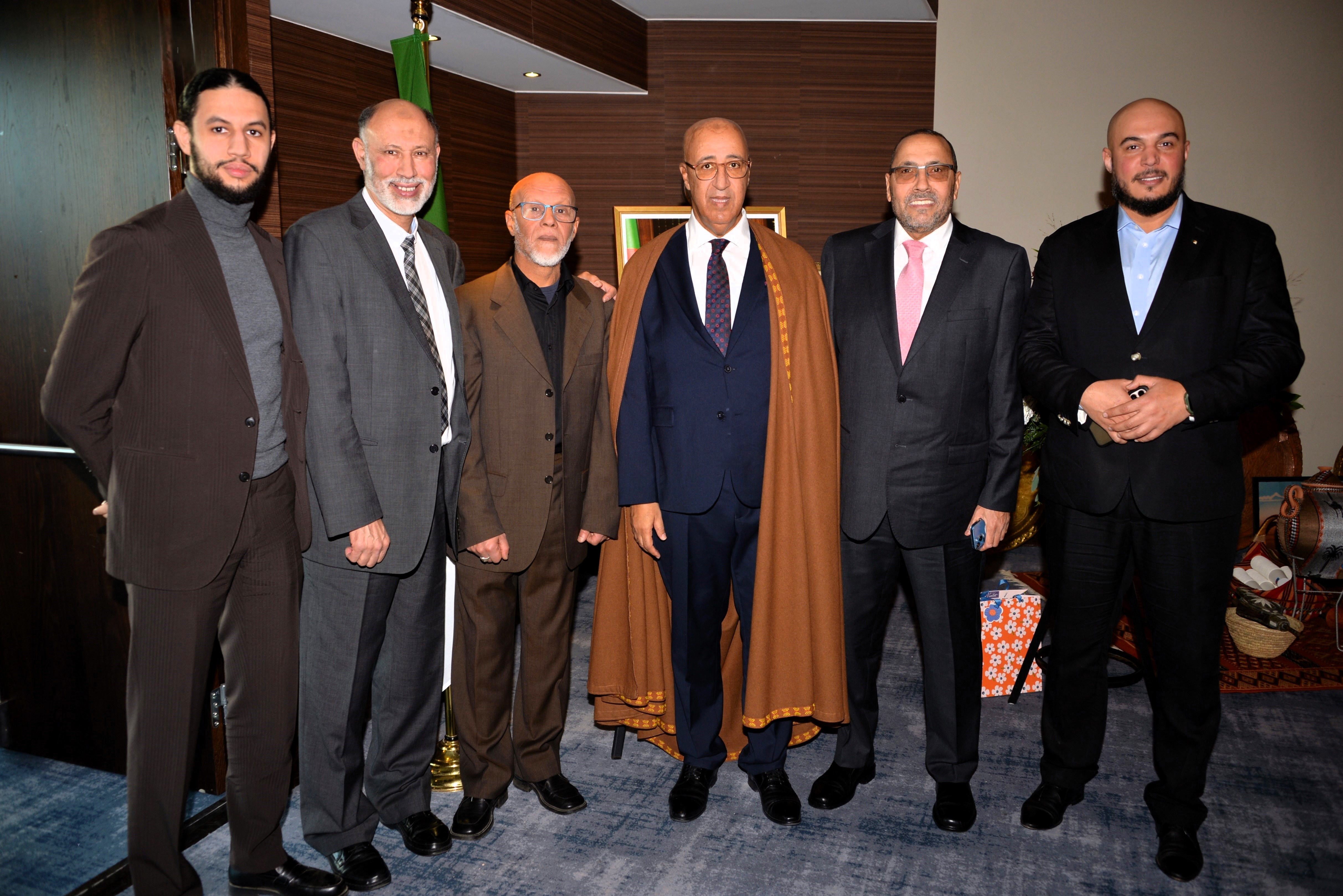
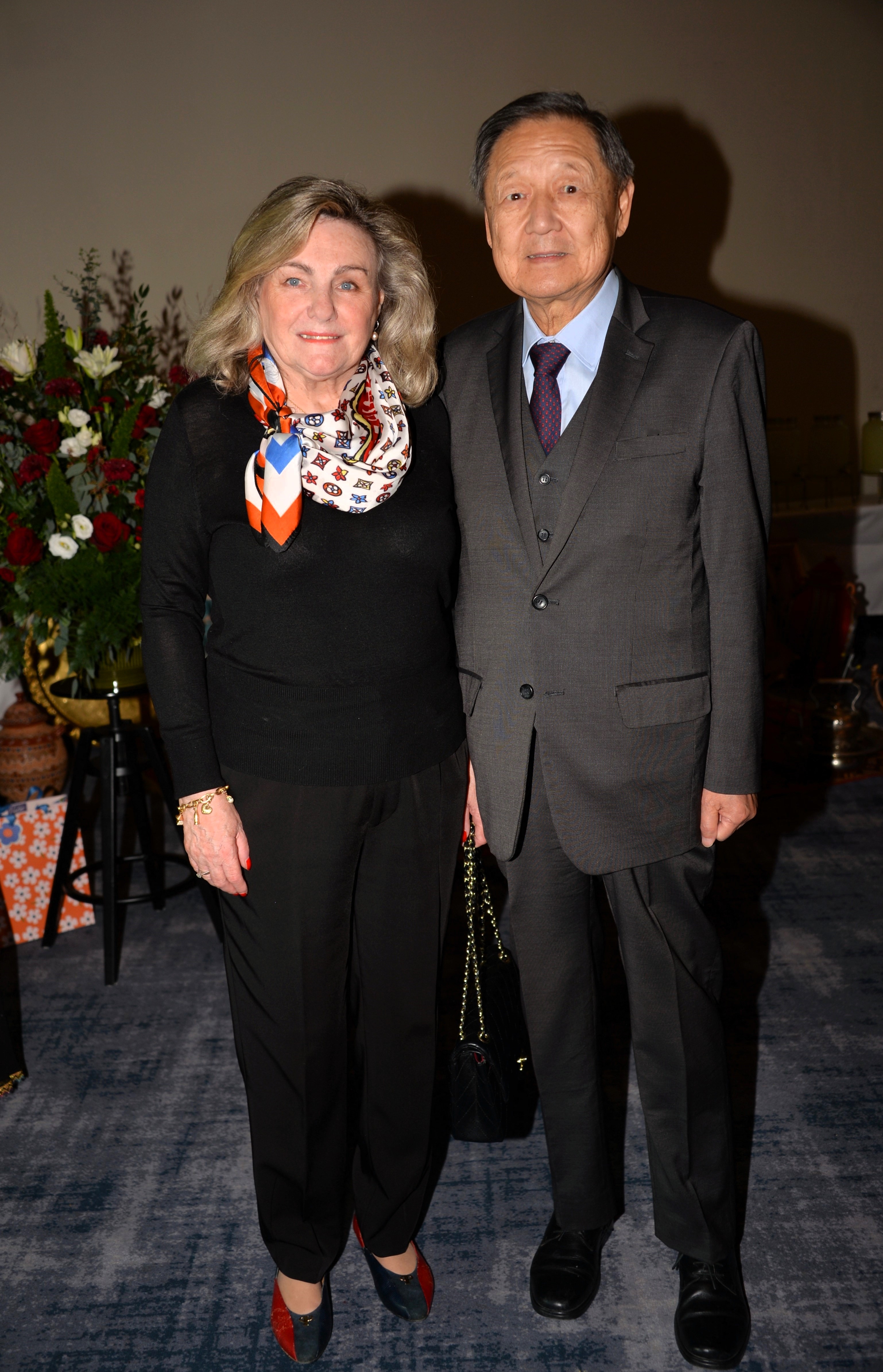
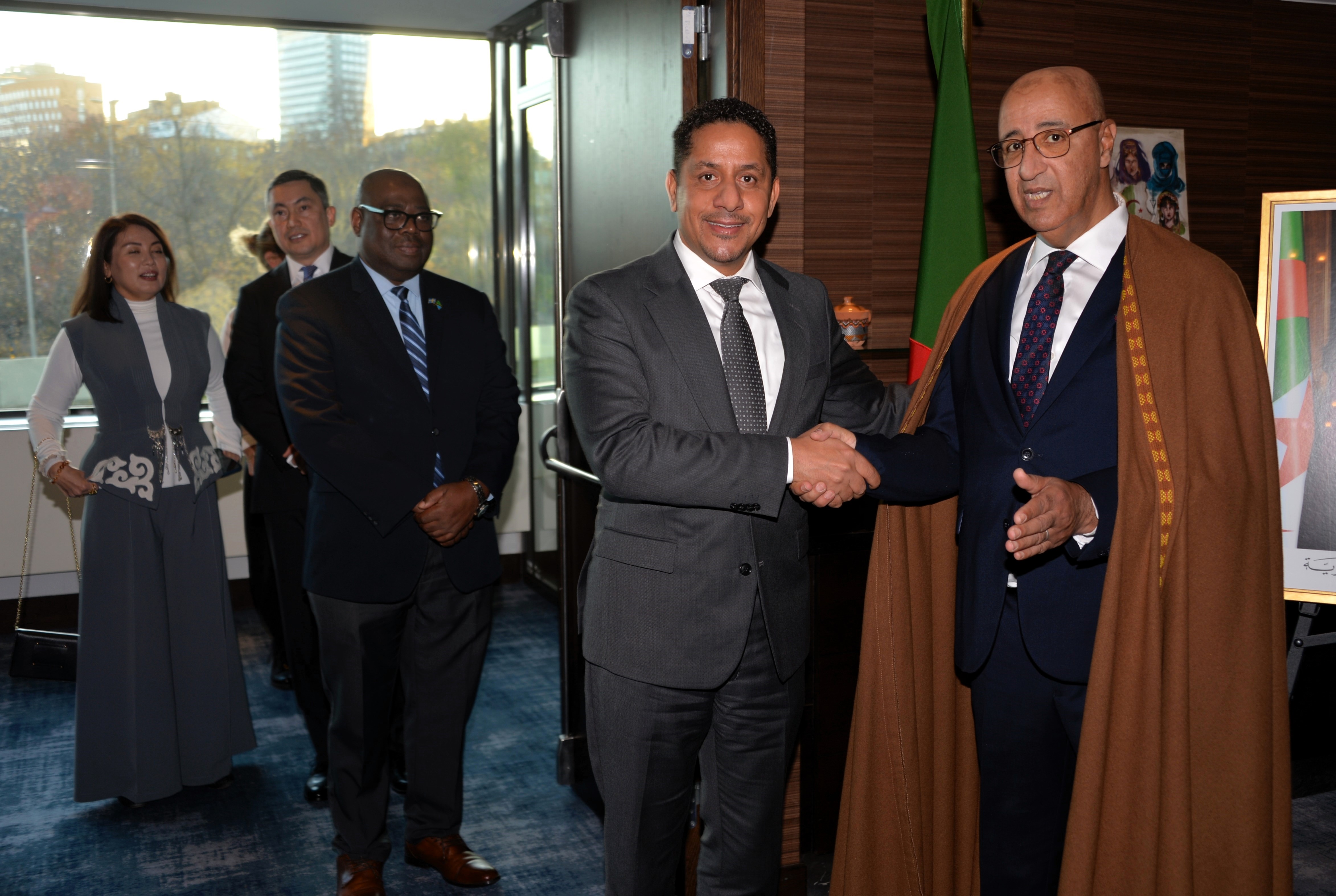
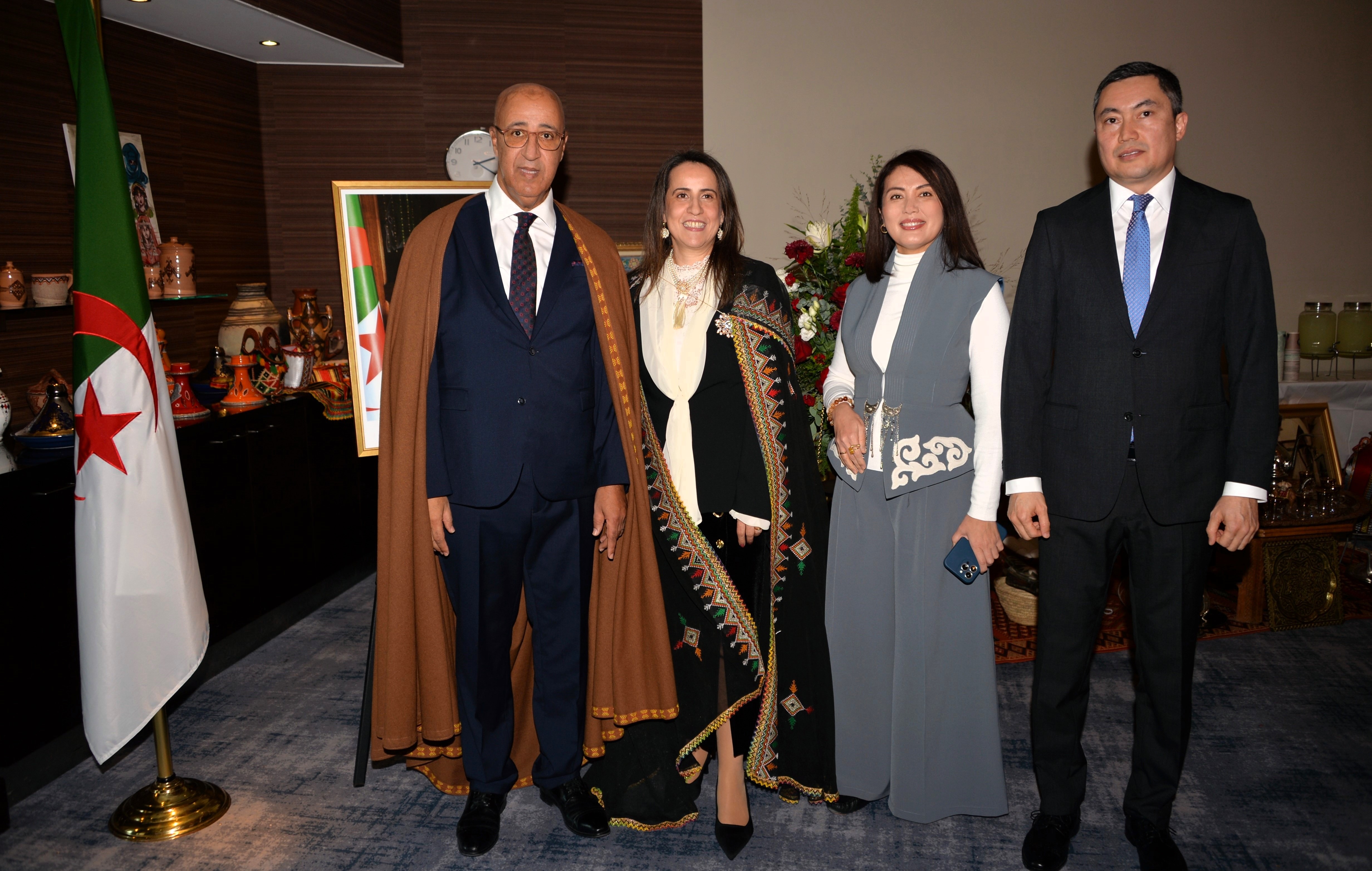
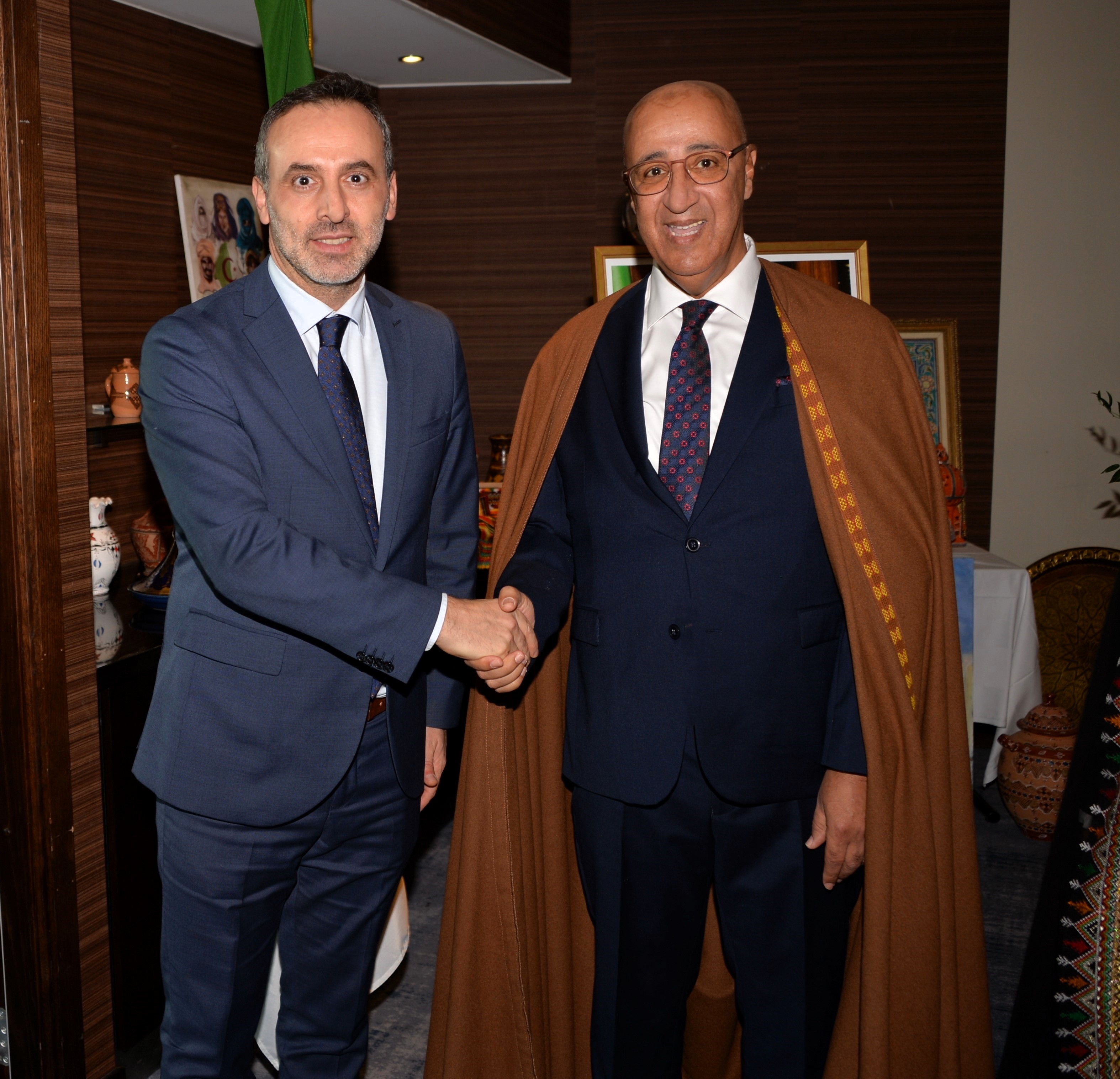
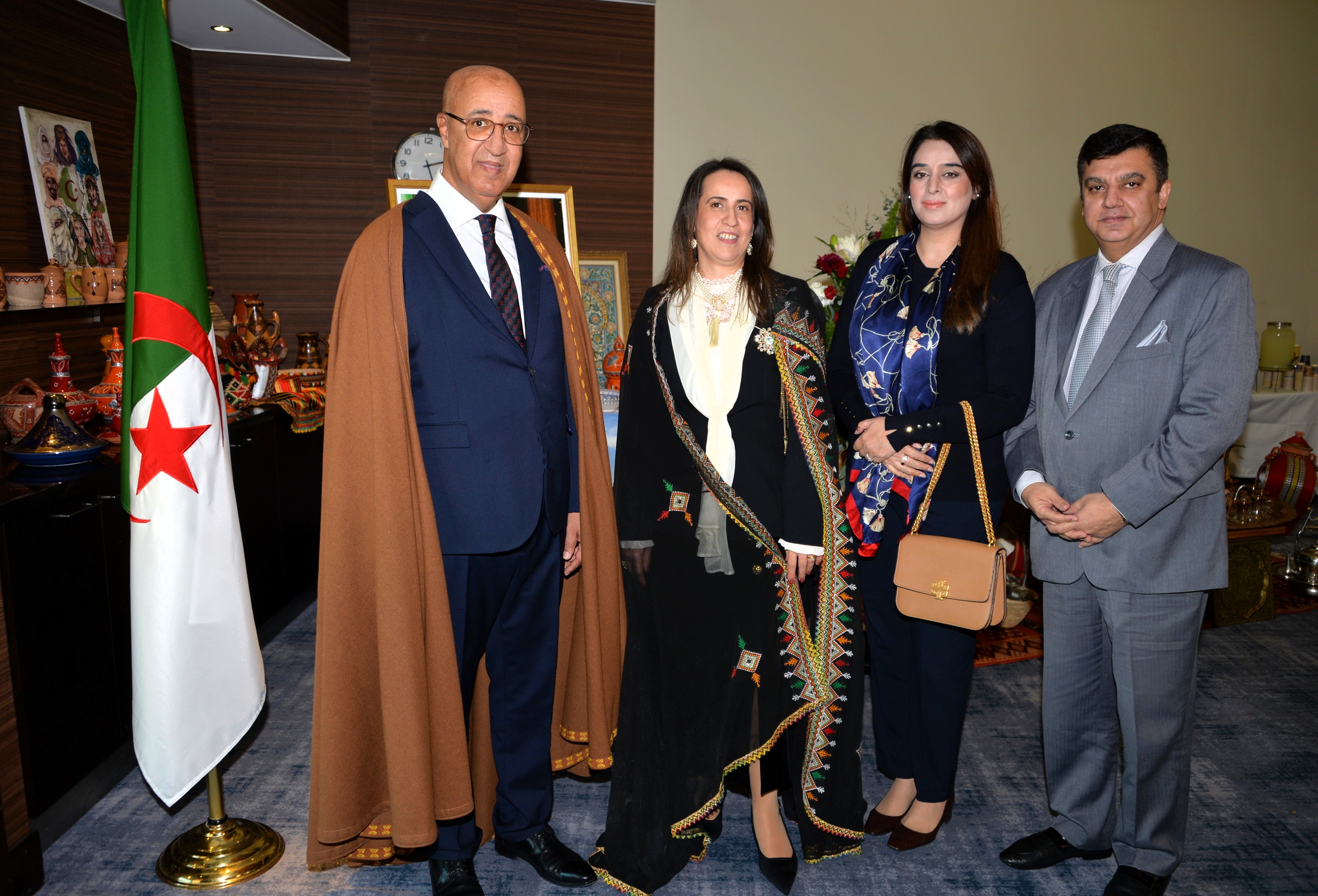
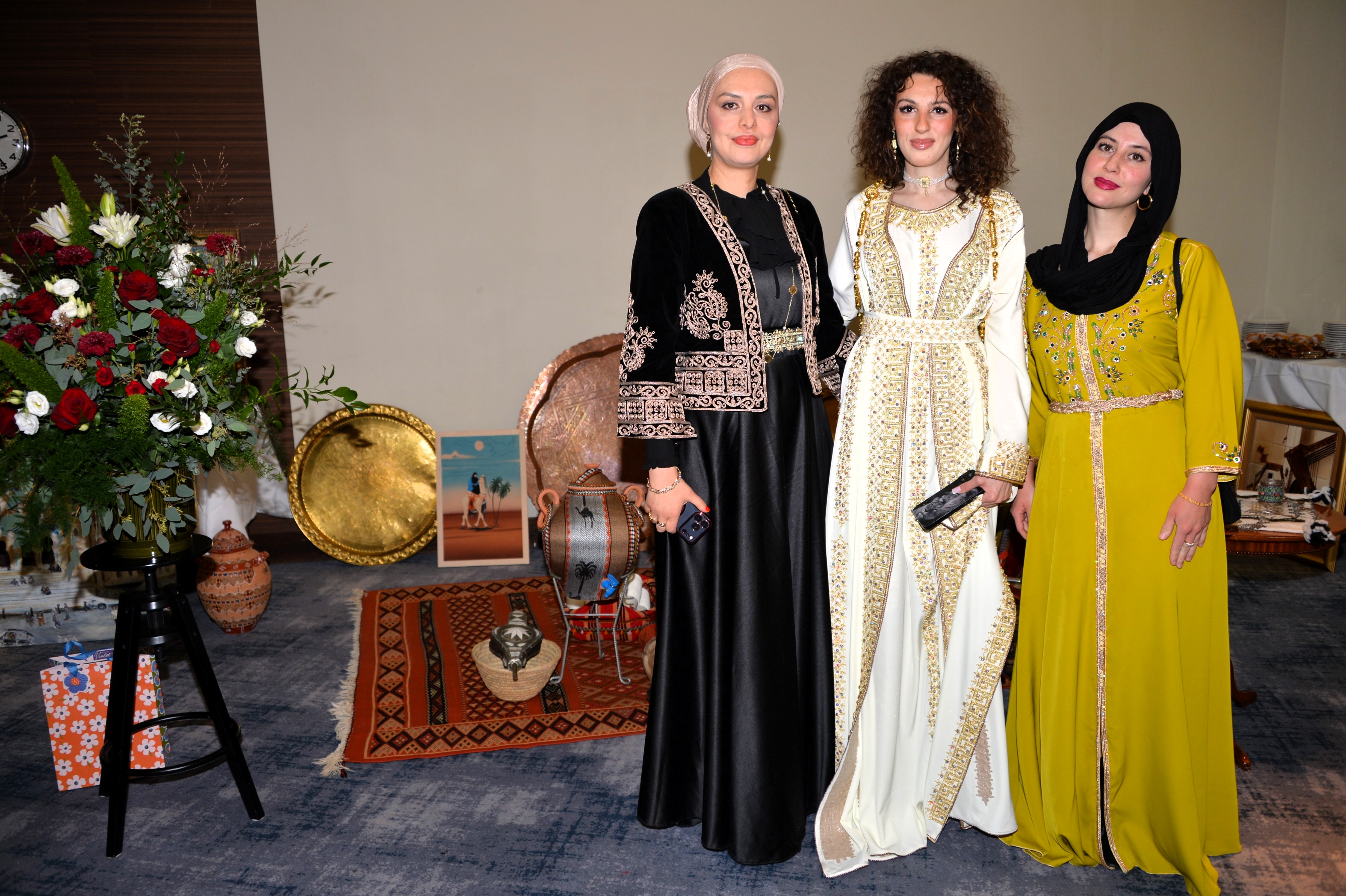
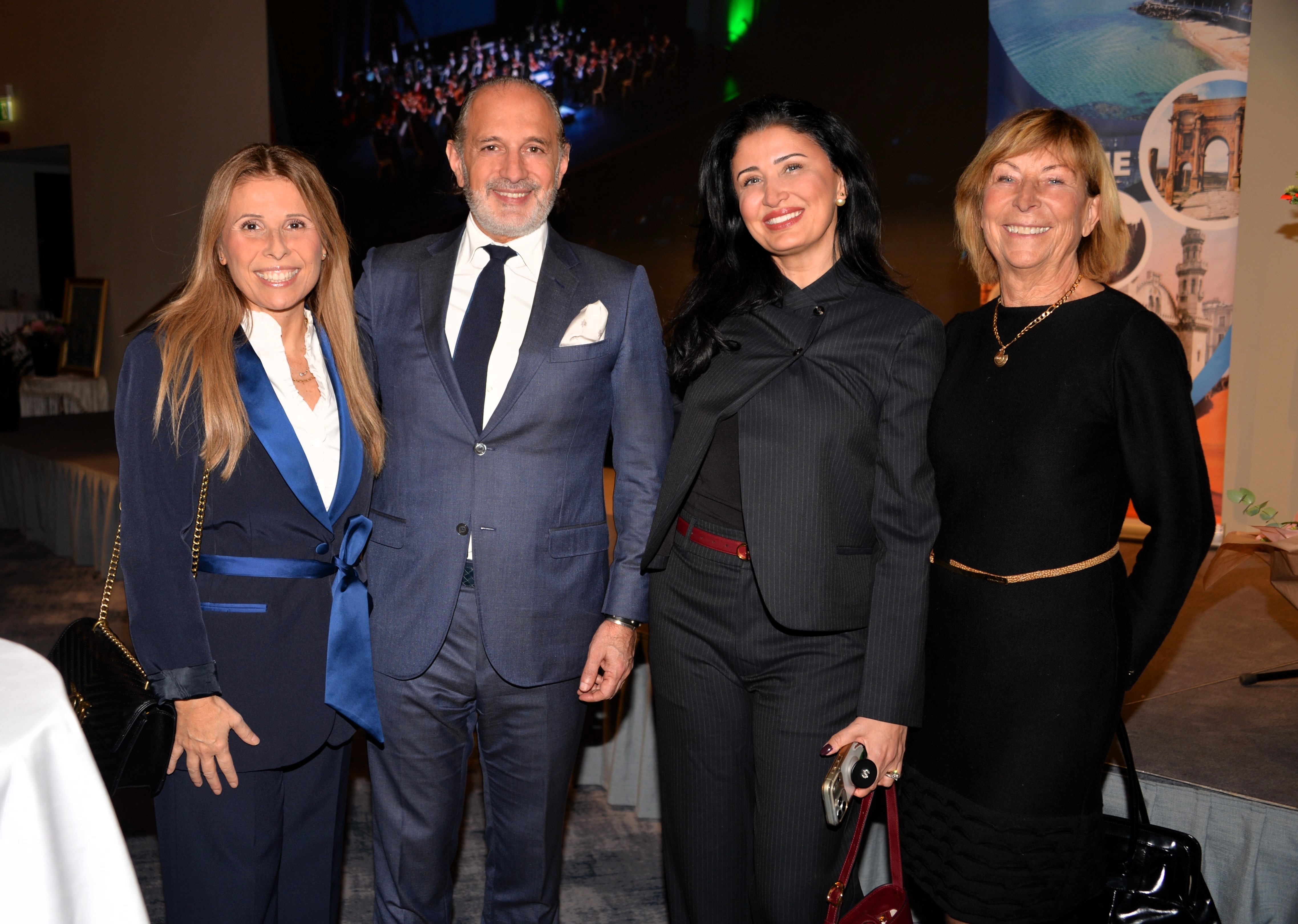
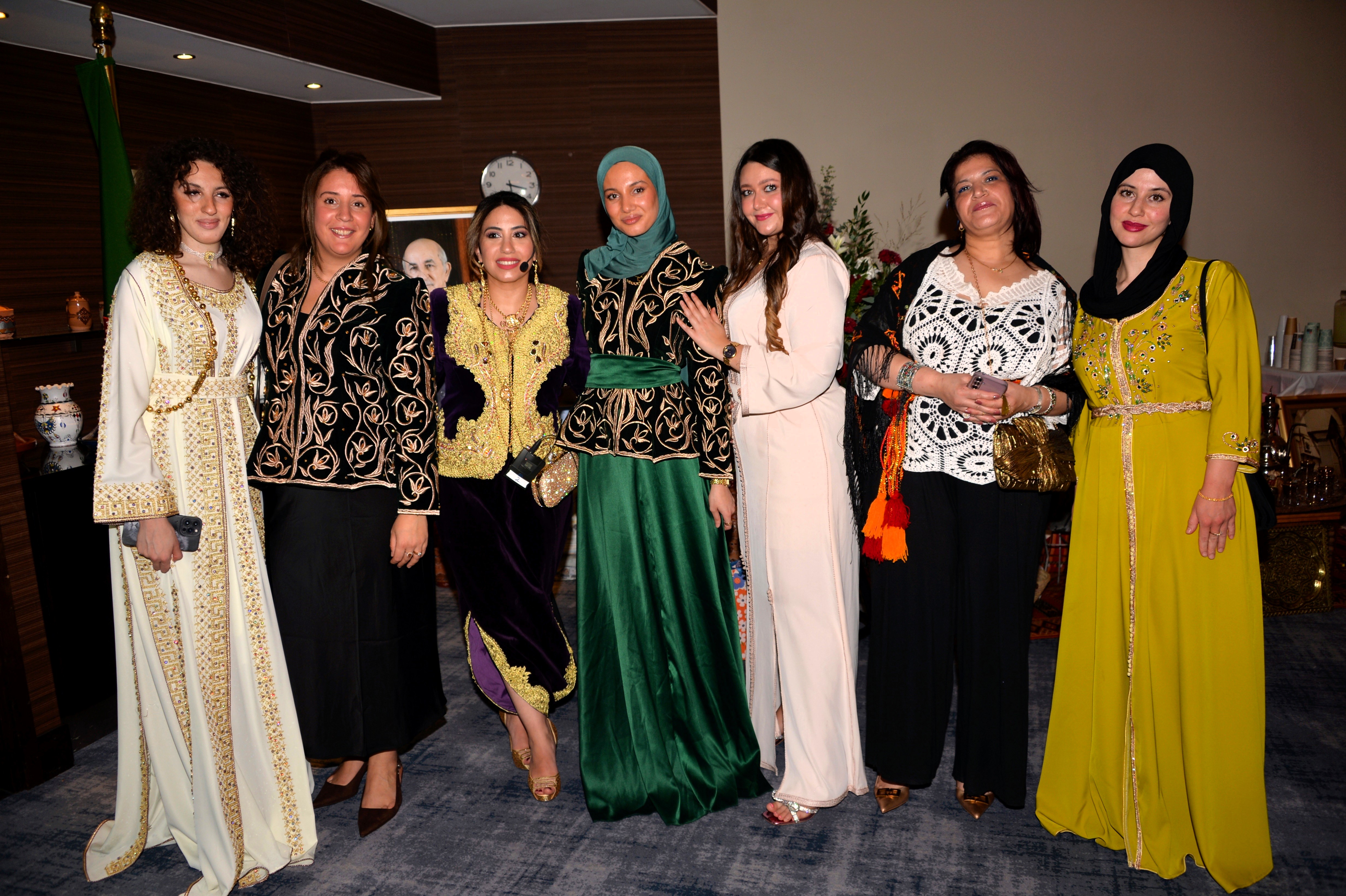
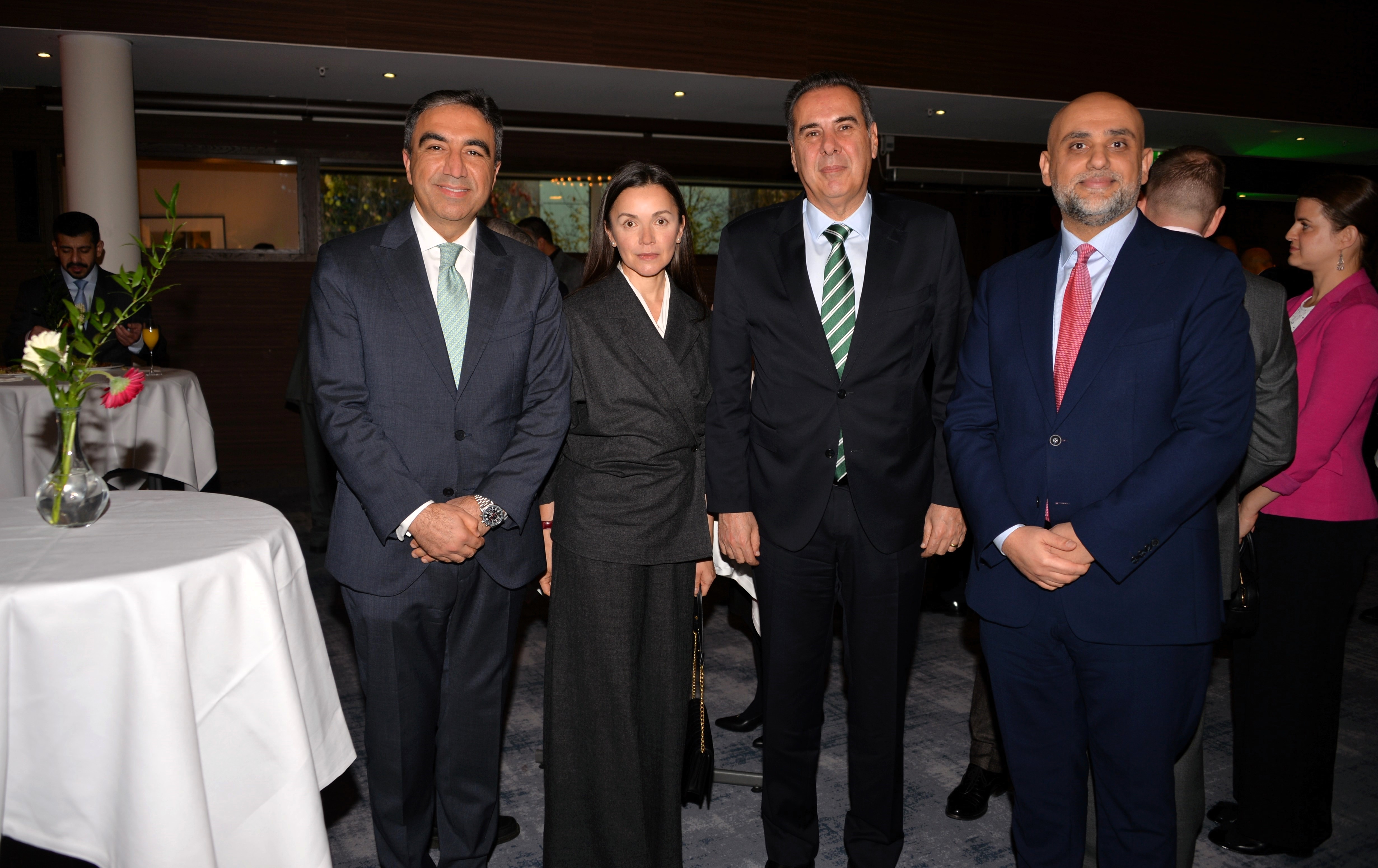
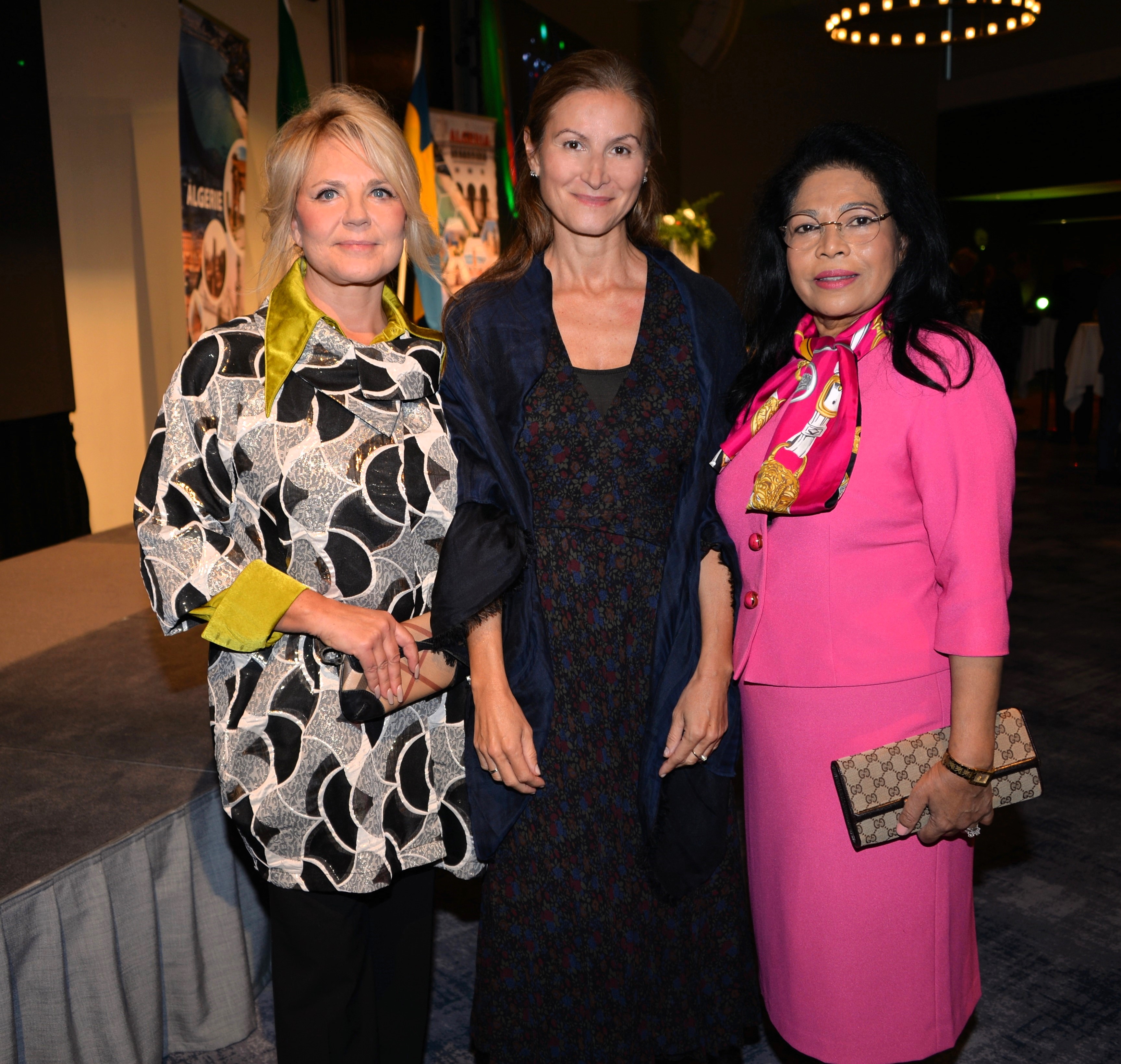
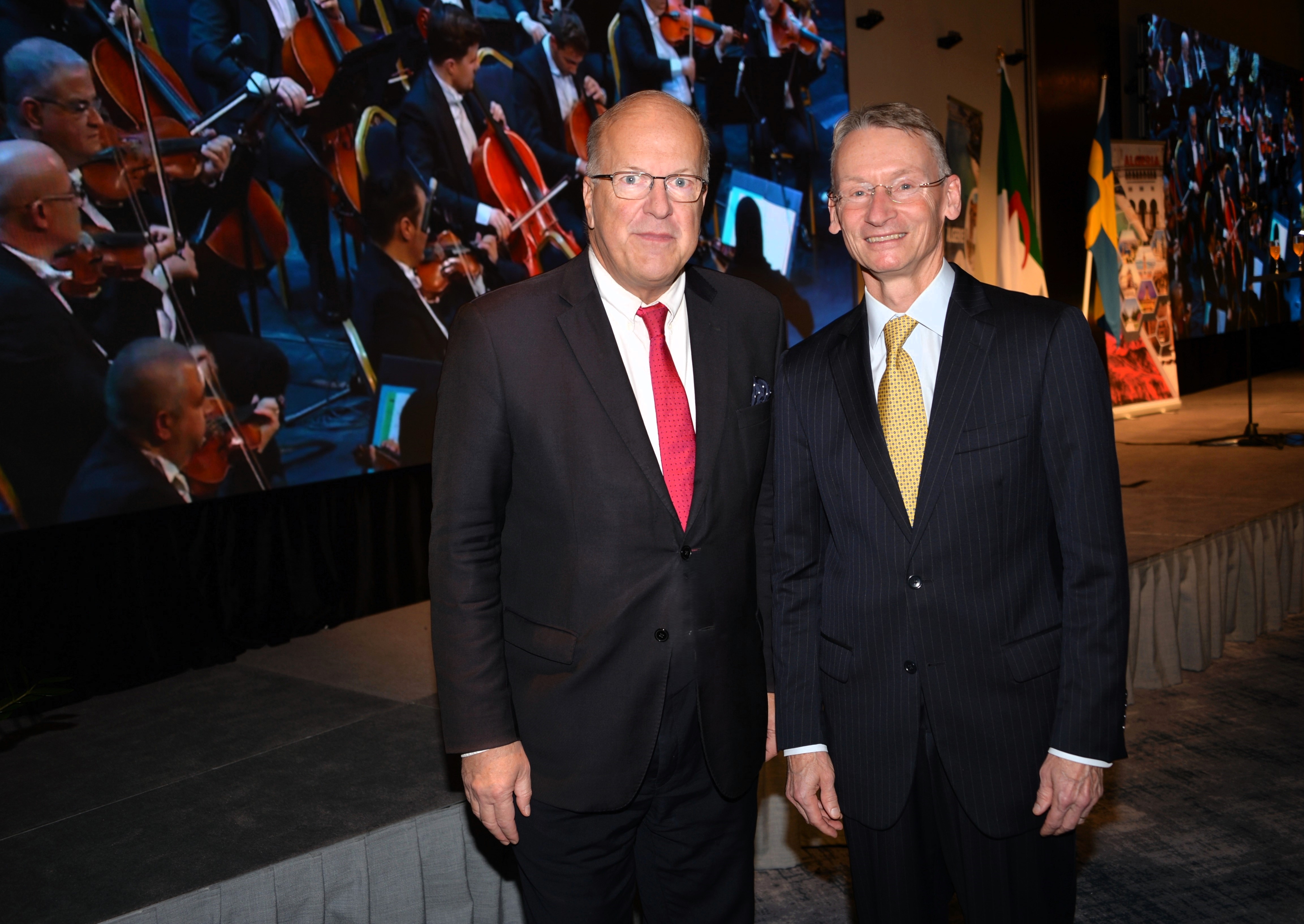
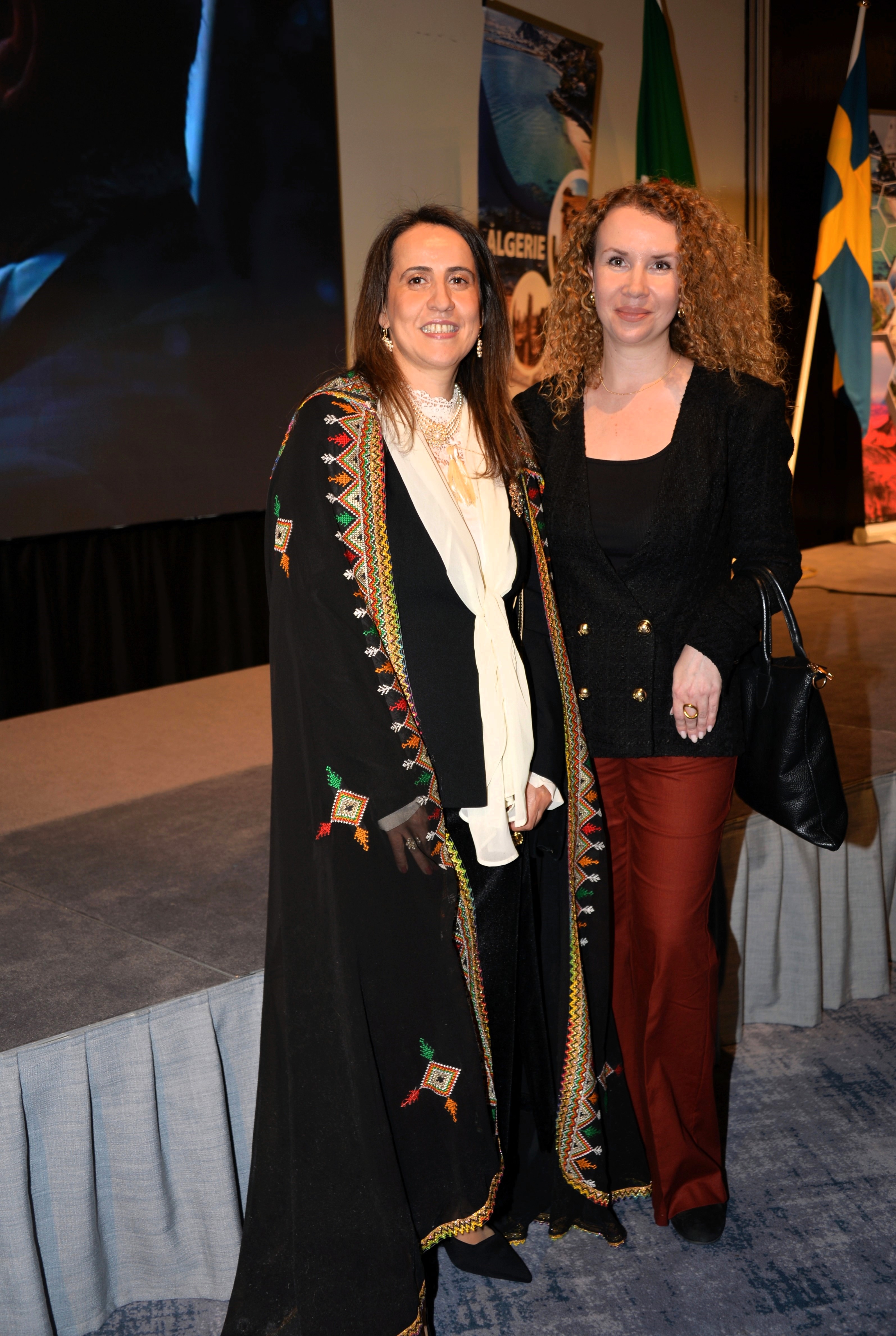
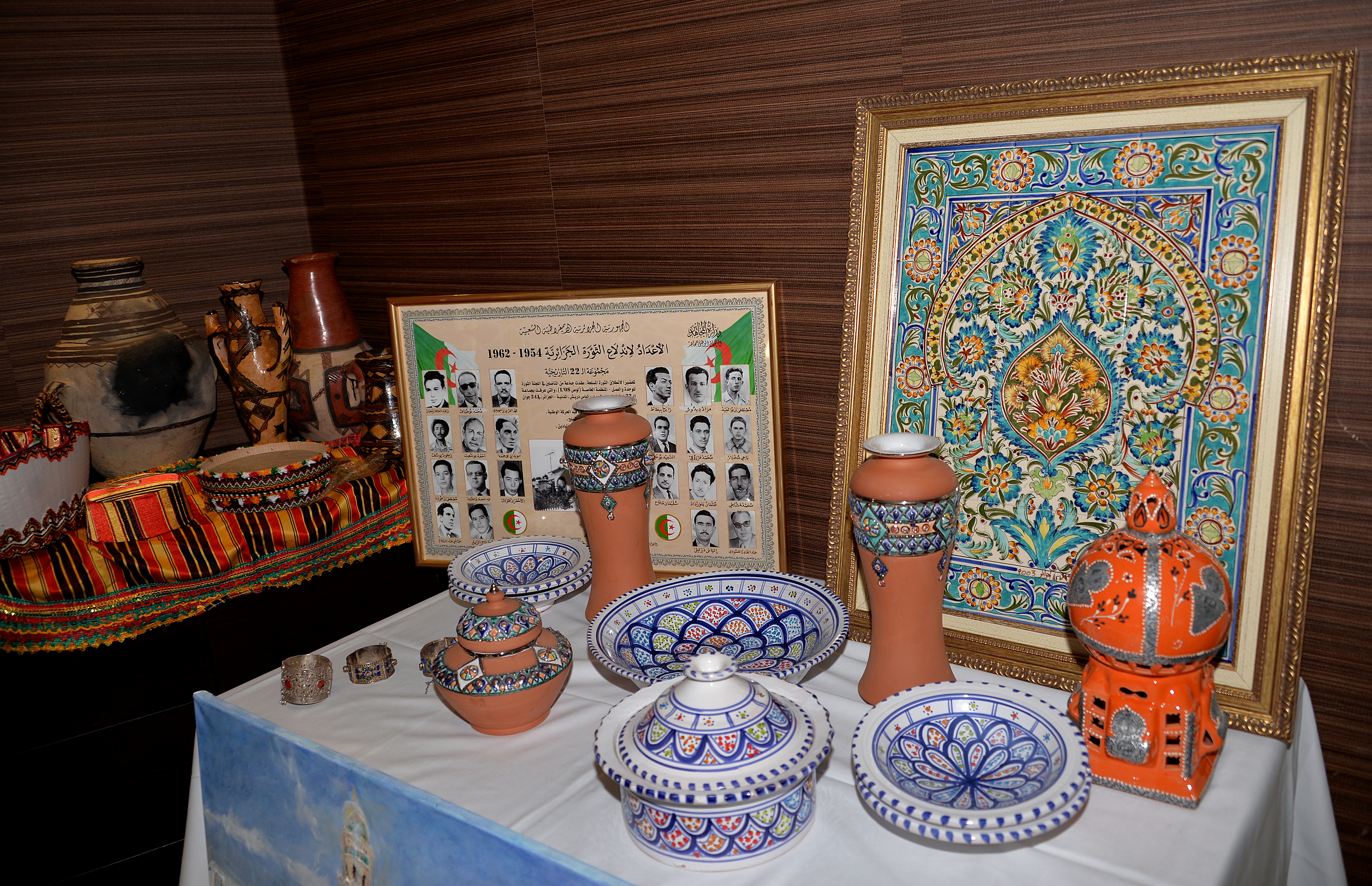
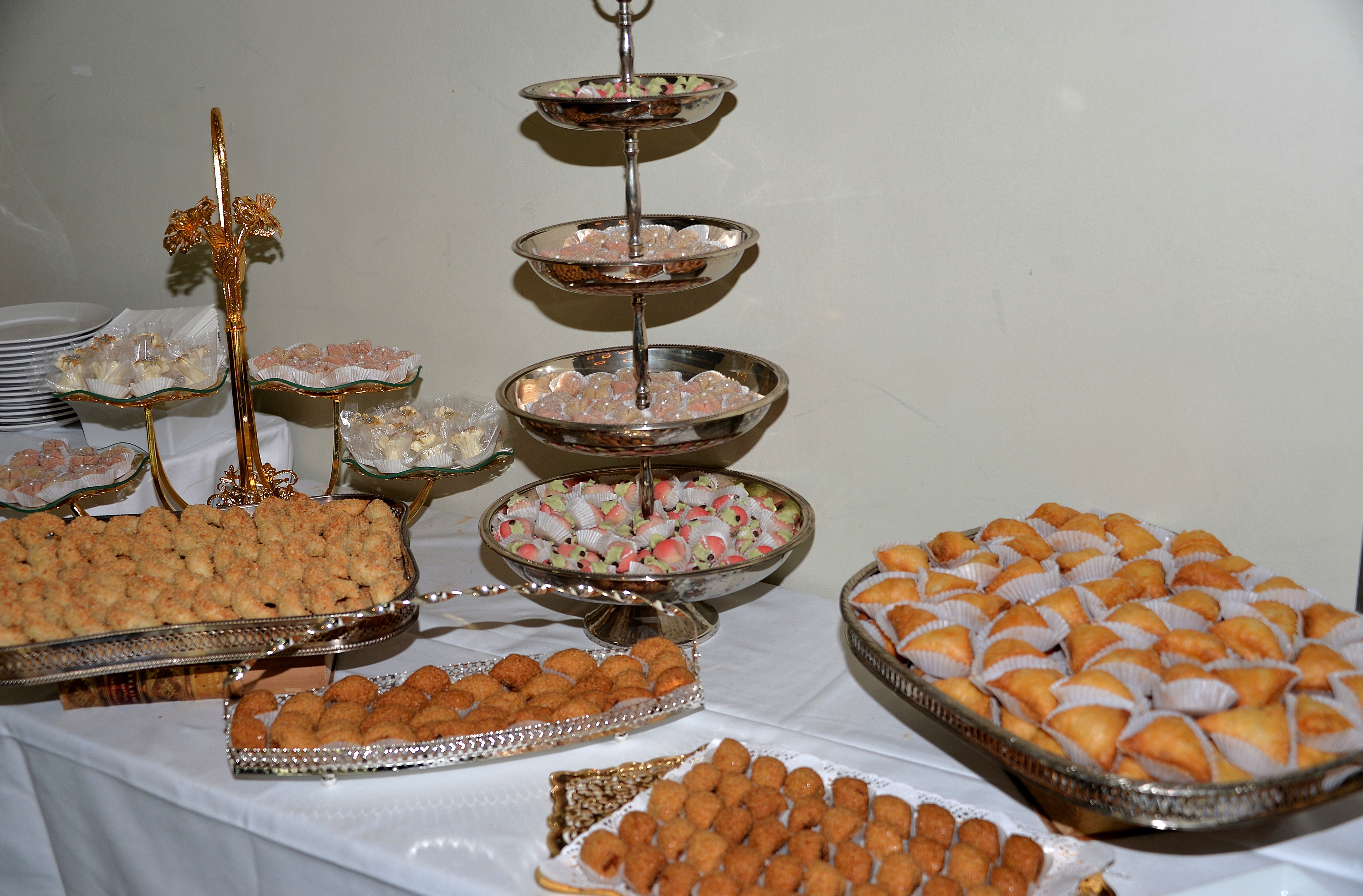
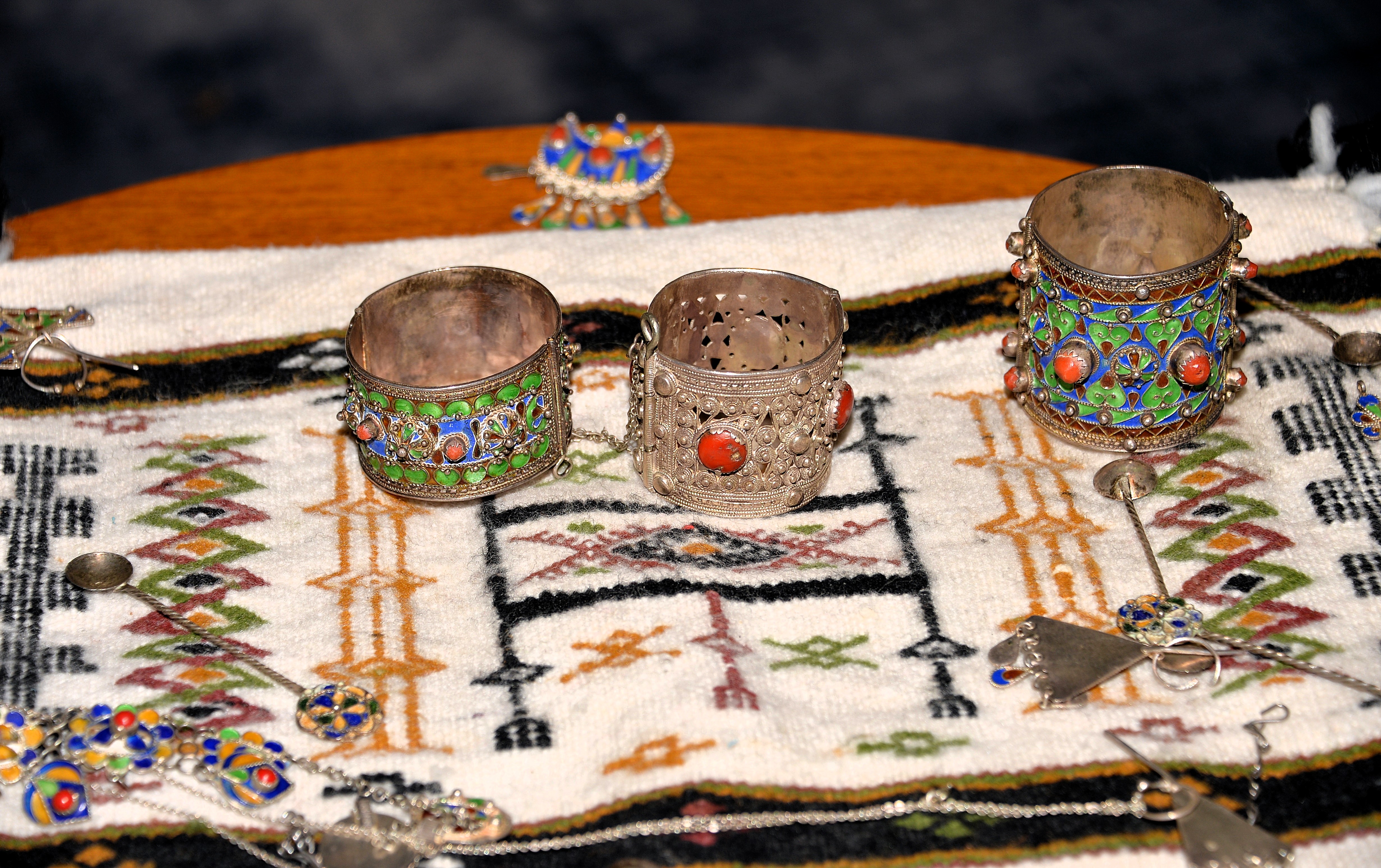
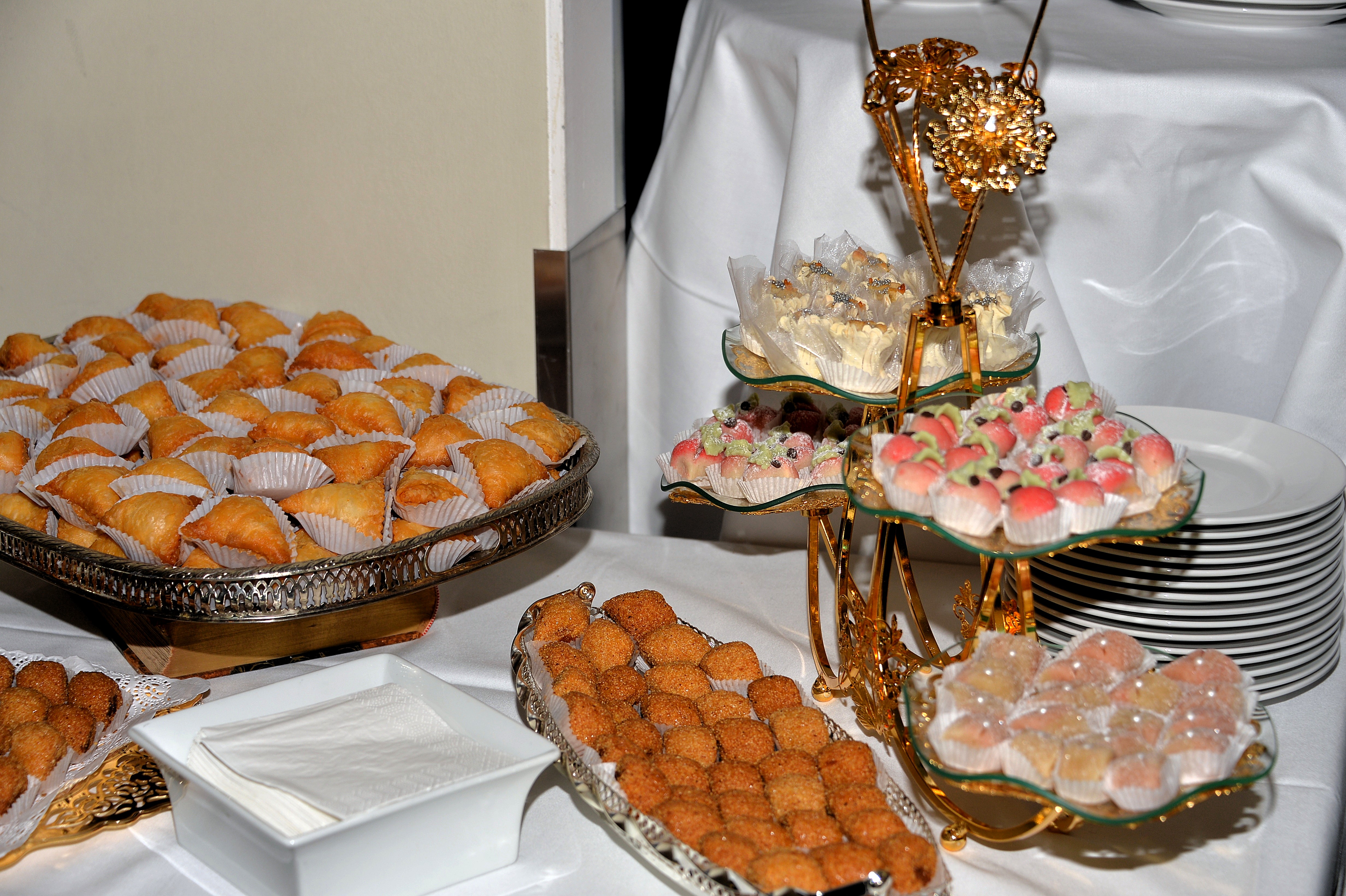
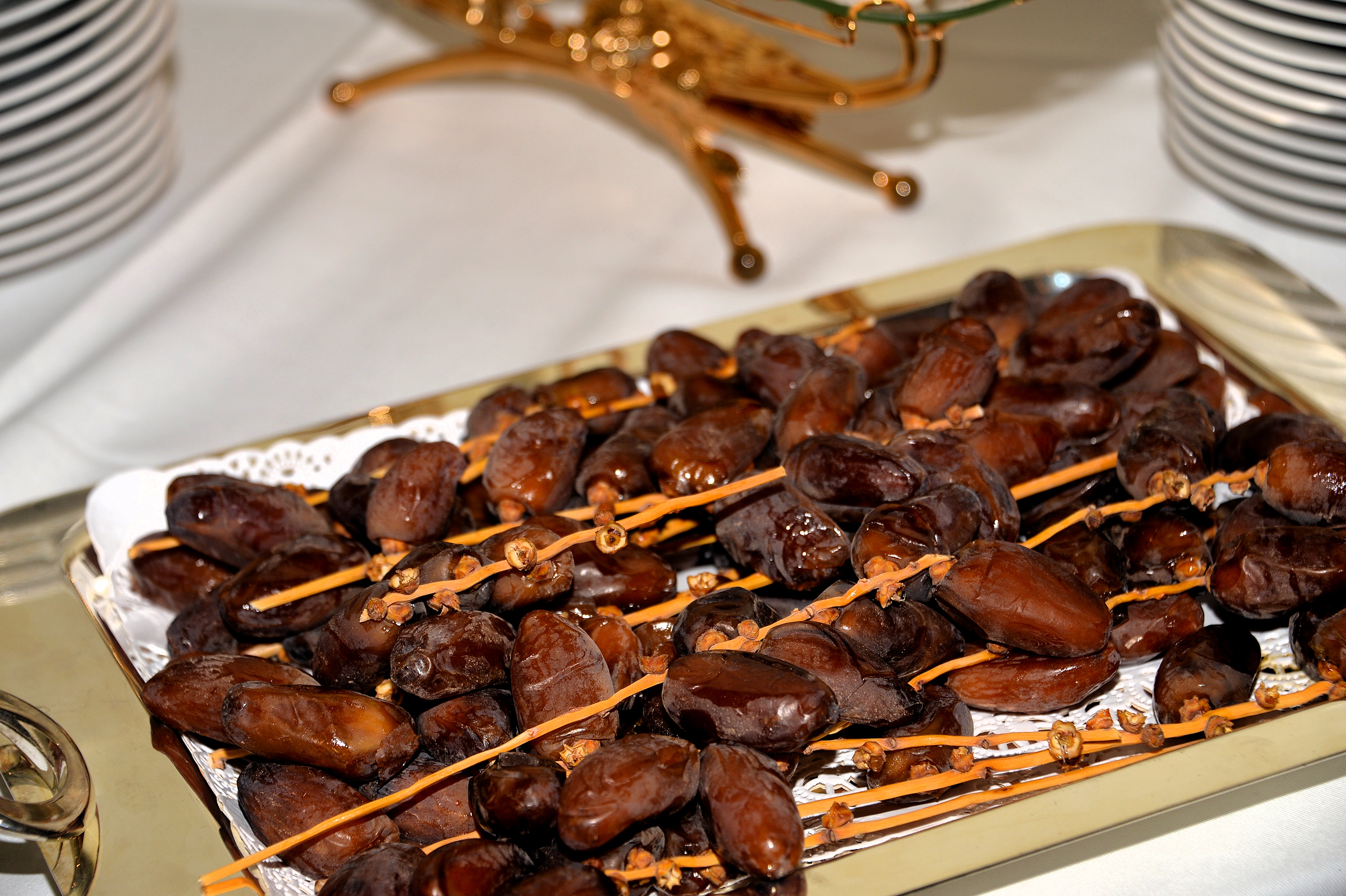
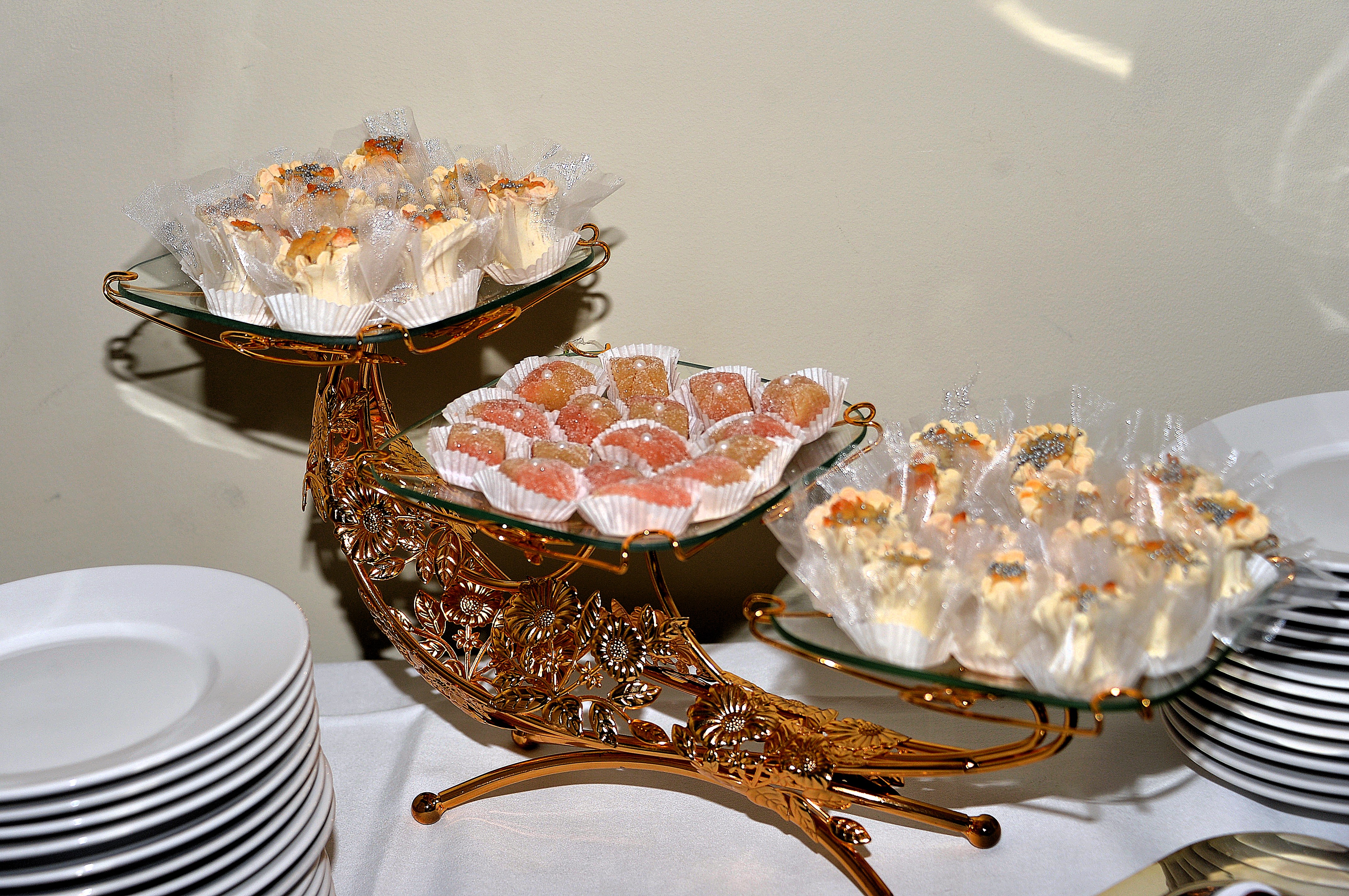
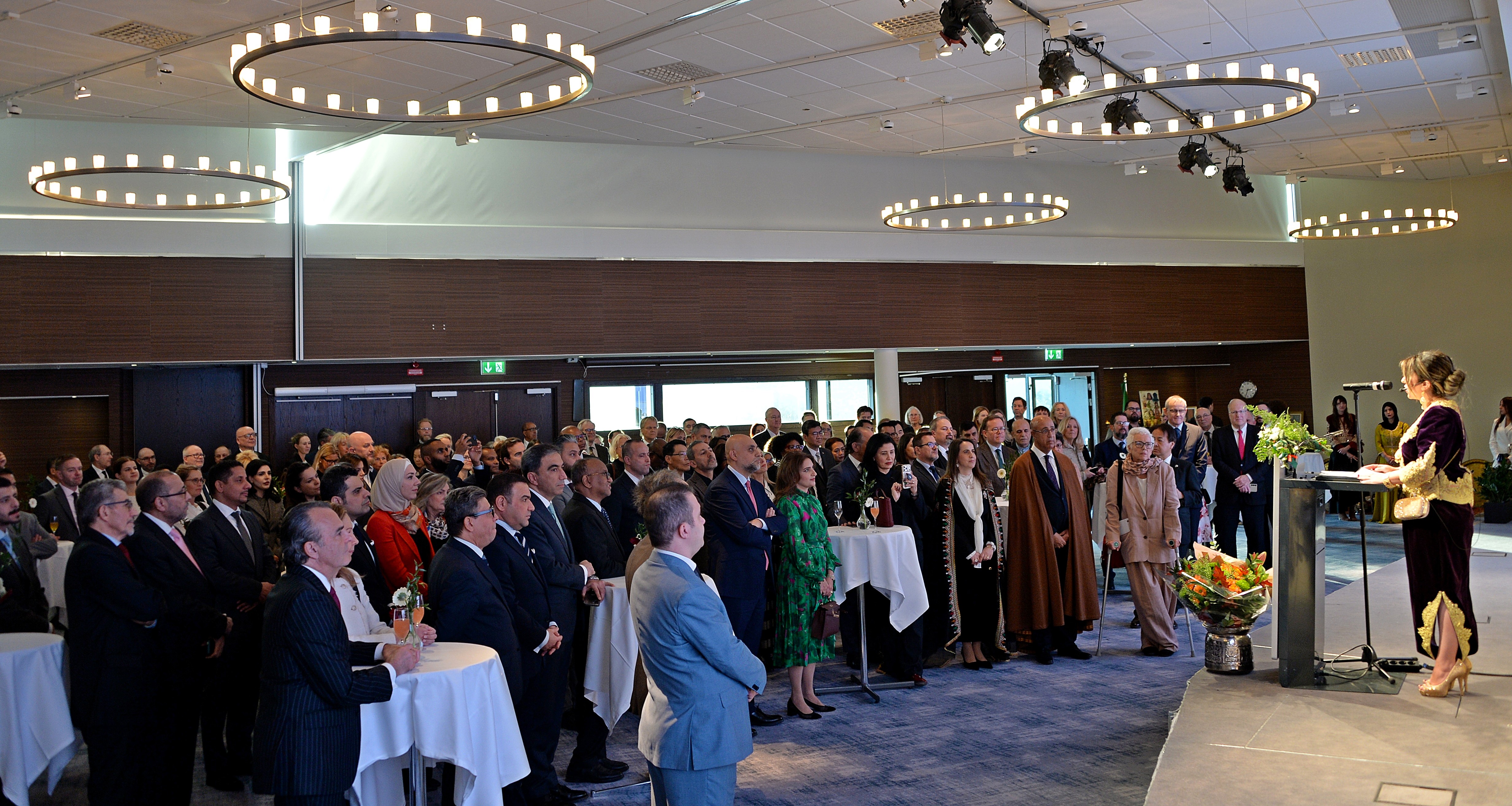
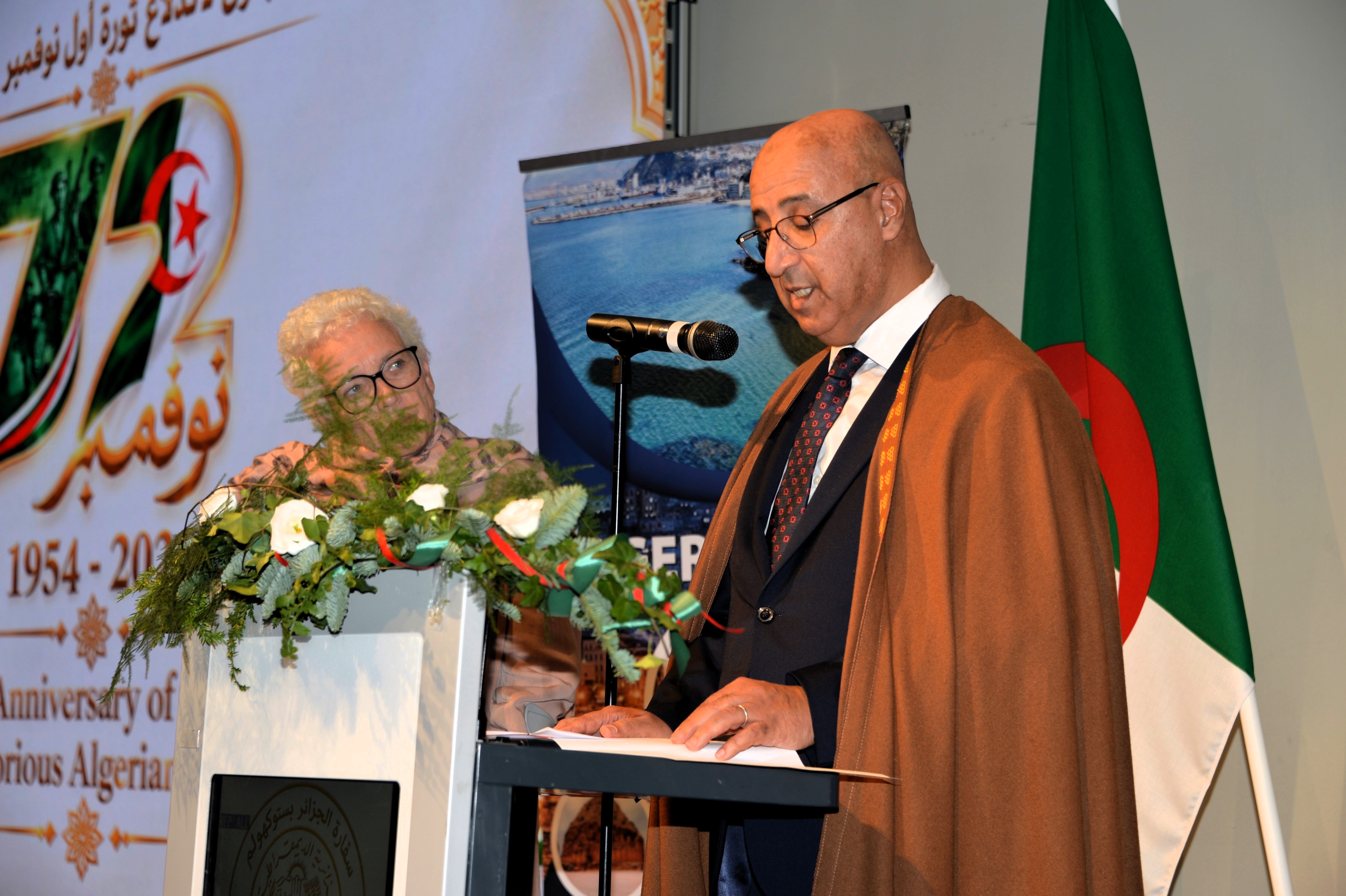
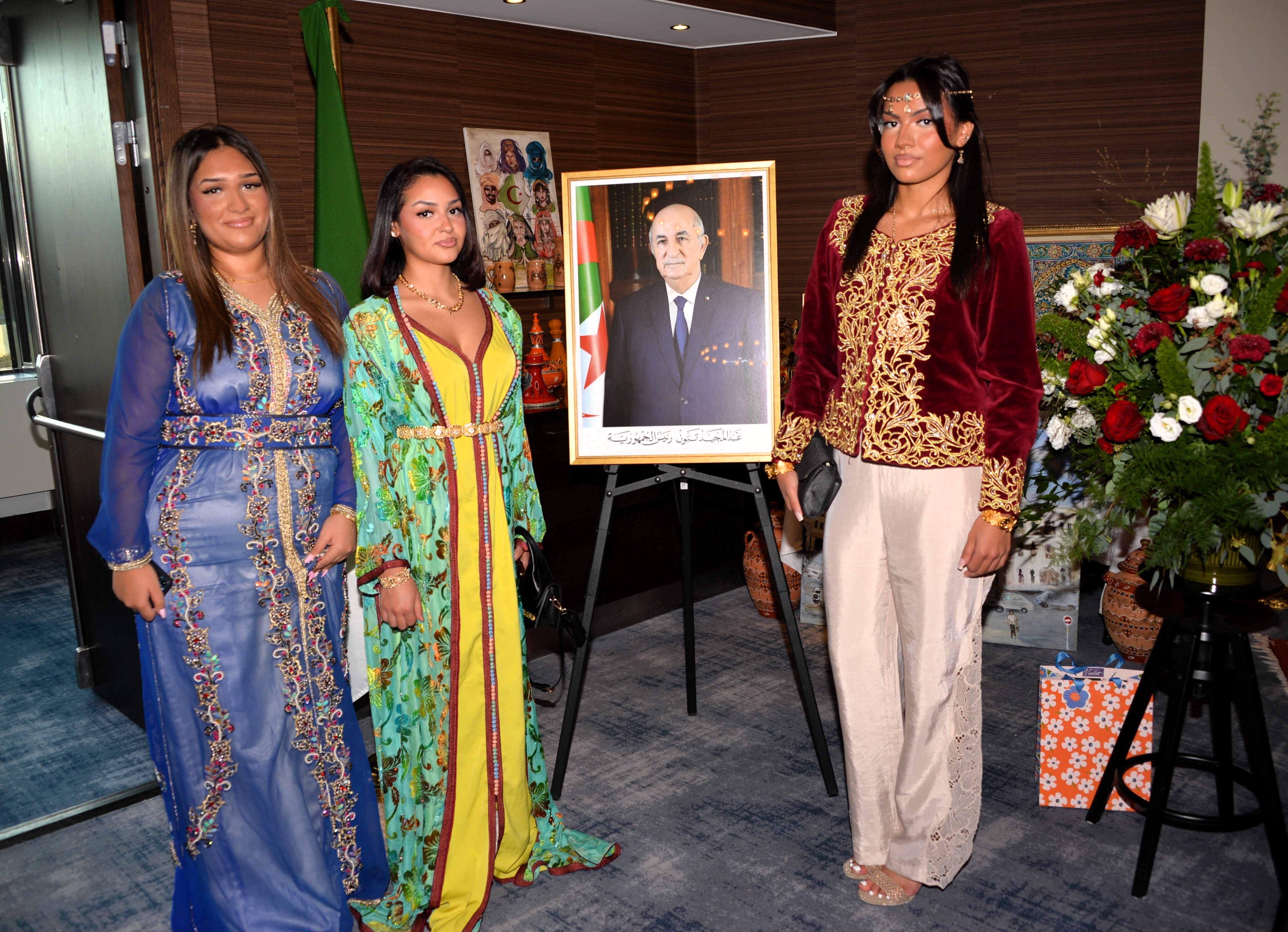
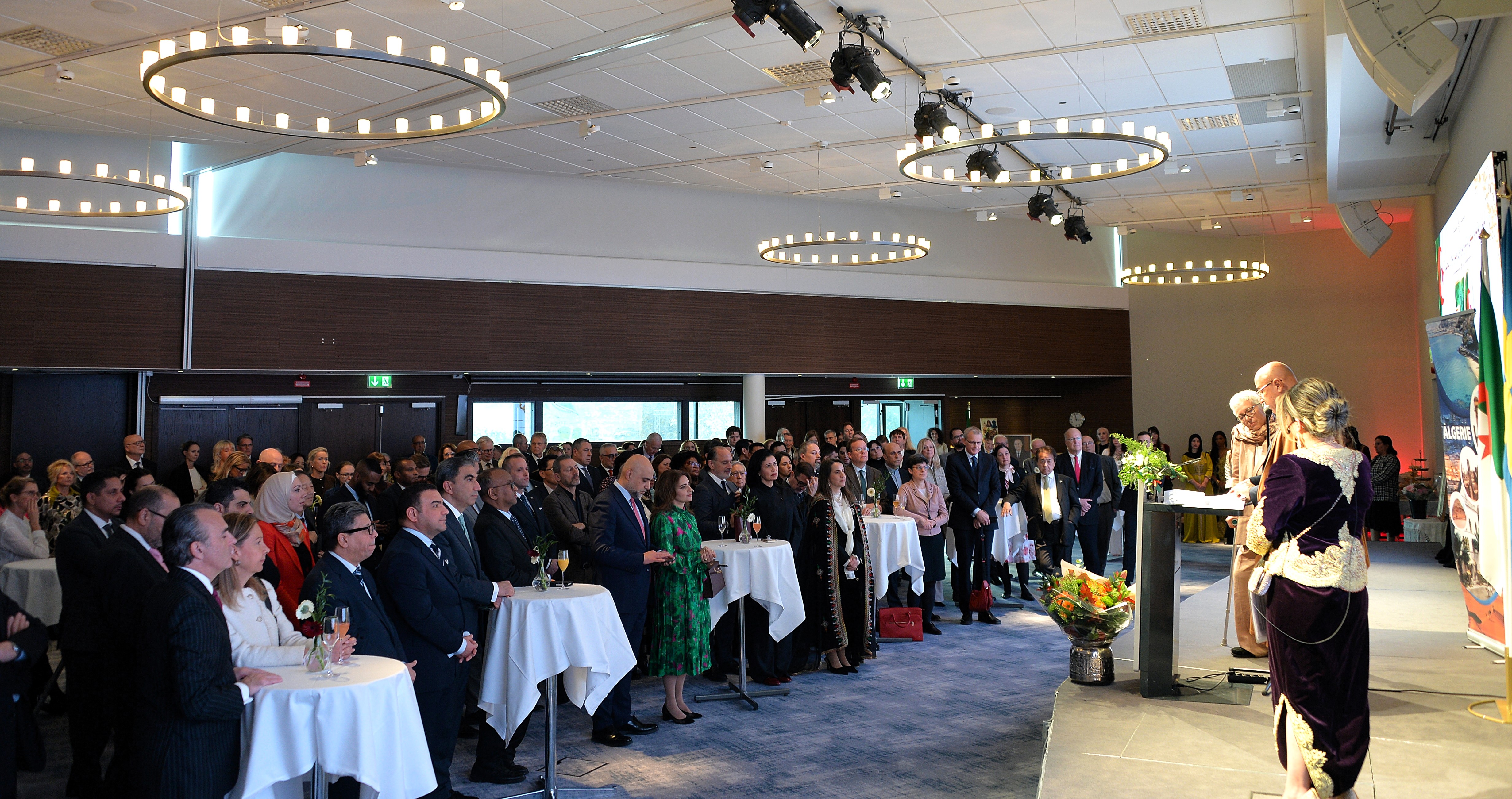
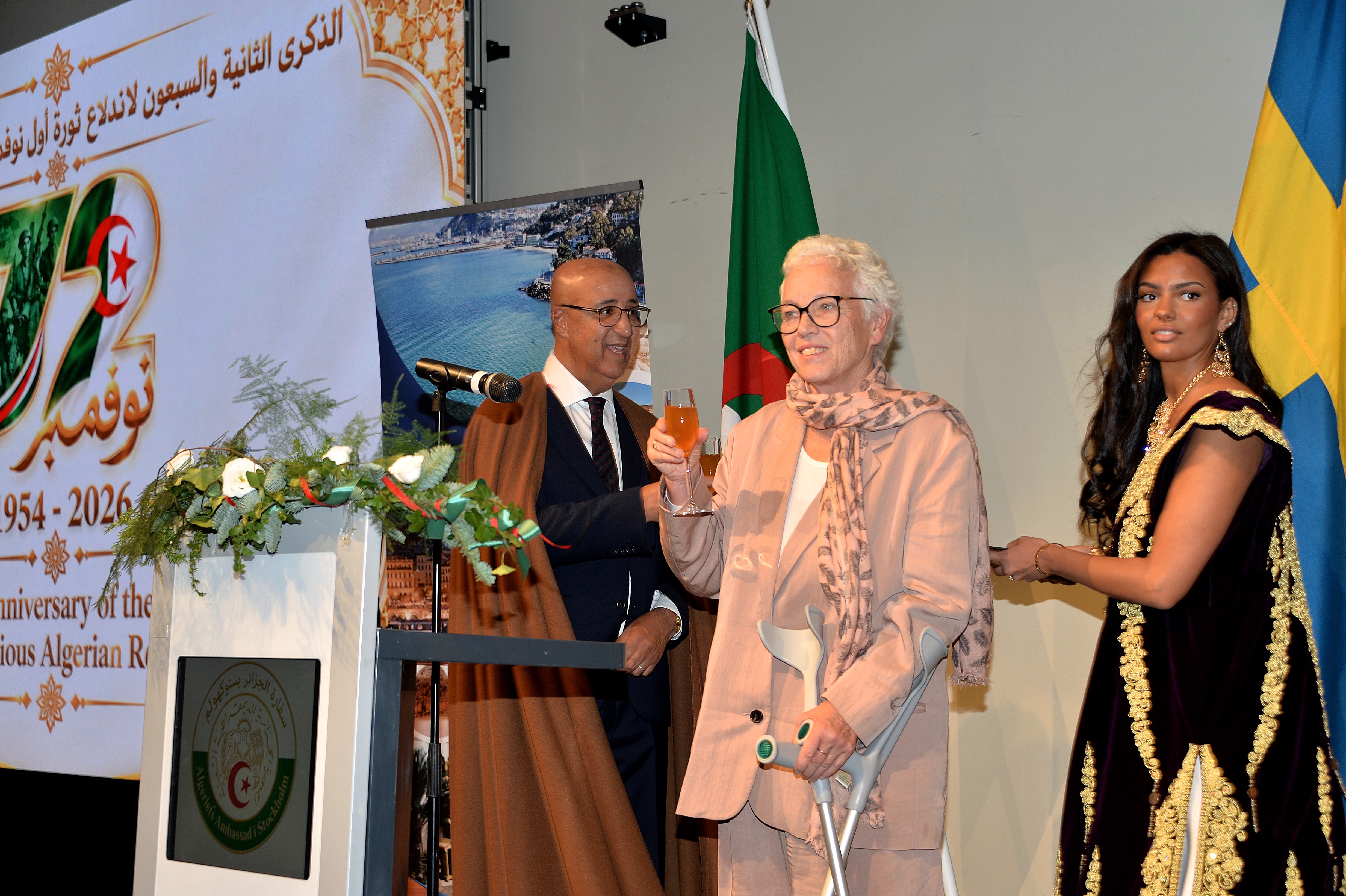
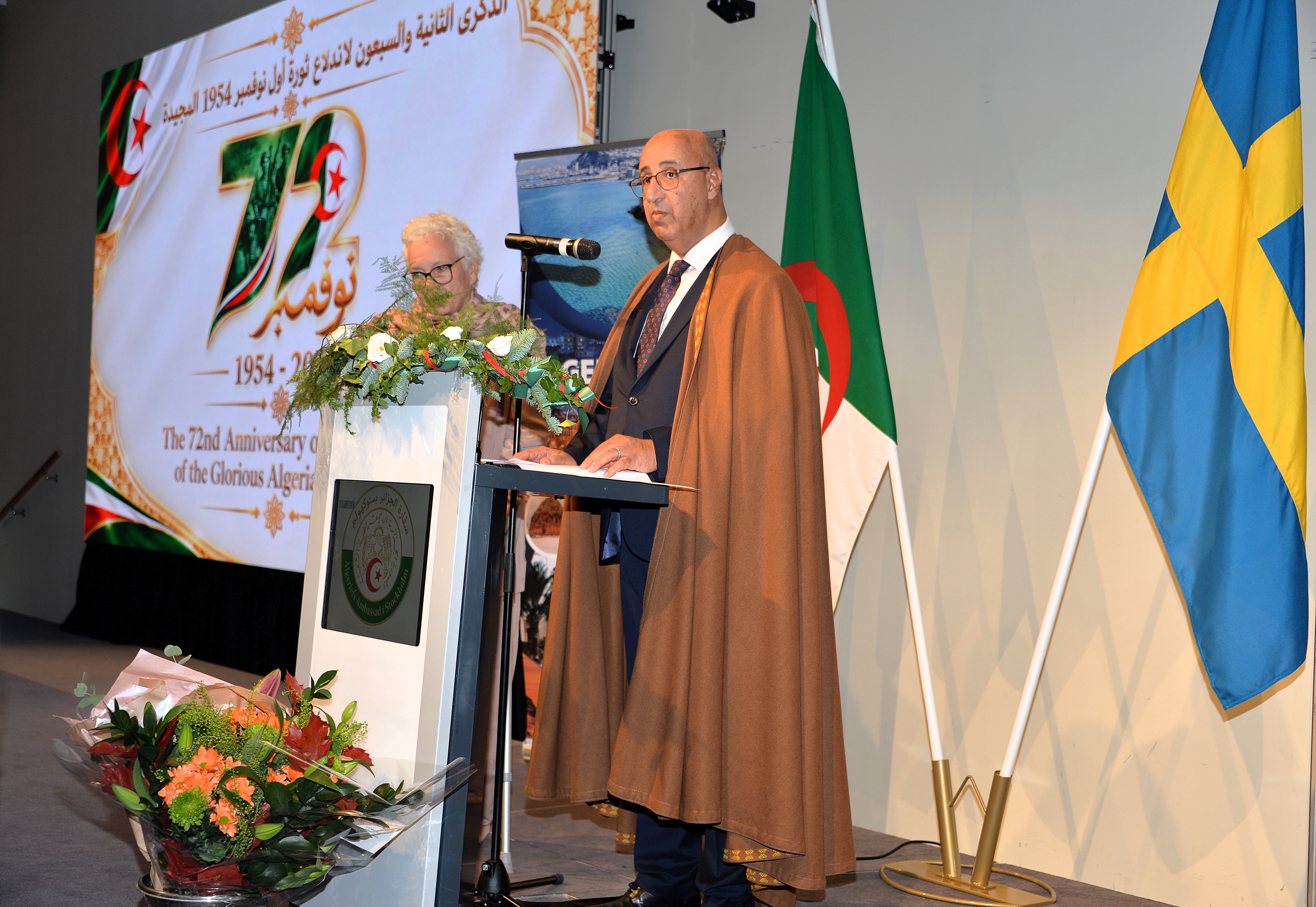
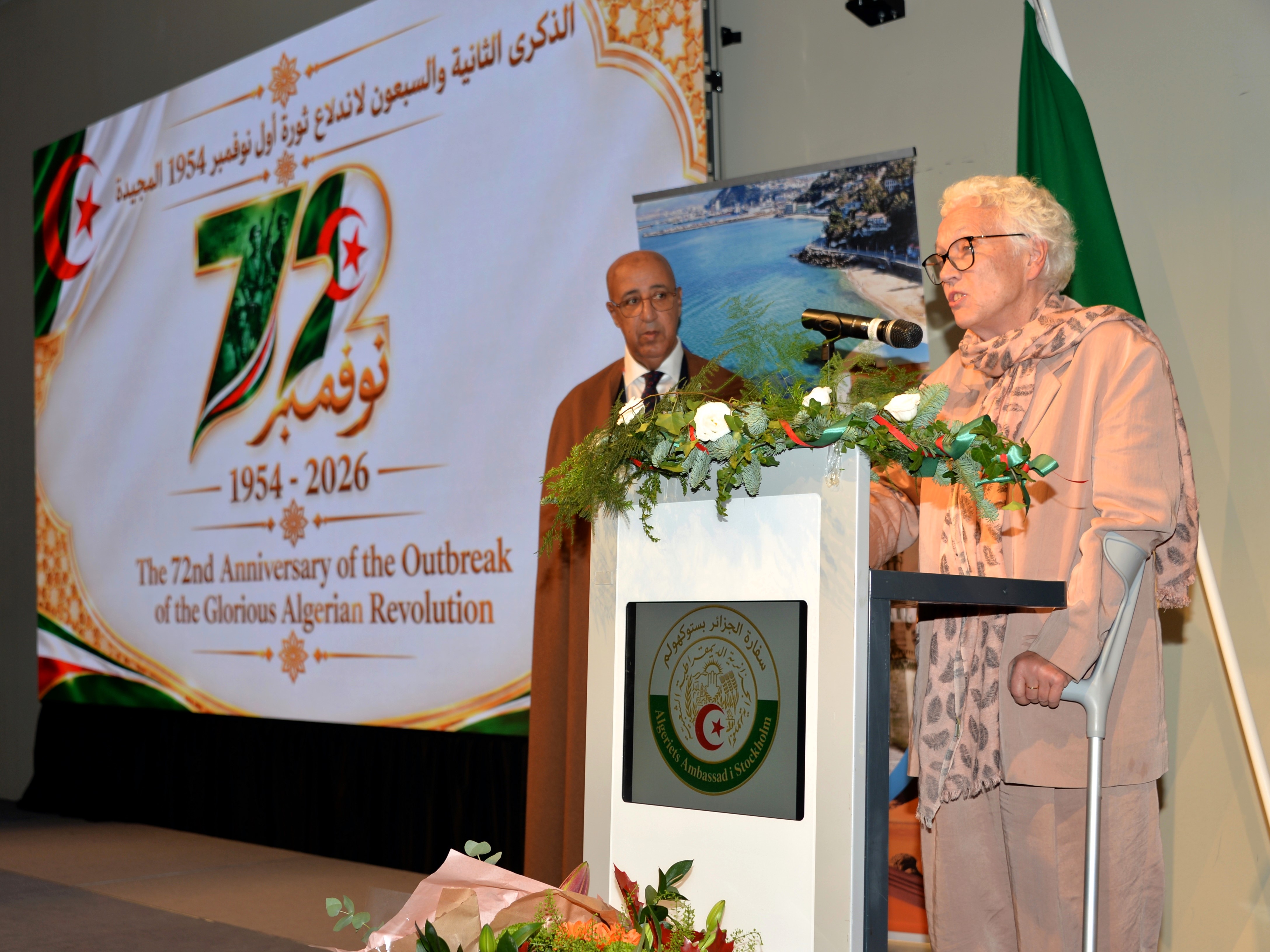
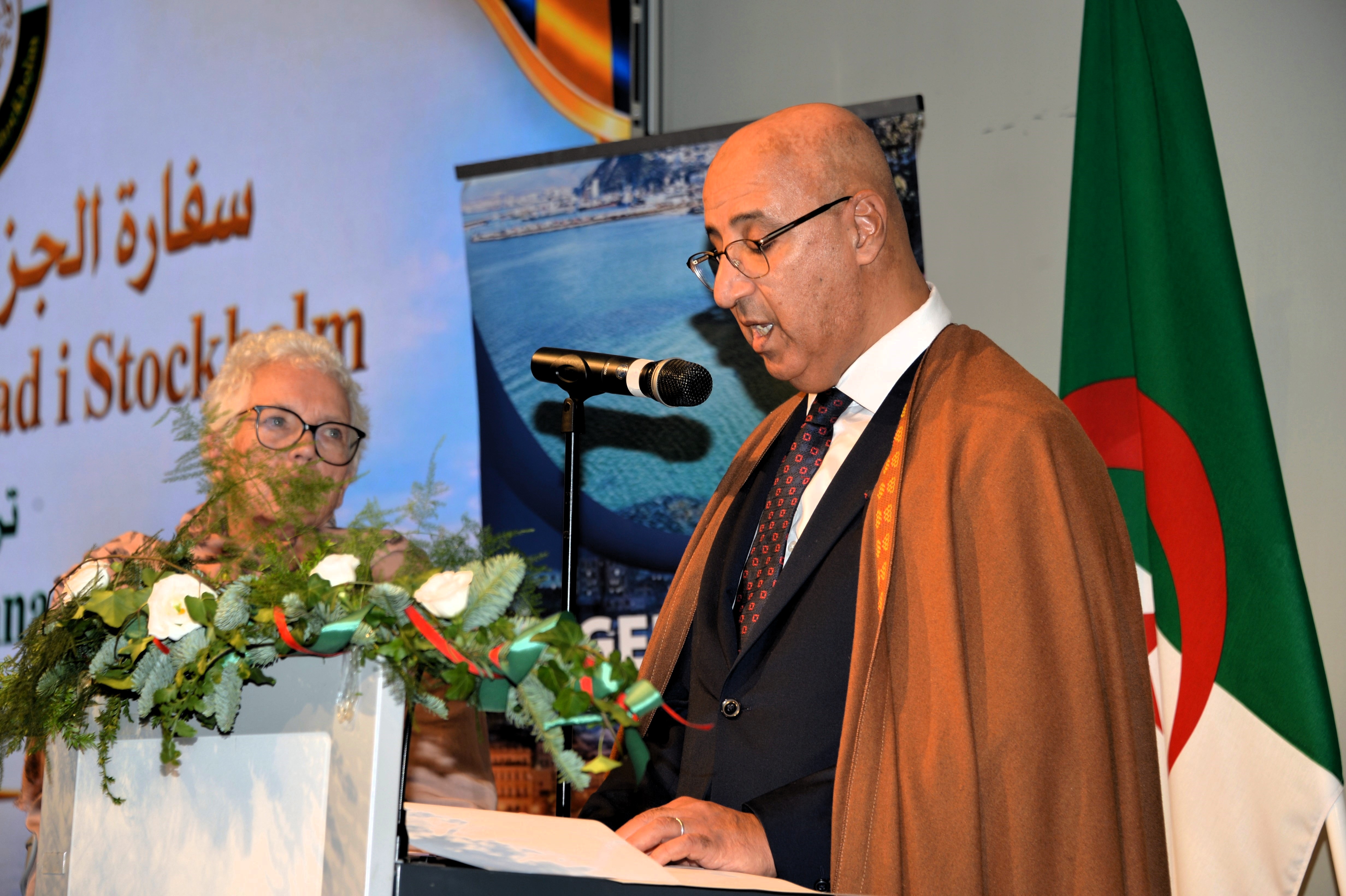
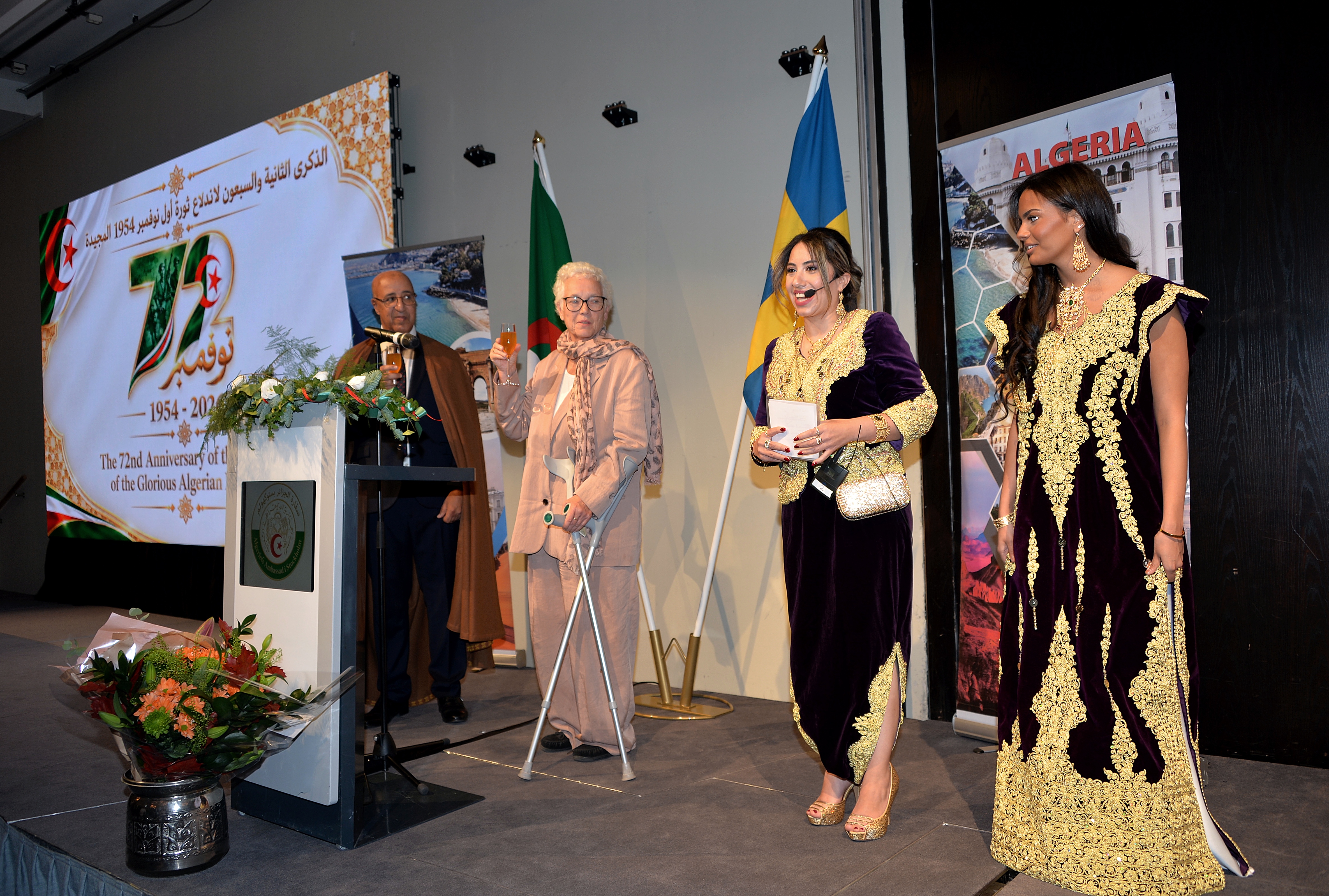
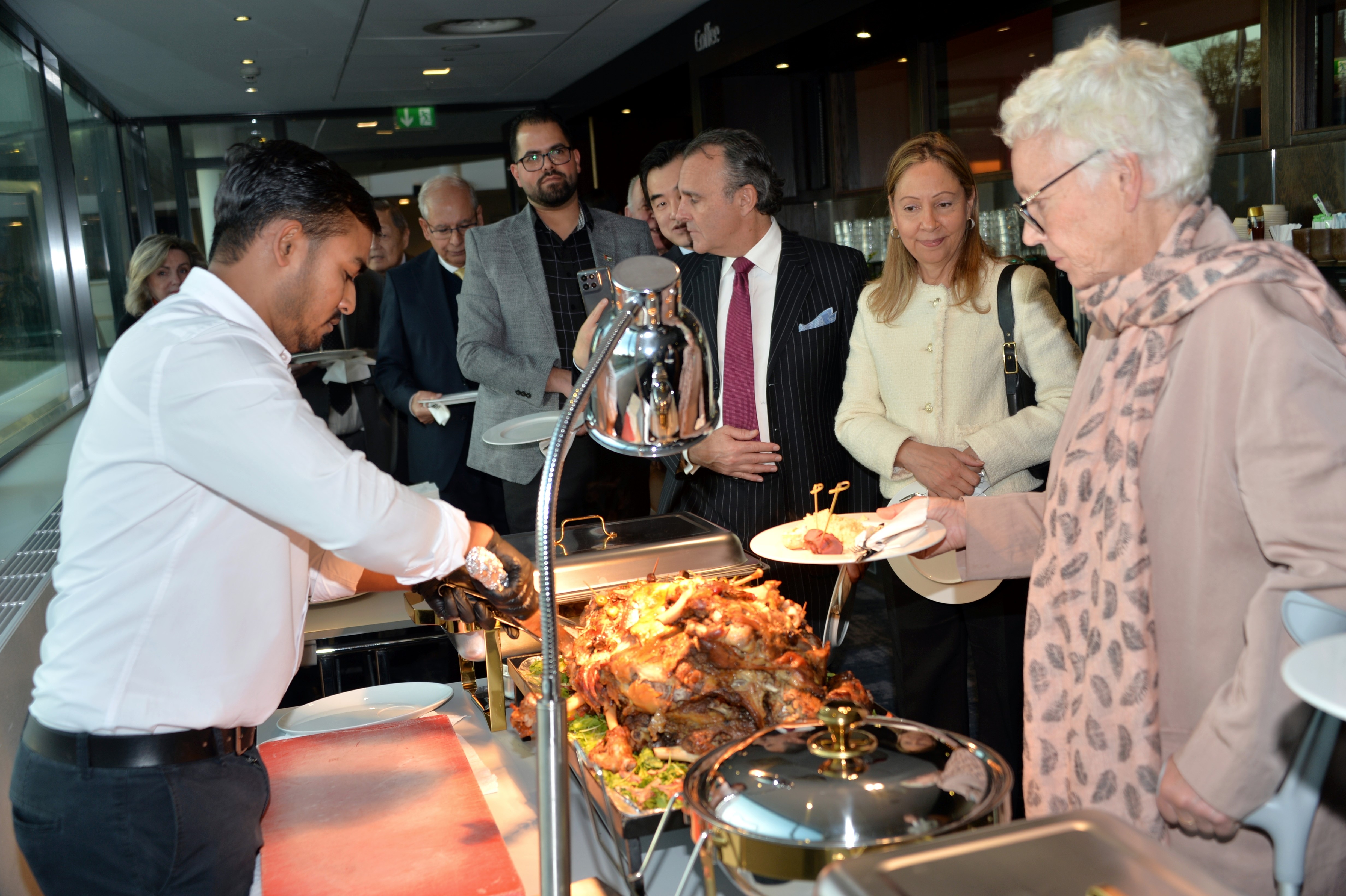
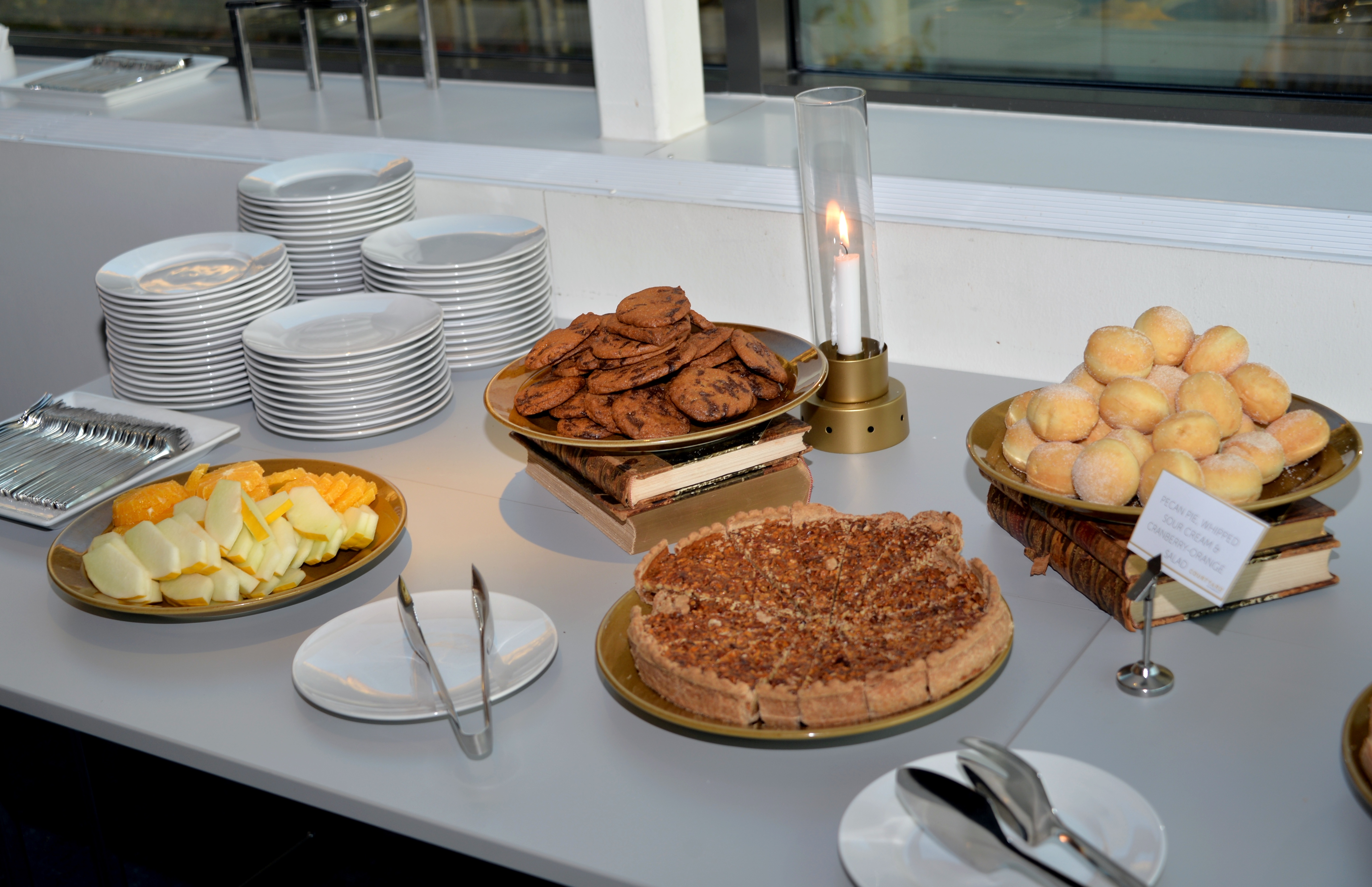
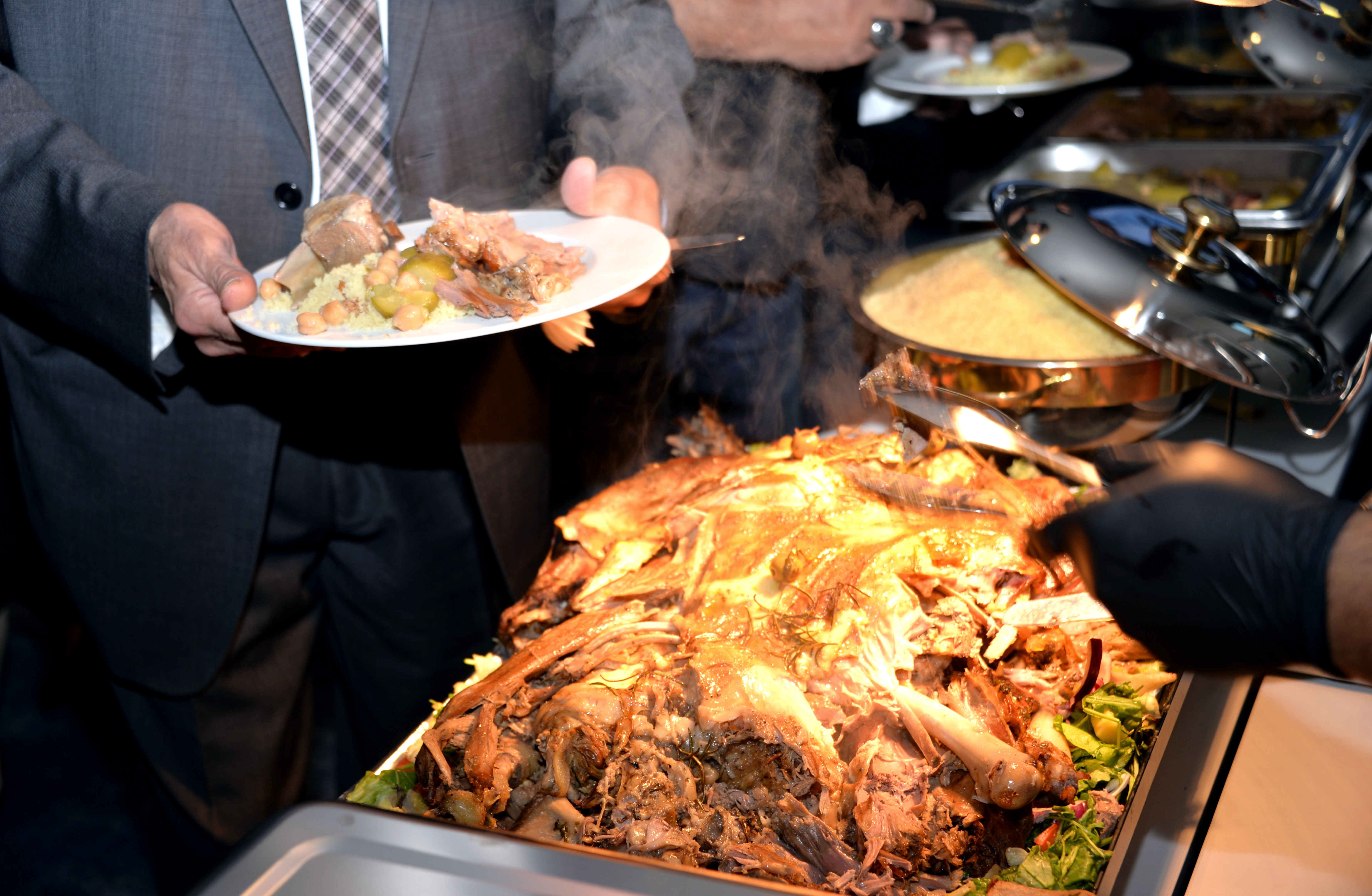
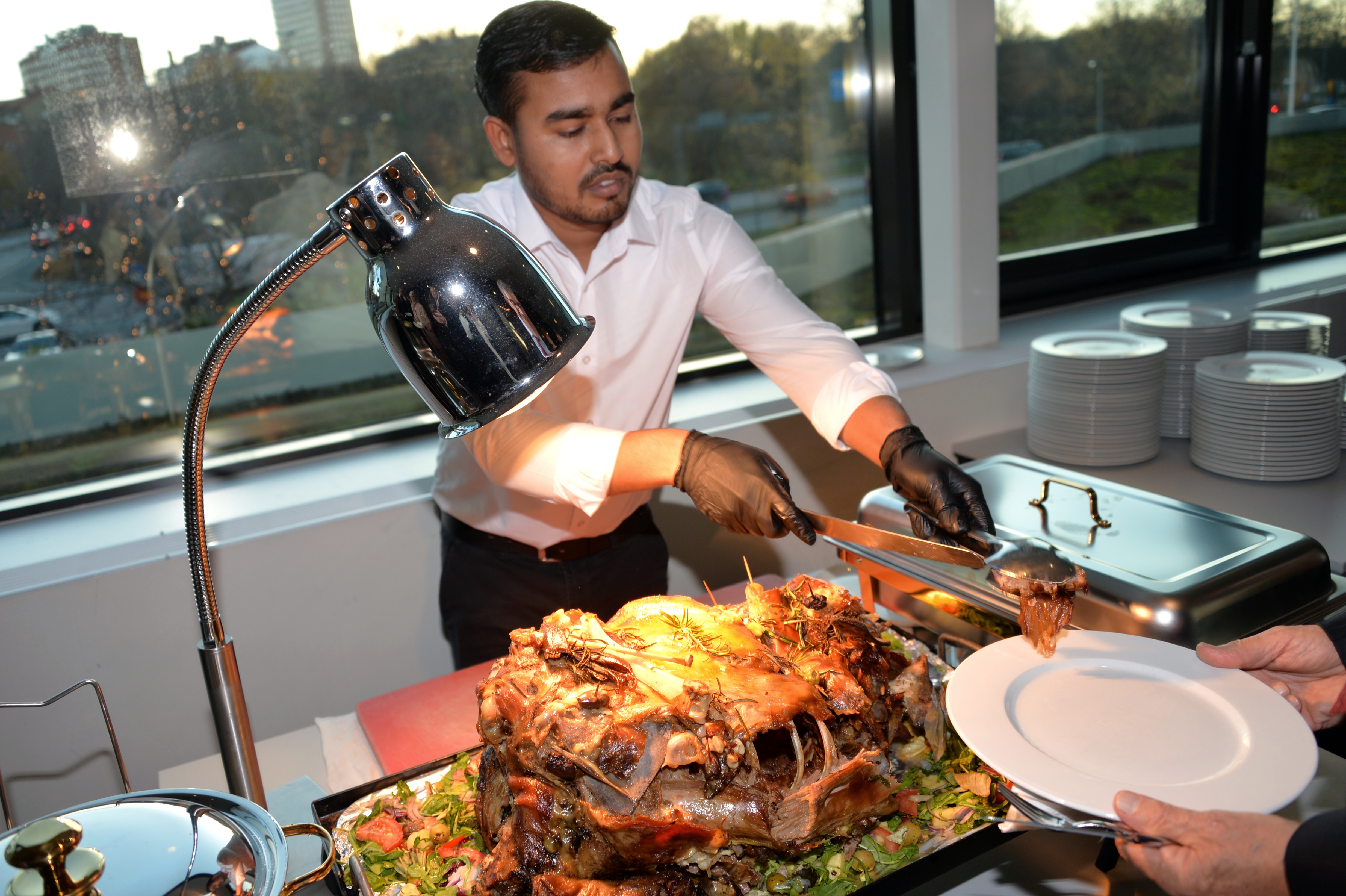
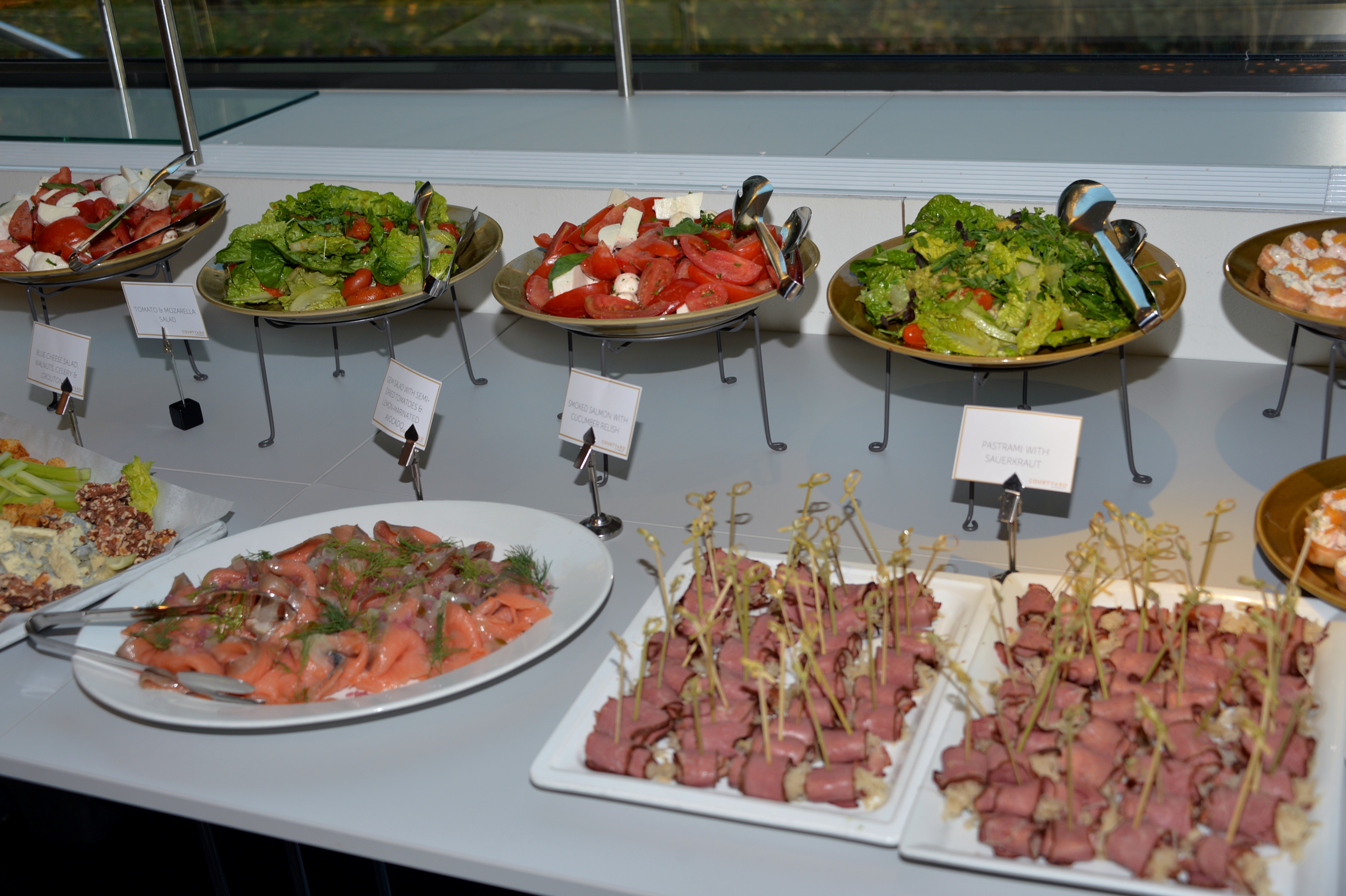
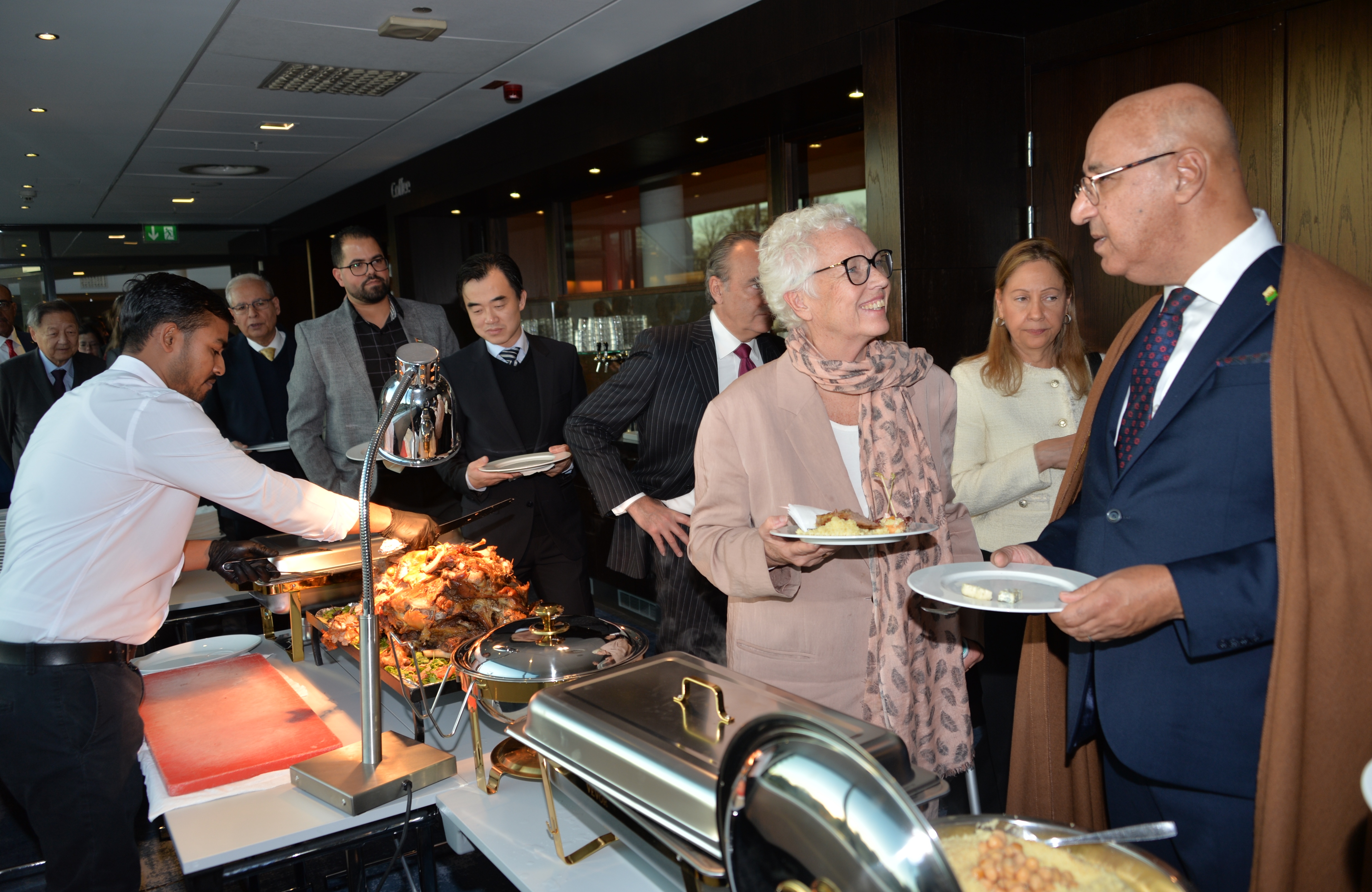
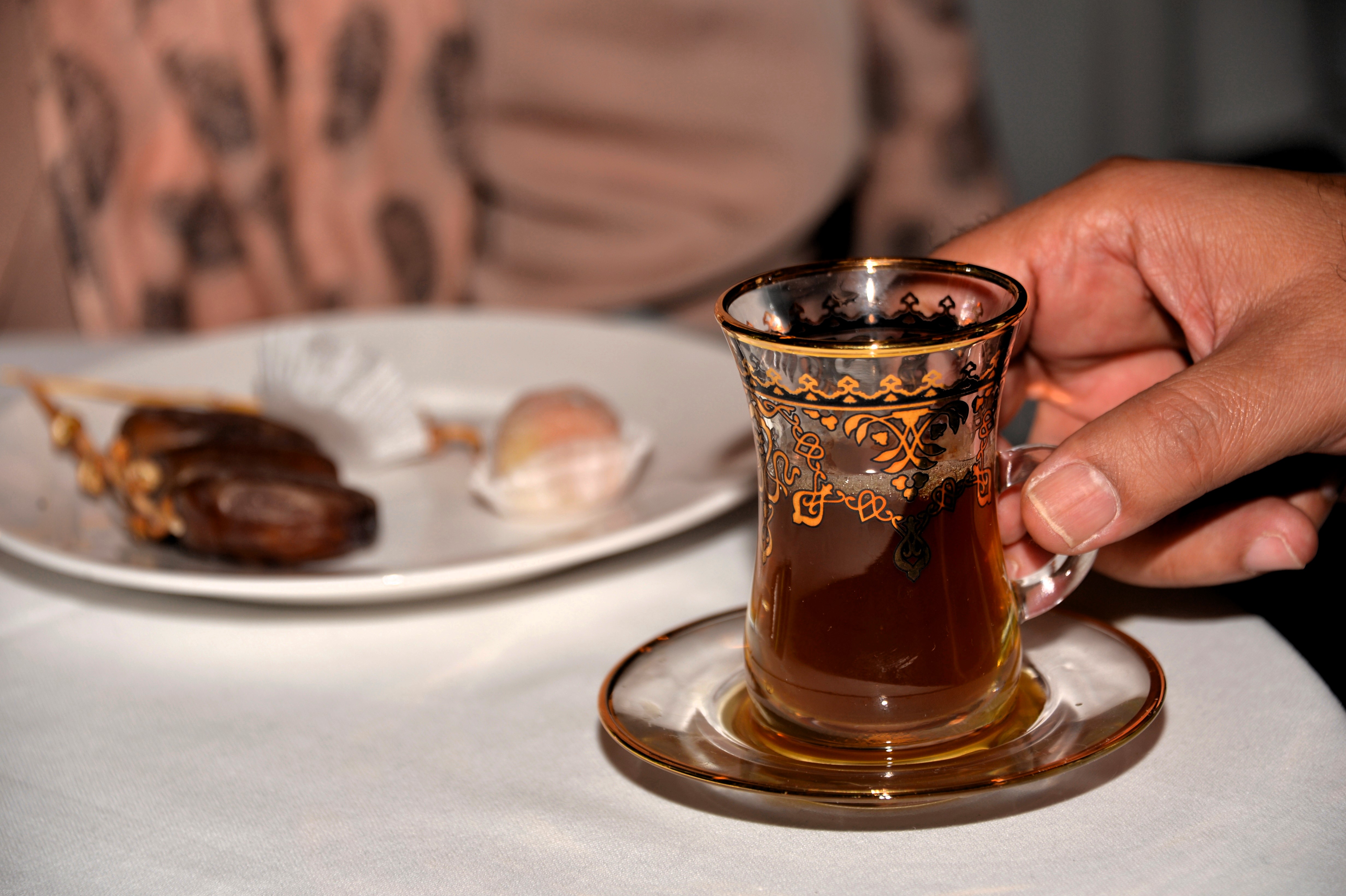
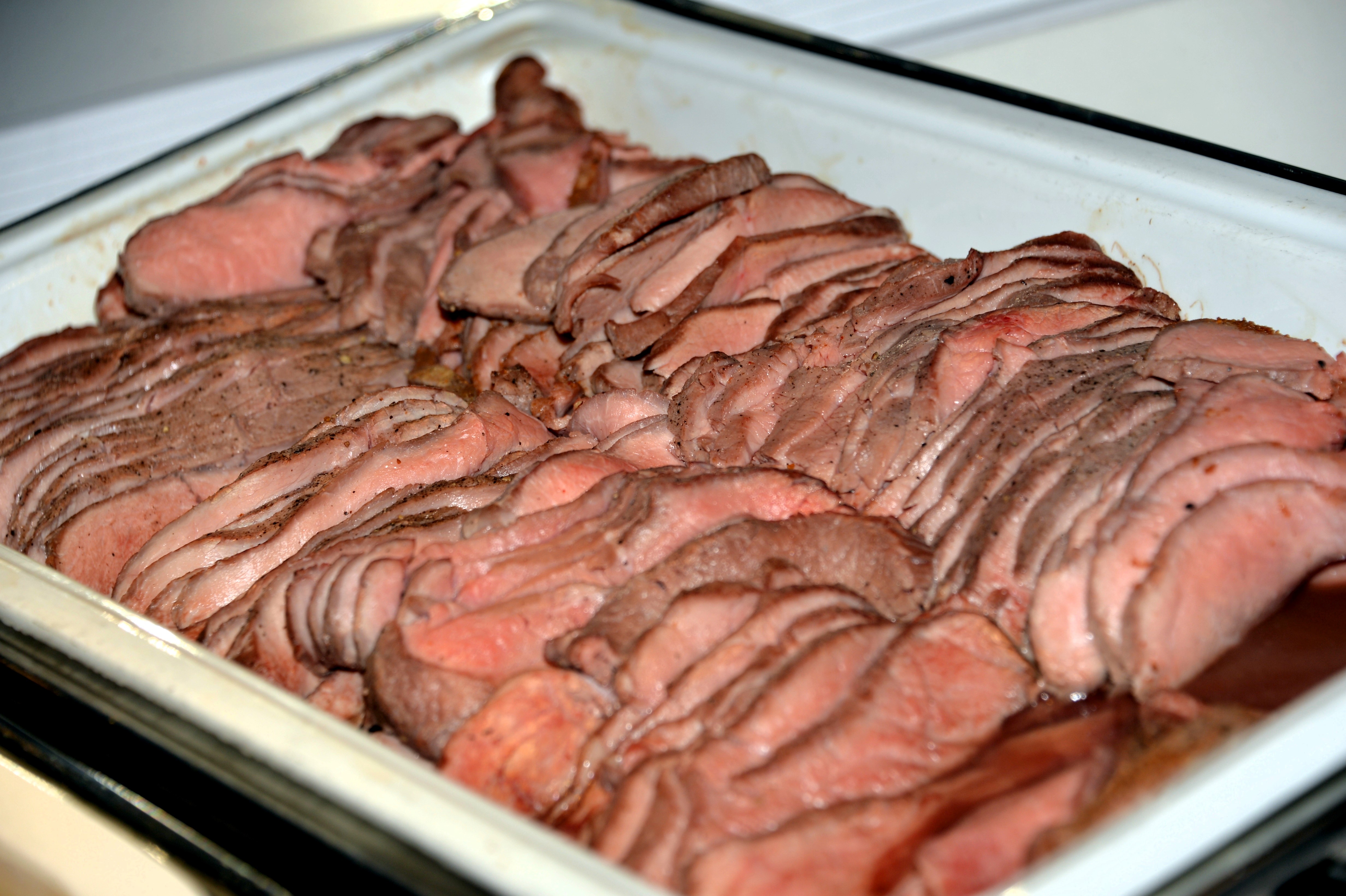
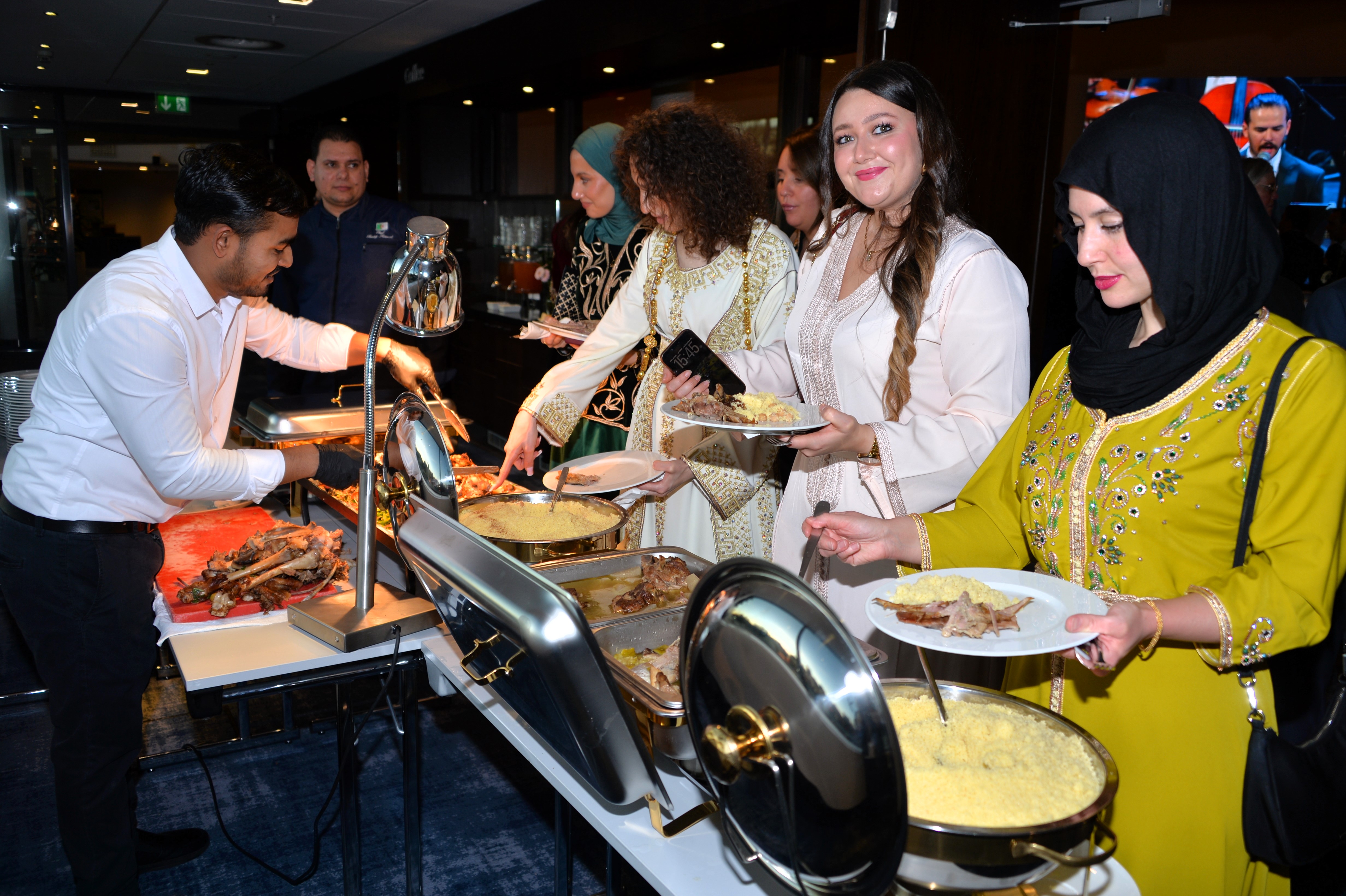
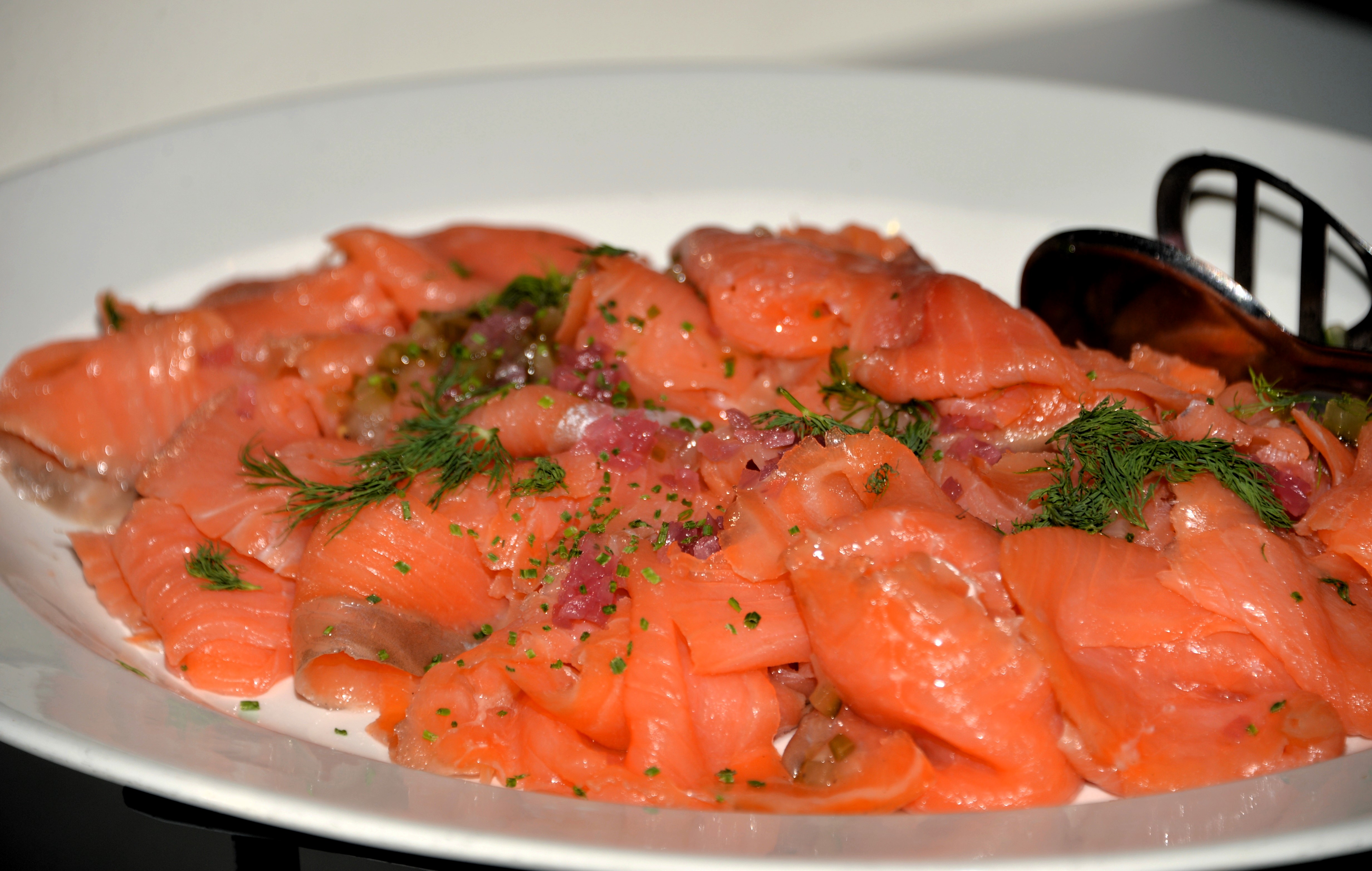
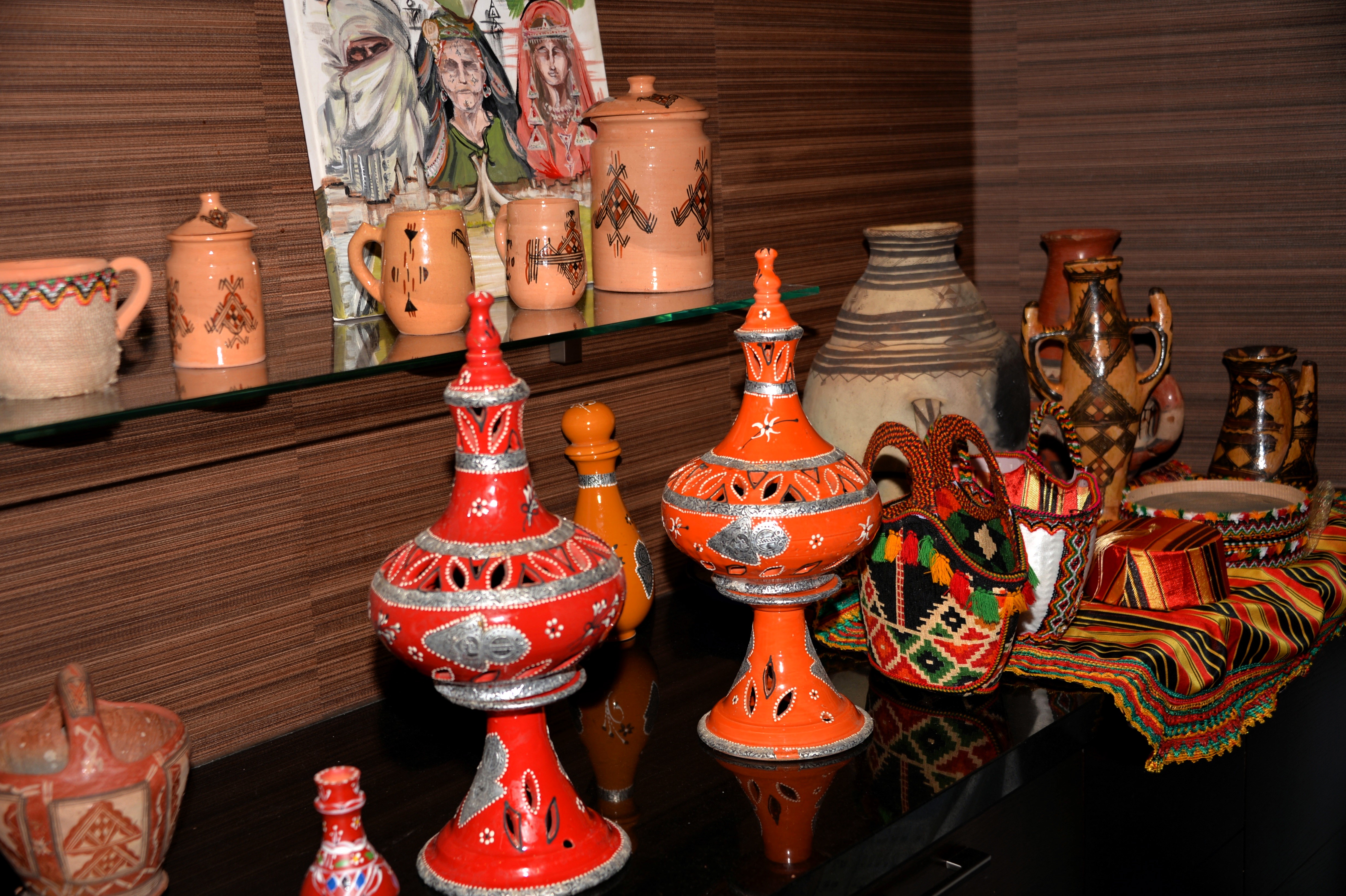
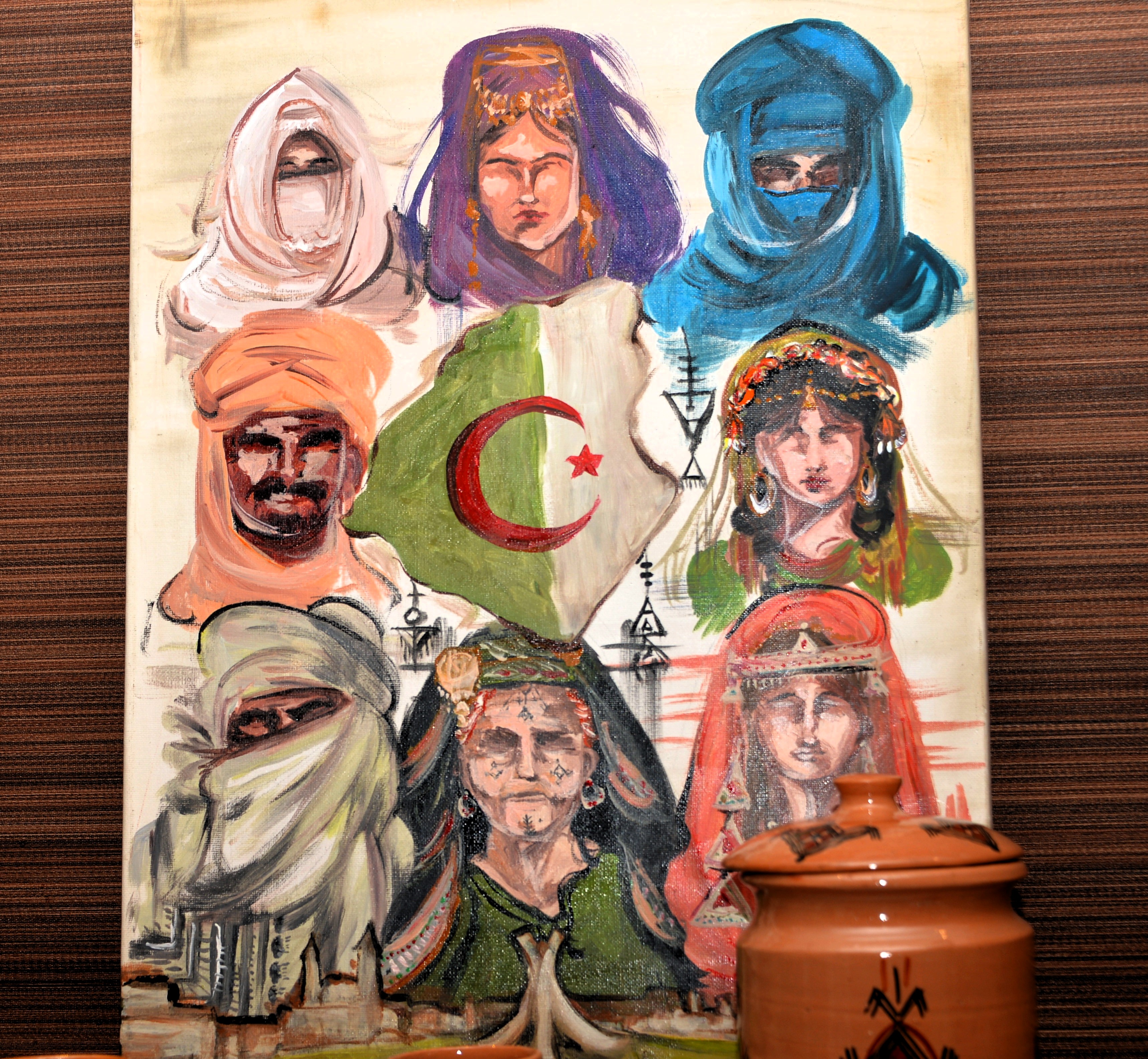
Algeria 72nd revolution day reception at the Marriot hotel in Stockhom on the 6th of Novemer 2026. Cawa Media reports…
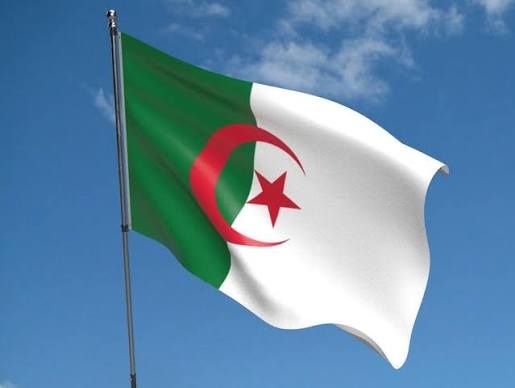
Algeria, officially the People’s Democratic Republic of Algeria, is a country in North Africa. It is bordered to the northeast by Tunisia; to the east by Libya; to the southeast by Niger; to the southwest by Mali, Mauritania, and Western Sahara; to the west by Morocco; and to the north by the Mediterranean Sea. Its capital and largest city is Algiers.
Algeria is a semi-arid country spanning over 2,381,741 square kilometres (919,595 sq mi) with a population of 47 million, making it the tenth largest in the world and the tenth-most populous country in Africa. The Sahara covers most of Algeria except for the fertile and mountainous north, where the population is concentrated. Its official languages are Arabic and Amazigh, while the vast majority of the population speak Algerian Arabic. French is also influential. Most Algerians identify as Arabs, while Berbers form a sizeable minority. Sunni Islam is the official religion and practiced by 99% of the population.
Algeria was shaped first by indigenous Amazigh societies, including the Numidians, whose kingdom became one of the earliest major states in the region, as well as by Phoenician, Roman, Vandal, and Byzantine influences. From the 7th century onward, the spread of Islam and arrival of Arab tribes gradually transformed the region, contributing to the development of a distinct Algerian identity rooted in both Arab, Islamic and Amazigh heritage. Between the 8th and 15th centuries, Algeria was ruled by a succession of local Islamic dynasties. In 1516, the Regency of Algiers was established, gradually emerging as a largely autonomous state owing nominal allegiance to the Ottoman Empire. After nearly three centuries as a major power in the Mediterranean, the country was invaded by France in 1830 and formally annexed in 1848, though it was not fully conquered and pacified until 1903. French rule brought mass European settlement that displaced the local population; by mid-1870, indigenous Algerians declined by up to a third due to warfare, disease, and starvation. French colonization faced continuous Algerian resistance, from Emir Abdelkader’s campaigns and the Mokrani Revolt to the rise of nationalist movements in the 20th century. The Sétif and Guelma massacre in 1945 catalysed local resistance that culminated in the outbreak of the Algerian War in 1954. Algeria gained independence in 1962. It descended into a bloody civil war from 1992 to 2002, remaining in an official state of emergency until the 2010–2012 Algerian protests during the Arab Spring.
Kategorier:Okategoriserade