
Almaty, formerly known as Alma-Ata, is the largest city in Kazakhstan, with a population of around 2,040,000 people, about 11% of the country’s total population and more than 2,7 million in its built-up area that encompasses Talgar, Boraldai, Otegen Batyr and many other suburbs. It served as capital of the Kazakh state in its various forms from 1929 to 1997, under the influence of the then Soviet Union and its appointees. In 1997, the government relocated the capital to Astana (today known as ”Nur-Sultan” as of 23 March 2019) in the north of the country and about 12 hours away by train.
Thank’s to Euronews Life for sharing…
Almaty continues as the major commercial and cultural centre of Kazakhstan, as well as its most populous and most cosmopolitan city. The city is located in the mountainous area of southern Kazakhstan in the foothills of the Trans-Ili Alatau at an elevation of 700–900 m (2,300–3,000 feet), where the Large and Small Almatinka rivers run into the plain.
The city has been part of the UNESCO Creative Cities Network in the area of music since November 2017. The name Almaty has its roots in the medieval settlement Almatu, that existed near the present-day city. A disputed theory holds that the name is derived from the Kazakh word for ‘apple’ (алма), and is often translated as ”full of apples”. Originally it was Almatau which means Apple Mountain. The Russian version of the name was Alma-Ata (Kaz. Father of Apples). Since gaining its independence from the Soviet Union, the use of the Kazakh Almaty is accepted.
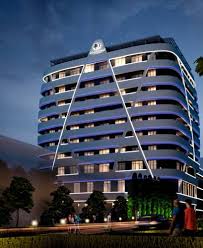
Double Tree Hilton Almaty Recommended hotel accommodation DoubleTree by Hilton Almaty is a bright and modern hotel in the foothills of the Trans-Ili Alatau mountains, just a 5-minute walk to Baikonur Metro Station, Almaty Central Stadium and Kazakh State Circus. Discover local artists’ works at the bustling Arbat Market or see shows at the Abay Kazakh State Academic Theatre of Opera and Ballet, all 6 minutes away. We’re also 10 minutes from the Botanical Garden, Green Bazaar and Central State Museum of Kazakhstan.
Multimediacenter of Traditional Music Traditional music school of Zhetysu – One of the traditional Kazakh musical school of Kui and zhyr came from the Zhetysu region. The authors such as Kebekbay, Nogaybay, Kenen, Kapez are representatives of this school. Founders of ”School of Zhetysu zhyrau art” Kaban, Suyinbay, Zhambyl and Umbetali had a vital influence on the formation of poetry and zhyr. Uniqueness of ”School of Zhentysu kui art” is it’s antiquity. All kui compositions are based on the events from the Kazakh history. The composers such as Bayserke, Kozheke, Mergenbay, Erdeneuly, Tilendi Atabaiuly, had made big contribution to the school of kui.


National craft center Qazag Oner Qazaq-Oner is a center of artisans with the purpose of development of external and inner tourism. This is a kazakhstani first unique project that develop and promote the national-applied arts of our nation. Qazaq-Oner artisan center is including training, production, shopping, cultural and historical and entertainments. Our guests can spend their time useful and interesting.


State Museum of Arts of Republic of Kazakhstan In January 1984 the museum was named after People’s Artist of the Kazakh SSR A. Kasteyev (1904-1973). Abilkhan Kasteev was a Kazakhstani painter. He was highly decorated, winning the National Artist of Kazakh SSR, and The Laureate of the Chokan Valikhanov State Premium of the Kazakh SSR. He was awarded the Order of October Revolution, and two Orders of Labour Red Flag. Kasteev was born in a small village in Taldykorgan Region and studied at the Nadezhda Krupskaya art studio in Almaty. He painted more than a thousand paintings in oil and water-colours. Some of his works are on display in the State Tretyakov Gallery, in the State Museum of East Nations Art, in the Central Museum of USSR Revolution by Lenin Order in Moscow, and in the State Museum of Fine Arts of Kazakhstan. Currently, the A. Kasteyev State Museum of Arts of the Republic of Kazakhstan is the largest art museum and the country’s leading research, cultural and educational center in the field of fine arts. Rich, diverse, precious collection gives a vivid picture of the artistic culture of Kazakhstan, Europe and Asia, the masters of past ages and the present time. Number of exhibits of the main fund of the museum is more than 25 000 units.


Cablecar to Kok-tobe Hill The hill the TV mast stands on, is the highest point of the city in Almaty at 1100 metres and the mast itself is 350 meters tall, and built in stainless steel (No heavy concrete). The viewpoint from Kok-tobe is well worth a visit with the panoramic views of the city in all directions. A cable car ride is a really very good way to the top of Kok-tobe Hill, and see the view of surrounding mountains, the start of which is located close to the Hotel Kazakhstan. The cable car goes over some of the oldest parts of Almaty. On the top you find a nice souvenir shop and a wonderful statue of the Beatles.


Navat restaurant lunch. NAVAT – a vivid example of the legendary Eastern cultures meeting and receiving respected guests. NAVAT is an oasis for lovers of oriental cuisine among the noise and bustle of the city.
Thank’s to Aneesh Pradeep for sharing…


Alasha restaurant dinner with Kazakh Beshbarmak basically means “five fingers” in Kazakhstan. It is probably the most popular dish in the land. The name five fingers is what is required to enjoy it, all five of them. Typically this dish is made with either horse meat or mutton. Beef is sometimes used but the others are much more common. In fact horse meat is so common in Kazakhstan that Olympians had to beg the Olympic committee to allow them to bring it the games so that they could maintain their normal diet. Needless to say, you can certainly enjoy this dish made with beef or lamb and be authentic. This dish is almost always served on a large platter to be enjoyed by guests on a Darsakstan (either a low table or clear cloth over a rug, on the floor) . Be sure to use all five fingers, it is a real treat and fun to do. This is also almost always served with a bowl of the broth on the side called shorpa. See https://www.internationalcuisine.com/kazakh-shorpa/ for the the proper way to serve it. Also if you don’t have the time to make the noodles from scratch, you can use lasagna noodles as a fine substitute. A delicious main dish from Kazakhstan.
Thank’s to My destination – Kazakhstan for sharing…


Kategorier:Okategoriserade


 Cawa Media